
Bharat’s Civilisational Journey a Story of Cultural Exchange: PM Modi
Brihattar Bharat initiative to promote joint research, preserve shared heritage and strengthen international cultural cooperation

- PM Modi underscores centuries of cultural exchange
- Brihattar Bharat promotes research across 51 countries
- Conference marks centenary of Greater India Society
- Five-year programme targets heritage preservation and global partnerships
GG News Bureau
New Delhi, 15th Oct: Prime Minister Narendra Modi has highlighted India’s centuries-old tradition of cultural exchange, emphasising how knowledge, philosophy, art and spiritual traditions travelled across borders and connected civilisations. His message was conveyed at the inauguration of the three-day international conference on Bharat’s Cultural Connections across the Globe at Vigyan Bhawan, New Delhi.
Organised by the Indira Gandhi National Centre for the Arts (IGNCA), an autonomous institution under the Ministry of Culture, the conference will run from October 14 to 16. Union Minister of Culture and Tourism Gajendra Singh Shekhawat inaugurated the event, which brings together scholars, researchers, diplomats and cultural experts from India and abroad.
PM Modi Emphasises India’s Civilisational Links
In his message, read out by Culture Ministry Secretary Vivek Aggarwal, the Prime Minister said India’s civilisational journey had long been shaped by cultural exchange. He highlighted the role of ancient centres of learning such as Nalanda and the contributions of Buddhist monks, scholars, traders and travellers who carried Indian ideas across Asia and other parts of the world through land and maritime routes.
PM Modi noted that Indian philosophy, music, dance, literature, cinema, cuisine and festivals continue to connect people across countries. The worldwide spread of yoga, he said, reflects the continuing relevance of India’s ancient knowledge traditions.
The Prime Minister also highlighted the significance of the conference in marking the centenary of the Greater India Society, established in Calcutta on October 14, 1926. He expressed hope that the discussions would deepen understanding of India’s historical ties with other civilisations and strengthen international cultural cooperation.
Shekhawat Calls for Evidence-Based Cultural Research
Addressing the gathering, Gajendra Singh Shekhawat said the Brihattar Bharat initiative offered an opportunity to explore how historical knowledge and cultural exchanges could guide future cooperation.
He clarified that Brihattar Bharat should be understood as a sphere of historical and cultural connections, rather than a political or territorial claim. Emphasising the principle of Vasudhaiva Kutumbakam — the world is one family — he said culture should connect people rather than divide them.
Shekhawat called for a dynamic, evidence-based approach to studying India’s global cultural links, supported by international collaboration. He said the initiative should encourage joint research, preserve shared heritage and build lasting academic partnerships.
Five-Year Initiative to Expand International Collaboration
Vivek Aggarwal outlined the objectives of the Brihattar Bharat Project, which seeks to bring India’s historical cultural connections to wider international recognition through collaborative research involving scholars from around 51 countries.
The initiative aims to document India’s contributions to global knowledge systems, languages, sciences, art and cultural traditions through research projects, seminars and workshops. It also envisages a structured five-year programme of academic exchange and the exploration of multinational nominations of shared intangible cultural heritage to UNESCO’s Representative List.
The Brihattar Bharat Scheme for 2026–2031 will focus on collaborative research, documentation, digitisation and preservation of shared cultural heritage, while expanding international academic partnerships.
Conference Explores Ten Themes of Shared Heritage
IGNCA Member Secretary Sachchidanand Joshi said civilisations are shaped not only by geographical boundaries but also by the movement of people, ideas, artistic traditions and knowledge. He highlighted the historical role of merchants, pilgrims, Buddhist monks, scholars and artisans in building cultural connections across regions.
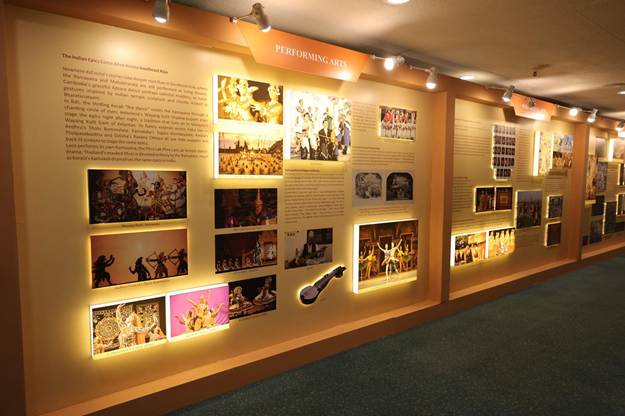
An exhibition titled Asia’s Shared Cultural Heritage was also organised at the venue, showcasing historical links between India and other Asian countries.
The conference’s ten thematic areas cover philosophy, religion, languages, arts, textiles, cuisine, performing arts, trade and diaspora communities. A plenary session chaired by former Foreign Secretary Ambassador Shashank brought together diplomats and experts, including representatives from Lithuania and Fiji, to discuss international cultural connections.
Through interdisciplinary research and global partnerships, the conference seeks to renew the scholarly legacy of the Greater India Society and strengthen understanding of the cultural exchanges that have connected India with the wider world for centuries.
