
CCPA Fines Rapido ₹10 Lakh for Dark Patterns
Consumer watchdog finds misleading tipping prompts and interface design that steered riders towards paying more

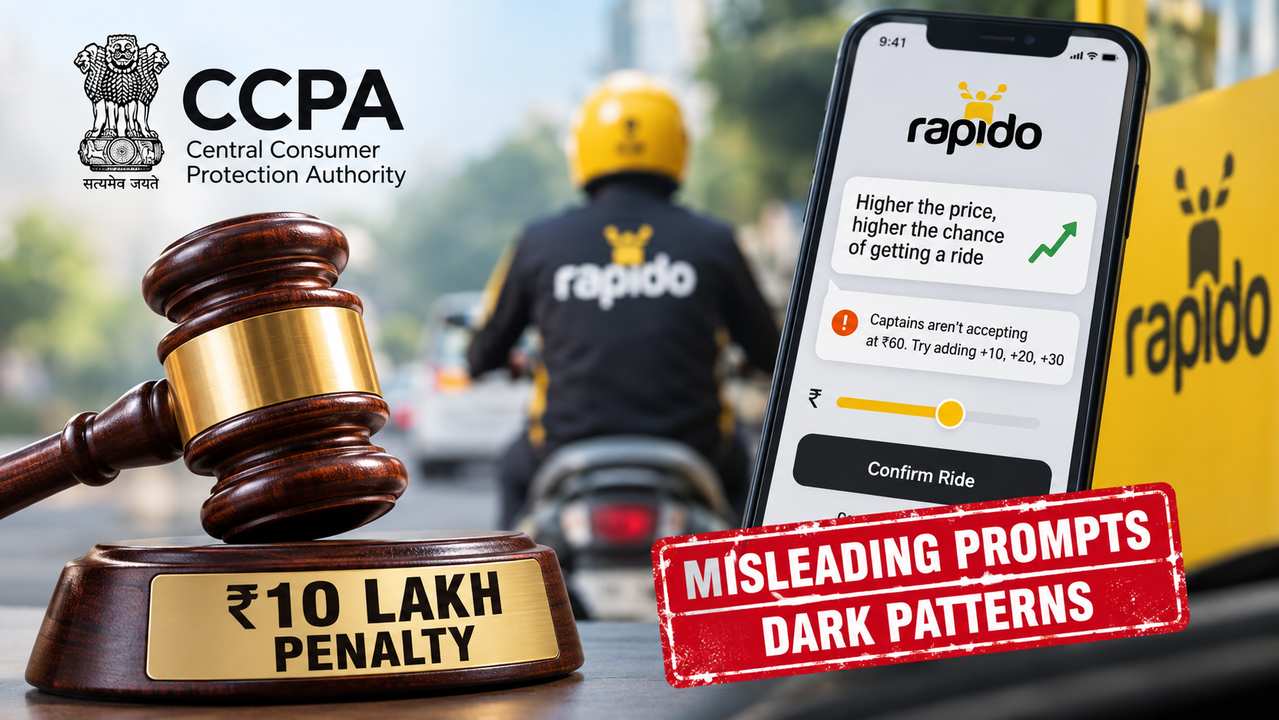
- CCPA imposed a ₹10 lakh penalty on Rapido operator Roppen Transportation Services.
- It found “Confirm Shaming” and “Interface Interference” in Rapido’s booking interface.
- Rapido was directed to discontinue misleading prompts and practices encouraging higher payments.
- The action follows a wider CCPA examination of tipping and dynamic pricing practices in ride-hailing platforms.
GG News Bureau
New Delhi, 16th Sept: The Central Consumer Protection Authority (CCPA) has imposed a ₹10 lakh penalty on Roppen Transportation Services Private Limited, operator of ride-hailing platform Rapido, over misleading advertisements, unfair trade practices, unfair contract terms and dark patterns in its ride-booking interface.
The action was taken following a sector-wide examination of cab and bike-taxi aggregator platforms concerning pre-ride tipping and dynamic pricing practices.
During its examination, the CCPA found prompts on the Rapido app such as “Higher the price, higher the chance of getting a ride” and “Captains aren’t accepting at ₹60. Try adding +10, +20, +30” while a booking was still being processed.
CCPA finds “Confirm Shaming”
According to the CCPA, Rapido first quoted a fare and, after the rider booked at that price, prompted the rider to pay an additional amount on the grounds that captains were not accepting the original fare.
The authority held that the practice could create an impression that paying more was necessary to improve the chances of getting a ride quickly. It classified the practice as “Confirm Shaming”, a dark pattern identified under the Guidelines for Prevention and Regulation of Dark Patterns, 2023.
Pricing slider termed “Interface Interference”
The CCPA also examined Rapido’s “Set your price” slider and found that its colour coding could influence consumers’ pricing decisions.
According to the authority, increasing the price displayed a “higher chance of getting a ride” message in green, while lowering the price triggered a red or orange warning. The slider also provided more space for increasing the price than decreasing it.
The CCPA classified the design as “Interface Interference”, holding that the interface visually steered consumers towards paying a higher amount.
CCPA questions advance tipping
The authority noted that the fare displayed at booking already considers factors such as distance, time, traffic, tolls and the amount payable to the captain.
It said a tip is ordinarily a voluntary payment made after a service has been rendered and should not be presented as a condition for providing the service.
The CCPA also referred to the Motor Vehicle Aggregator Guidelines, 2025, which require tipping features to be made available only after completion of the ride.
Rapido had argued that tipping was voluntary and that its matching algorithm operated irrespective of whether an additional amount was offered. The company also described the prompts as reflecting real-time negotiation between riders and drivers.
The CCPA rejected these submissions, stating that the timing and design of the prompts placed pressure on riders. It further noted that Rapido had not submitted data demonstrating that paying an additional amount actually increased the likelihood of getting a ride. The claim was therefore considered unsubstantiated and misleading.
Wider scrutiny of ride-hailing platforms
The action is part of the CCPA’s broader scrutiny of advance-tip and dark-pattern practices among ride-hailing and bike-taxi platforms.
The authority had earlier issued notices to Uber, Ola, Rapido and Namma Yatri, directing them to comply with the 2023 dark-pattern guidelines and submit self-declarations regarding compliance. The CCPA’s examination of Uber and Ola remains ongoing.
The CCPA said it would continue to take measures under the Consumer Protection Act, 2019 to protect consumers and prevent unfair trade practices and misleading advertisements.
Consumers can register complaints relating to misleading advertisements, unfair trade practices or dark patterns through the National Consumer Helpline at 1915.
