
European Scholars Seek Release of Shincheonji Chairman Lee Man-hee
Religious freedom advocates raise concerns over detention of 95-year-old leader at Rome conference

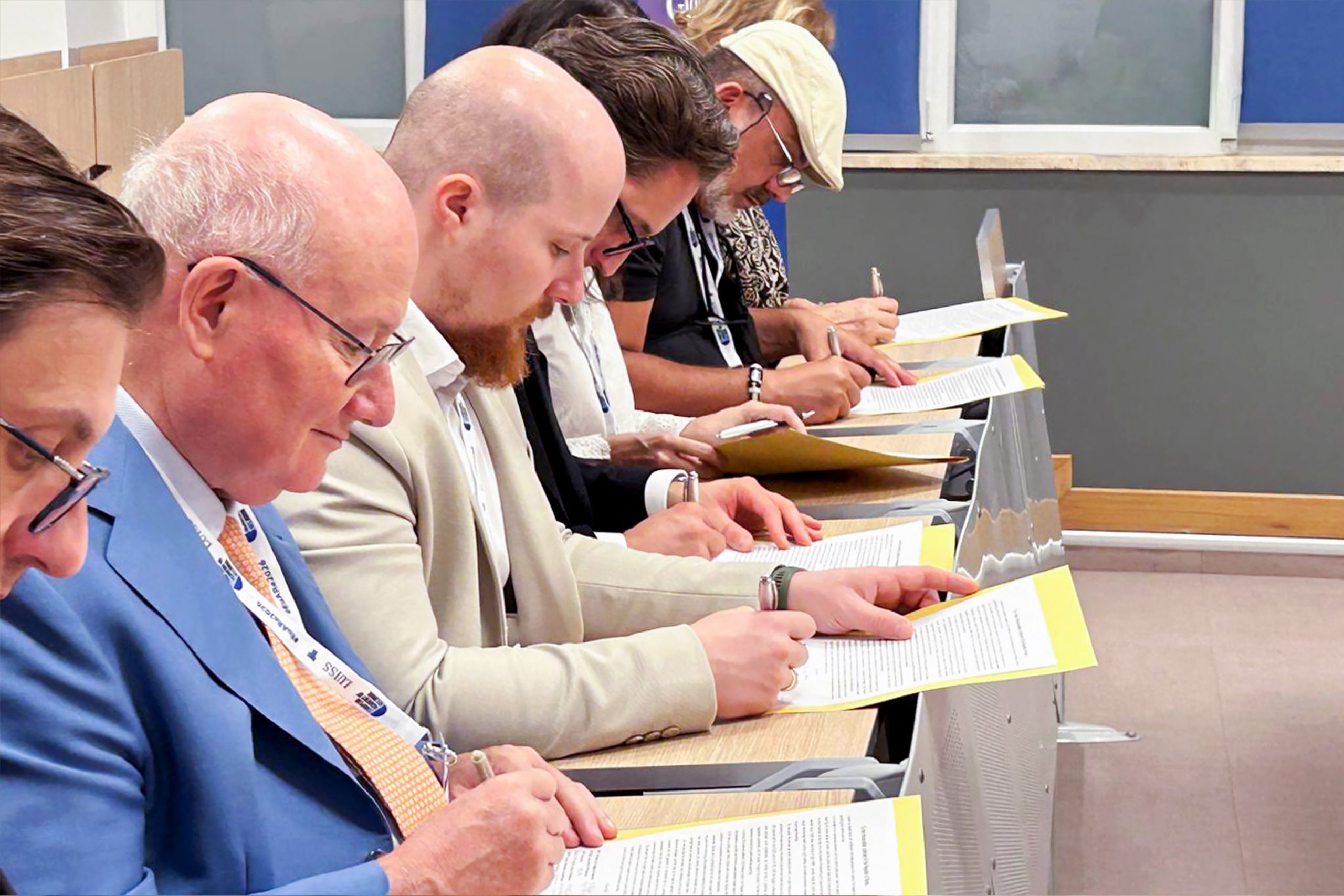
- European scholars urge South Korea to release Shincheonji Chairman Lee Man-hee.
- Detention of the 95-year-old religious leader criticised as a human rights concern.
- Experts cite international legal standards on treatment of elderly detainees.
- Shincheonji says Chairman Lee’s detention has become an international religious freedom issue.
GG News Bureau
Rome/Seoul, 12th July: European scholars of religion and human rights experts have called on the South Korean government to release Shincheonji Church Chairman Lee Man-hee, arguing that the detention of the 95-year-old religious leader raises serious concerns over religious freedom and international human rights standards.
The appeals were made during the Ninth Annual Conference of the European Academy of Religion (EuARe) held in Rome on July 3, where scholars discussed Shincheonji Church’s global presence and recent developments surrounding its leader.
Chairman Lee was detained on June 24 and indicted on June 29 on allegations of violating South Korea’s Political Parties Act. Investigators allege that between July 2021 and January 2024, he directed the registration of around 50,000 church members into a political party.
Shincheonji Church has denied the allegations, stating that political participation by its members was voluntary and that both Chairman Lee and the church cooperated fully with investigators throughout the inquiry. The church described the detention of the elderly religious leader as excessive and equivalent to physical punishment.
Speaking at the conference, sociologist of religion Dr. Massimo Introvigne, founder of the Center for Studies on New Religions (CESNUR), argued that imprisoning a 95-year-old over non-violent allegations was inconsistent with international standards governing the treatment of elderly detainees. He referred to the United Nations’ Mandela Rules, which recommend detention of elderly individuals only in exceptional circumstances.
Eric Roux, President of the European Interreligious Forum for Religious Freedom (EIFRF), also expressed concern, saying the imprisonment of a person of such advanced age was difficult to reconcile with the principle of human dignity. He urged South Korean authorities to review the decision to avoid damage to the country’s international reputation.
Human rights lawyer Alessandro Amicarelli, Chairman of the European Federation for Freedom of Belief (FOB), said he was surprised by the developments, describing South Korea as a country traditionally recognised for its democratic values and commitment to human rights. He voiced support for protecting religious freedom and preventing abuse.
Shincheonji Church said the issue has evolved beyond an academic discussion and has become an international human rights concern.
The church also referred to a joint written statement submitted by United for Human Rights and Coordination des Associations et des Particuliers pour la Liberté de Conscience (CAP-LC) to the 62nd session of the United Nations Human Rights Council. The statement reportedly raised concerns over the treatment of Shincheonji members and questioned whether linking political participation to religious affiliation was consistent with the International Covenant on Civil and Political Rights.
According to the church, growing support from international scholars and human rights advocates has increased calls for Chairman Lee’s release, describing the issue as one concerning freedom of religion, due process and the protection of fundamental human rights.
