

By Anjali Sharma
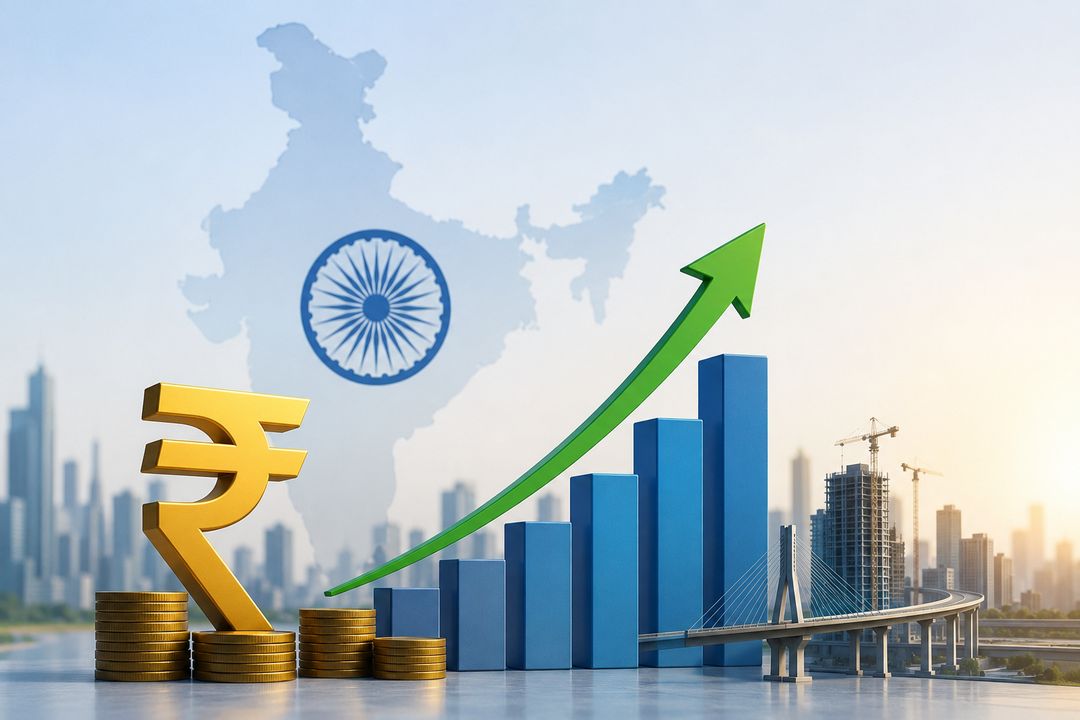
WASHINGTON – According to a recent EY report issued on Sunday showed that India’s economic growth is expected to remain resilient in 2026-27, with real GDP growth projected at 7-7.2% supported by robust domestic demand and sustained government spending on infrastructure and other capital projects.
EY has estimated nominal GDP growth at 12.5-13% for FY27.
The firm said India’s growth outlook remains relatively strong despite risks arising from geopolitical tensions, elevated crude oil prices and a weaker global trade environment.
It noted a pickup in industrial production has further strengthened the growth outlook.
The Index of Industrial Production (IIP) grew 7.3% in June 2026, marking its fastest expansion in 23 months.
According to EY the industrial output averaged 5.7% growth during the first quarter of FY27, making it the strongest quarterly performance in eight quarters.
Manufacturing remained a key driver, with output rising 7.8%.
Electrical equipment, automobiles, textiles and food products were among the sectors that recorded relatively strong growth during the period.
Despite the improvement in industrial activity, more recent high-frequency indicators suggest that the pace of expansion could be easing.
India’s manufacturing PMI declined to 53.5 in July from 54.2 in June, while the services PMI fell more sharply to 53.3 from 57.4.
Both indices remained above the 50-mark, indicated continued expansion, although at a slower pace.
EY said credit growth, however, remained supportive of economic activity. Gross bank credit growth accelerated to 18.6% in June, its strongest pace in 25 months.
Public investment continues to provide an important foundation for economic activity. Government capital expenditure grew 23.7% in the first quarter of FY27, reversing a 23.3% contraction recorded in the previous quarter of FY26, it added.
The fiscal deficit during the first quarter stood at 18.2% of the full-year budget target.
EY expected the renewed momentum in capital spending to support demand and strengthen the economy’s growth trajectory through FY27.
Inflation remains an important factor for the broader economic outlook.
Consumer price inflation stood at 4.4% in July, while wholesale price inflation rose to 9.8%.
The increase in wholesale inflation was driven by a combination of factors, including mineral oils, food products, metals, chemicals and fuel-related items.
EY said elevated WPI inflation could push nominal GDP growth above the 10.04% assumption used in the government’s Budget calculations.
Faster nominal growth could, in turn, strengthen tax and other revenue collections, potentially giving the government greater room to maintain capital spending while staying within its fiscal deficit target.
The external environment presents a more challenging picture. Higher energy prices and softer global demand could put pressure on India’s exports and widen the country’s current account deficit.
The OECD has projected India’s current account deficit at around 1.9% of GDP in FY27.
EY said India can strengthen its external position over the medium term by reducing dependence on imports and increasing domestic value addition.
The report identified 1,272 products where greater domestic production could potentially substitute imports worth around $189 billion.
It concluded that import substitution, stronger export promotion and expansion of domestic manufacturing could help India reduce supply-side vulnerabilities and build greater resilience against global trade and geopolitical shocks.
