
Jaishankar says India-China ties better than last year as border standoff eases
External Affairs Minister links broader bilateral normalisation to peace and stability along the India-China border

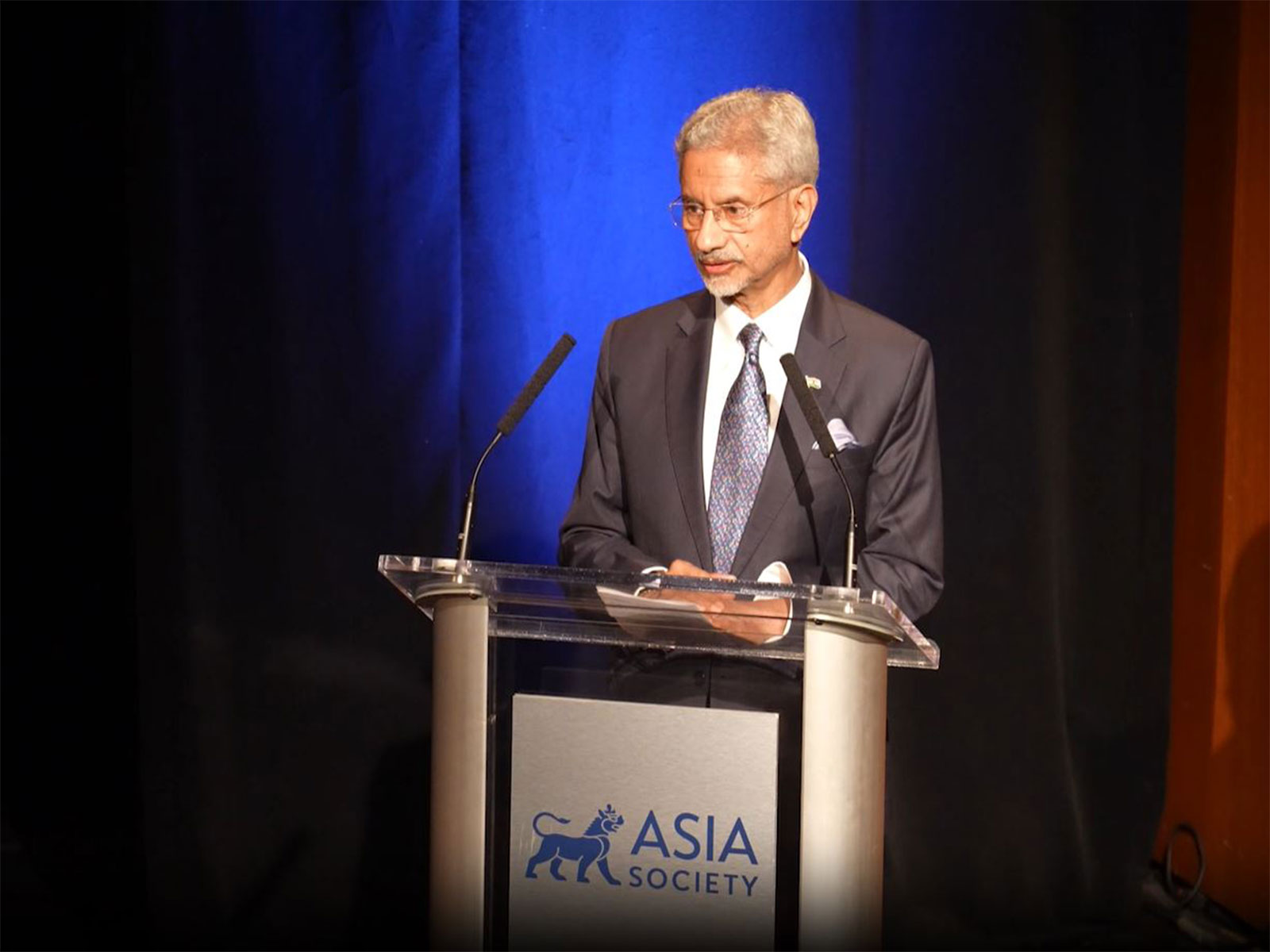
- Jaishankar says ties are better than they were last year
- Border stability remains central to bilateral relations
- India and China have resumed broader engagement
- Minister warns of a more competitive global order
By Anjali Sharma
NEW YORK- External Affairs Minister S Jaishankar said on Wednesday that India-China relations are “better” today than they were last year, linked the improvement directly to the easing of the border standoff and stressed that the state of the border determines the state of bilateral ties.
He was speaking at an event organized by the Asia Society in New York, Jaishankar said it was “natural” for other aspects of the relationship, including visas and flights, to improve once the border situation was resolved.
“The state of the border determines the state of the relationship. You can’t have tension, if not worse, on the border and say the relationship should be normal,” he added.
Jaishankar said India had conveyed to China that prolonged tensions and a downturn in bilateral ties served neither side’s interests and could instead benefit third parties.
“We had long been telling the Chinese that a standoff between us, a dip in our relationship, actually doesn’t help either of us. In fact, it is third parties who will take advantage of that,” he said.
He said India had followed what he described as an “elementary principle of statecraft” not allowing itself to remain locked in a problem that benefits others.
“Don’t get locked into a problem which benefits others,” he said, adding that the prolonged standoff “didn’t serve our interest, it certainly didn’t serve theirs.”
Jaishankar said the improvement in relations was also important for India’s wider diplomatic position.
“To the extent there is an improvement in our relations, I think it certainly helps our position. It helps our position not only vis-a-vis China, it helps our position vis-a-vis the rest of the world,” he said.
He said India’s position had remained grounded in a straightforward principle: progress on the border was essential for normalisation of the broader relationship.
“What we’ve had is, as the border comes back more towards normalcy, the relationship comes back more towards normalcy,” Jaishankar said.
He added that improved ties would benefit both countries.
The remarks came amid a recent improvement in India-China engagement, including Chinese President Xi Jinping’s visit to India for the BRICS Leaders’ Summit hosted by New Delhi.
Jaishankar’s assessment underlined New Delhi’s long-standing position that while it seeks stable and constructive relations with Beijing, normalization of ties is closely linked to maintaining peace and tranquility along the border.
Jaishankar also warned that the erosion of global rules and the growing emphasis on one-to-one deals could push the world towards a more competitive and potentially “Hobbesian” order, saying India would respond by diversifying its partnerships and protecting its strategic interests.
He said the international system is undergoing a fundamental shift, with countries increasingly pursuing sharper definitions of their national interests and negotiating new bargains rather than relying on the assumptions of the old global order.
“The pretense has dropped for everybody. Everybody is openly dealing with everybody else,” he said.
He described the trend as part of the world’s movement towards multi polarity.
“Everybody is actually going to get the best deal that they can out of a given situation from a much sharper definition of their interest,” Jaishankar said.
He added that while countries may or may not like the emerging reality, “once Washington takes the lead on that, it becomes, in a way, a kind of a global fashion.”
On the erosion of global rules, Jaishankar said the problem could not be attributed solely to the United States, argued that the rules had been weakened over a longer period, particularly in the economic and trade spheres.
“I think the rules have been continuously eroded over a period of time, particularly economic rules,” he said.
He pointed to a growing gap between market-based trading structures and actual trading practices.
