
Trump Says Russia, Ukraine Agree to Halt Energy Strikes; Zelenskyy Seeks Guarantees
Kyiv backs a reciprocal halt to attacks on energy infrastructure but demands assurances that Moscow will honour the deal

By Anjali Sharma
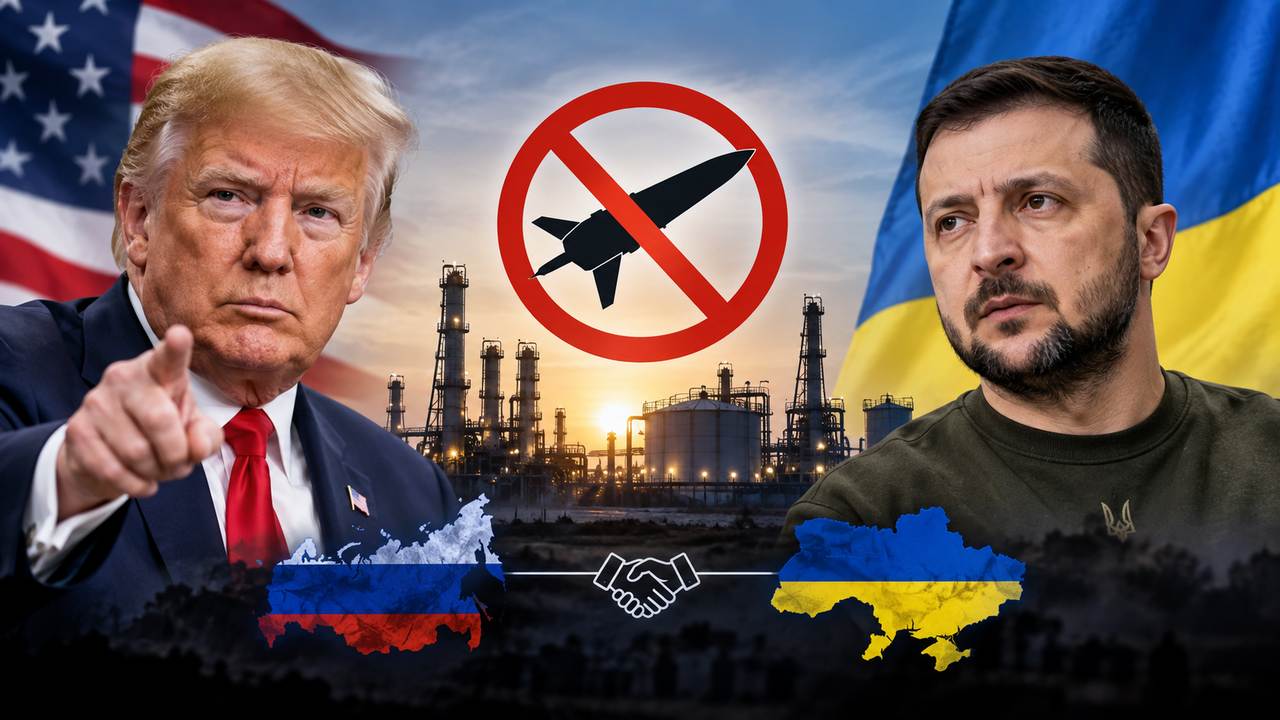
WASHINGTON – US President Donald Trump on Monday has claimed that Russia and Ukraine have agreed to stop attacking each other’s energy infrastructure, but Kyiv has made clear that its participation in such a halt depends on international partners to ensure Moscow sticks to the arrangement.
Trump blamed the Russia-Ukraine war for much of the global diesel price surge as fuel costs become an increasingly sensitive issue in the US.
He declared a reciprocal halt to energy strikes.
Ukrainian President Volodymyr Zelenskyy described Kyiv as ready for such a step only if its partners can secure a reliable Russian commitment.
Russia had not publicly confirmed Trump’s announcement.
“Ukraine has agreed not to hit Russian Energy targets. Russia has agreed to do, likewise!” Trump wrote on Truth Social.
Trump also tied the surge in global diesel prices primarily to the Russia-Ukraine conflict rather than the war involving Iran.
“The World’s Diesel price rise is mostly caused by the Russia/Ukraine War, not Iran,” he said.
Trump’s declaration came a day after he urged Zelenskyy to stop Ukrainian attacks on Russian oil refineries and diesel infrastructure amid pressure on global fuel supplies.
Zelenskyy presented a more conditional picture of the proposed halt.
Ukraine, he said, has asked its international partners to secure an agreement with Russia covering critical infrastructure and essential supplies.
Kyiv remains skeptical about whether Moscow would honour such an arrangement.
“Ukraine has proposed that its partners secure an agreement with Russia that would stop the destruction of critical infrastructure. Food, energy, and other basics that sustain life must be protected, and Russian strikes are directed primarily against them. Every day, Ukrainian energy facilities, port infrastructure, logistics, and even warehouses storing food and pharmaceuticals are targeted. Ukraine is not convinced that Russia is willing to abide by any agreement,” Zelenskyy wrote on X.
He said Ukraine was prepared to reciprocate if its partners could ensure Russia stopped attacking Ukrainian energy systems, other critical infrastructure, and food supply routes.
“If our partners are ready to ensure that Russia genuinely refrains from striking our electricity system, other energy facilities, critical infrastructure, and food supply routes, then, of course, we are ready to ensure a corresponding halt to our strikes. So that it is reliable, long-term, has a real impact on people’s lives, and does not fall apart after the Russians hold their ‘elections’ and get an easing of pressure on gasoline and diesel precisely for that period,” Zelenskyy said.
“The war must be brought to an end. And a de-escalatory step regarding critical infrastructure could be the first step toward peace. We expect specifics from our partners,” he added.
The push to stop attacks on energy installations comes as diesel prices have become an increasingly prominent issue in the United States.
US diesel prices crossed $6 a gallon on Friday, according to reports, reached a record as high fuel costs put pressure on Americans ahead of the November congressional mid-term elections.
Ukraine has used long-range drones to attack Russia’s energy sector, arguing that it helps finance and sustain Moscow’s war effort. Russia has continued aerial attacks against Ukraine.
The energy dispute also extends beyond the Russia-Ukraine battlefield. An International Energy Agency report said net exports of diesel and related fuels from Gulf countries in August had fallen to just over a quarter of their levels before the war involving Iran began in February.
Ukraine tests interceptors against jet-powered Shahed drones
Zelenskyy said Ukraine was testing a new generation of drone interceptors intended to counter Russia’s jet-powered Shahed strike drones.
“Reports on countering Russian ‘shaheds’ and our work with manufacturers on a new generation of drone interceptors – to defend against jet-powered ‘shaheds.’ There are solutions, and testing is underway. We are accelerating all processes. Ukraine needs a working defence solution in sufficient numbers and with the required effectiveness,” he said.
Zelenskyy said the project’s financial requirements had been secured.
“Together with Minister of Defence Yevhenii Khmara and Commander-in-Chief of the Armed Forces of Ukraine Mykhailo Drapatyi, we discussed steps that could deliver results faster. The financial foundation for this work has been secured,” he said.
Zelenskyy also said Ukrainian troops continued to defend their positions and singled out units fighting in the Donetsk region.
Russian drone struck train near Ukraine-Poland border
The latest diplomatic push follows another flashpoint near Ukraine’s border with NATO member Poland.
A Russian drone struck a passenger train near the border on Sunday shortly after a diplomatic train carrying former UK prime minister Boris Johnson, former Swedish prime minister Carl Bildt and other European officials had travelled through the area.
No casualties were reported. Ukraine’s state railway operator Ukrzaliznytsia said it considered it “highly probable” that the diplomatic train had been the intended target.
The diplomatic train had left Yahodyn station earlier than scheduled. The Russian drone later struck a passenger train about two kilometres from the Polish border.
