

By Anjali Sharma
UNITED NATIONS – UN Office on Drugs and Crime agency on Sunday said that the global police cooperation is helping to tackle cross-border crime and called it ‘Advance safety for all’ as criminal networks increasingly exploit weak institutions and operate across borders.
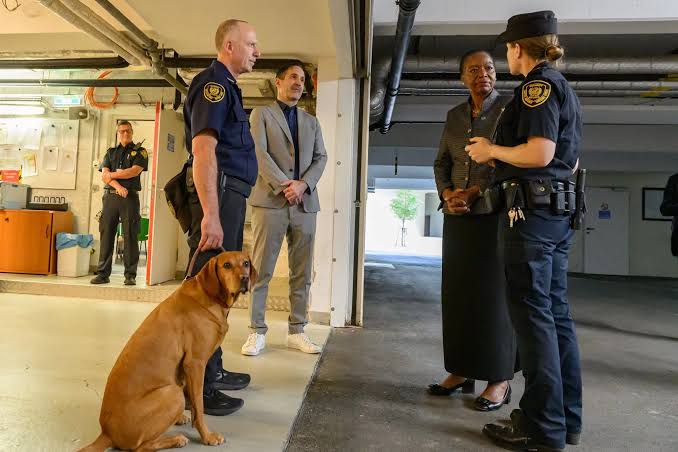
UNODC marked the International Day of Police Cooperation, recognized the importance of international cooperation in supporting national law enforcement agencies.
The UN agency warned that organised crime is responsible for about 95,000 homicides each year, and about one-fifth of global intentional homicides are at the hands of organized criminal groups.
UN head António Guterres said “By working together across borders, law enforcement agencies can better support survivors, apprehend perpetrators, disrupt criminal networks and advance safety for all”.
UN Police have worked alongside UN peacekeeping and special political missions in places where conflict has weakened the rule of law and eroded public trust in judicial institutions for more than 6 decades .
UNODC noted that over 7,700 UN Police personnel are authorized to serve across 14 peace operations worldwide, helping to protect civilians and human rights, strengthen national police services and support countries’ transitions from conflict to peace.
Modern crimes such as cybercrime, terrorism, fraud and human trafficking increasingly cross national borders, it said.
Police forces are limited by these borders, while criminals are not. International police cooperation allows law enforcement agencies to share information, coordinate investigations and respond to crimes that occur across jurisdictions.
One of the main platforms for that cooperation is the International Criminal Police Organization which connects police forces in 196 countries to share data on crimes and criminals, even as national police remain responsible for investigating crimes and enforcing domestic law.
INTERPOL, the UN also works with regional policing organizations and national authorities to strengthen the ability of police forces to operate across borders.
UN Police do not serve as global police forces and generally do not make arrests or replace national law enforcement.
The officers protect civilians, advise and train national police, and help rebuild law enforcement institutions.
UN chief for Peace Operations Jean-Pierre Lacroix said “UN Police play a critical role in supporting Member States to strengthen policing institutions that are effective, accountable and responsive to the needs of all communities”.
UNODC provides technical assistance to countries working to prevent and prosecute organized crime, trafficking, corruption and other transnational crimes.
UN Inter-Agency Task Force on Policing helps coordinate policing-related work across UN entities, promoting a coherent approach and helping avoid overlap.
The cooperation between police in Côte d’Ivoire and Switzerland was coordinated through INTERPOL helped dismantle a phishing operation that had defrauded Swiss victims of more than $1.4 million.
UNODC stated that these partnerships are becoming increasingly important as conflict, displacement and other crises create new opportunities for criminal networks to exploit vulnerable people.
UN officials said effective policing also relies on communities to trust the institutions meant to protect them.
The theme International Day of Police Cooperation is Protecting against Vulnerability Building Trust and Legitimacy in Policing, this year emphasized the centrality of trust and legitimacy in police work.
Mr. Lacroix said “At a time when confidence in public resolutions is under strain in many parts of the world, policing institutions face a dual responsibility: to protect communities from harm and to demonstrate fairness, accountability and transparency in the exercise of their authority”.
The marginalized people often bear the brunt of lawlessness and exploitation. In the Central African Republic, UN Police have worked with national police to strengthen their capacity to investigate trafficking and other forms of transnational organized crime.
UN police officer Gladys Nkeh, from Cameroon, helped a 13-year-old girl who was raped get medical care and helped authorities arrest her assailant. The girl eventually named her child Gladys after the officer.
UN officials, effective police cooperation ultimately depends on earning the confidence of the communities which officers serve, especially those most vulnerable to crime and abuse, UNODC said.
Acting Under-Secretary-General for Counter-Terrorism Alexandre Zouev said professional, accountable and trusted police institutions are best positioned to build the confidence communities need to assist investigations and address serious crimes.
“By recognizing the distinct experiences and security concerns of women, men, girls and boys, law enforcement can better serve all members of society,” Mr. Zouev said.
