
Vance Says China Willing to Help Isolate Iran
US vice president keeps economic, military, diplomatic and covert pressure options open against Tehran

By Anjali Sharma
WASHINGTON – US Vice President JD Vance on Friday named Türkiye, Azerbaijan, the UAE, Saudi Arabia and Qatar among countries helping Washington as it seeks to penalize Tehran over attacks on commercial shipping.
Vance said that China is showing a willingness to work with Washington as the Trump administration tries to economically isolate Iran, even as he left the door open to military and covert pressure against Tehran.
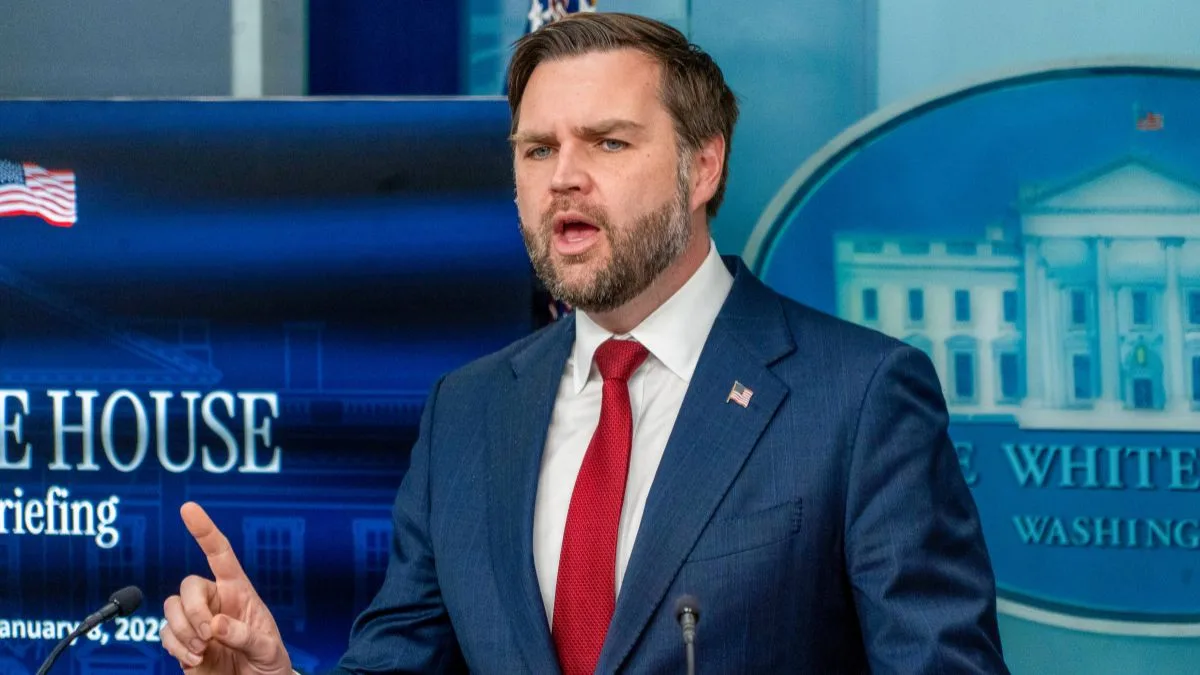
He made remarks at a White House media briefing offered a glimpse of the breadth of Washington’s strategy against Iran.
US administration is seeking international cooperation for its economic campaign while retaining military, diplomatic, and covert options if tensions escalate.
Vance hit a positive note on China when asked whether “Operation Economic Outcast” could work without Beijing joining the effort.
He said “First of all, I think the Chinese, the PRC, [are] being willing to play ball here,”.
Vance acknowledged that the US and China continue to have “some policy disagreements” and a “misalignment of interests”.
He also pointed to the relationship between US President Donald Trump and Chinese President Xi Jinping.
“Say what you will about them they are not the sort of nation that shoots at commercial shipping because they’re not getting their way in an international dispute,” Vance said.
“They [Chinese] are, in that way, I think, willing to be a little bit more responsible,” he added.
Vance stopped short of suggesting that Beijing had accepted all of Washington’s demands.
“Again, I’m not saying they’re doing everything that we’ve asked them to do. But I think that the PRC has been much more responsible, certainly than the Iranians, and much more responsible than a couple of other nations as well,” he said.
China is not the only country Vance identified as helping Washington, media reported.
He named Türkiye, Azerbaijan, the United Arab Emirates, Saudi Arabia, and Qatar among the countries taking steps to support US efforts against Tehran. Some of that cooperation, he said, was happening away from public view.
“A lot of countries, sometimes they’re not willing to say so publicly, but privately they’re doing a lot of good things to help us ensure that the Iranians pay a penalty for firing at commercial shipping,” Vance said.
According to Vance, US campaign is tied to three objectives: protecting commercial shipping, keeping global energy supplies moving, and preventing Iran from rebuilding its nuclear capabilities.
“We’re protecting commercial shipping, we’re protecting world energy markets, but it’s all in the service, all in the service of ensuring that Iran does not become a nuclear weapons power,” he said.
Vance also made clear that the Trump administration was not limiting its options to economic pressure.
“There are a lot of additional tools that we have at our disposal. Some of those the President will use, and some of them he won’t,” he said.
“But everything that could happen is on the table. Economic pressure, military pressure, diplomatic pressure, covert pressure. Of course, these are tools in the president’s toolkit.”
He declined to reveal which measures Washington could employ against Tehran in the coming months.
“Part of the reason they’re tools in the toolkit is because the Vice President, hopefully, is not dumb enough to stand up before all of you and a million Americans watching at home and say exactly what it is that we plan on doing,” Vance said.
Vance also accused Iran of targeting commercial shipping in the Strait of Hormuz and defended US military efforts in the region.
“We would have had an energy crisis because the Iranians refuse to stop acting like terrorists in the Strait of Hormuz,” he said.
Vance’s comments came against a backdrop of continuing military tensions between Washington and Tehran.
Trump said that he did not expect the conflict, which began on February 28, to continue for “very much longer”.
He also said US forces had carried out a “very heavy attack” on Iran the previous night and targeted newly established military equipment along the Strait of Hormuz, including radar and missile-related systems.
“We hit them hard last night, very hard. They gave a little love tap, but we hit them very hard last night,” Trump said.
Media reported that Trump is privately weighing whether to declare an end to the war as the US heads towards the midterm elections and energy prices remain elevated because of the conflict.
The report also said the Pentagon had extended troop deployments in West Asia, raising the possibility that military tensions could continue into next year.
Trump administration launched “Operation Economic Outcast” last month as an intensified campaign against Iran’s economic links.
US Treasury Secretary Scott Bessent said the initiative that its aim was “to sever every economic lifeline that sustains this tyrannical regime”.
According to Bessent, the Treasury had identified networks allegedly used by Iran to move oil and circumvent US sanctions.
Washington also expanded categories of Iran-related activity that could potentially attract sanctions, including conduct involving shipping, technology, and digital assets.
Bessent said Tehran faced “a clear choice” between “complete global isolation and a subsistence economy” or “a path to normalcy with the opportunity to rejoin the global economy.”
