
Elections, Jungle Raj and Political Dynasties, Crisis in West Bengal

Poonam Sharma
State Turmoil: The Call for Free and Fair Elections
With yet another crucial election cycle beckoning in India’s eastern state of West Bengal, the call for free and fair elections is louder than ever. West Bengal has witnessed the rise and fall of political dynasties, charges of booth looting, syndicate raj and the ever-present jungle raj over the years. Today, the state is at a crossroads, with democracy itself hanging in the balance.
A Short History: From Congress to CPI(M) to TMC
West Bengal’s political history is full of changing loyalties and deeply rooted ideologies. After independence, the political scene of the state was dominated by the Indian National Congress. But the Communist Party of India (Marxist) or CPI(M) had tremendous power in the late 1960s and for the next 34 years. These were the years when the CPI had been so deep rooted among the people at the grassroot level that even “local committees” were not only political bodies but also, very often, mediators of quotidian disputes, even between the spouses. So a level of deeprooted ideological influence was seen at every level.
But the more the CPI(M) tightened its grip on power, the more discontent grew over lack of development and rising unemployment. After the death of Jyoti Basu and during Buddhadeb Bhattacharya too the CPI had began loosing the ground as so In 1998, the When Trinamool Congress (TMC) entered the fray, led by the fiery Mamata Banerjee after breaking from Congress (I) promising to dislodge the entrenched Left Front, soon became a ray of hope for those who longed for change. The Left’s decades of rule were brought to an end in 2011 by Mamata Banerjee, heralding a new chapter for West Bengal.
TMC’s Rule: Syndicate Raj & Decay of Democracy
The initial euphoria over the TMC’s victory soon gave way to allegations of corruption, syndicate extortion and lawlessness. Because there was no issue or agenda of TMC for politics it was just to have the power .And since then the so-called ‘syndicate raj’ became synonymous with forced extortion and the unbridled expansion of local muscle power, often with the support of political patronage. With manipulating the democratic process, charges of booth capturing and poll rigging became frequent under TMC’s watch.The underdevelopment and de industrialisation has brought west Bengal to a state of lawlessness and a fearful population more particularly during the elections the fear is at its peak.
This culture of bullying and strong-arm tactics has profoundly affected the state’s governance and public morale. The recent Panchayat elections were not only marred with violence and fraud but also the voice of opposition was often silenced through fear and coercion.
The EVM Controversy and IPAC, the Police
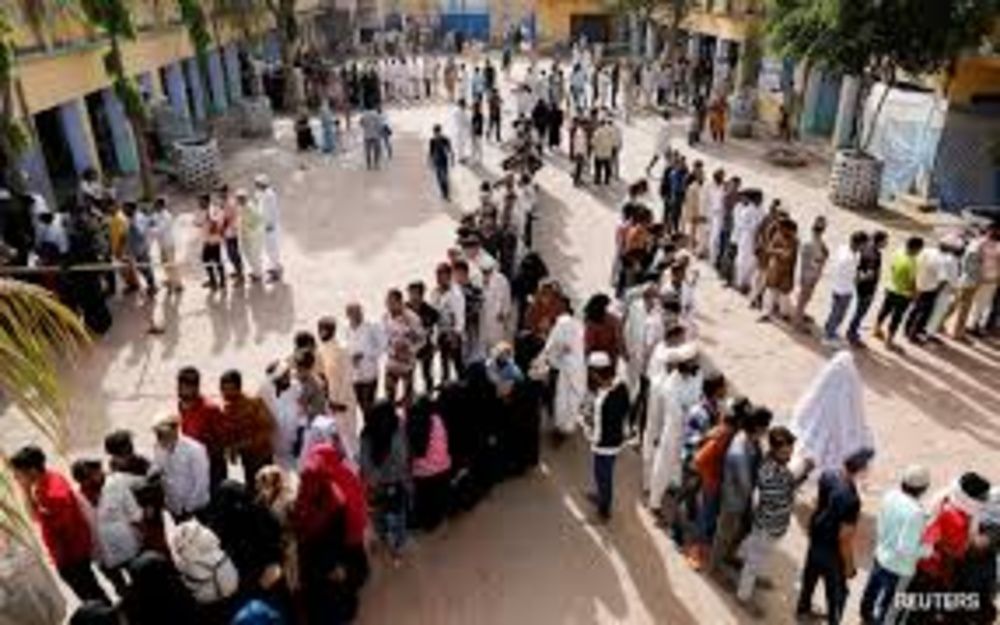
The elections on the 23rd were for the most part orderly, with only isolated cases of violence, despite the heavy deployment of security and paramilitary forces. But disturbing reports keep coming in from few places over West Bengal, especially places like Bishnupur and Murshidabad. Allegations have been made that certain individuals purported to be associated with the TMC, in disguise some claiming to be election officials, removed Electronic Voting Machines (EVMs) from polling stations. Concerns about the sanctity of the elections have also been added by the alleged role of the Indian Political Action Committee (IPAC) and possible connivance with police officials.
Opposition parties including the BJP have sounded alarm bells citing cases of EVMs being moved under suspicious circumstances and TMC and IPAC representatives being seen in villages trying to influence voters. The situation has become so serious that repolls have been ordered in places like Siliguri, Malda, Haldi and Asansol.
Bengal to Bihar: The Spread of Booth Looting
What started as a local malpractice in West Bengal had resonated in neighbouring Bihar. The practice of “booth looting”, once thought to be the unhappy hallmark of Bengal’s elections, had reportedly been adopted and refined in Bihar that has come to an end . Unfortunately, claims of fabricated votes, votes cast in the name of the dead, and the slicing off of legitimate votes had become commonplace. But in this election this trend too was rooted out .
This time, anti-incumbency and Sir have been major factors in the West Bengal elections. People fear that their names may be removed from the voter list if they choose not to cast a ballot. Re-elections need to be taking place in Siliguri, Malda, Haldia, Asansol, and particularly at booth 235 in Siliguri have been reported. According to reports, the Election Commission is taking action to resolve these issues and, if needed, set up new elections.
Political marketplaces and the declining influence of Mamata Banerjee
Interestingly, platforms such as Polymarket in New York have started predicting election outcomes too, and early trends are pointing to a possible BJP lead in the first phase. This has led to speculation about the future of TMC, especially as Mamata Banerjee’s leadership faces increasing scrutiny. There is a feeling in her absence that TMC’s influence might sharply dip in the coming years.
No real progress, growing desperation
West Bengal has remained backward in development even after decades of political turmoil. Public anger has been stoked by chronic unemployment, poor infrastructure and a flight of youth. “Across party lines, the political class of the state has failed to deliver on its promise of progress.
A Ray of Hope The Verdict of the People
The upcoming elections are seen as a litmus test for democracy in West Bengal. There is a genuine sense of urgency among voters, for the first time in years, many of whom are afraid their names will be purged if they don’t vote. Never have the siren call for real, free and fair elections been louder.
With repolls ordered in key constituencies and the spectre of violence looming, one thing is clear: the people of West Bengal are yearning for a return to rule of law and true democratic governance. The most important question of our time is whether these elections can deliver it.
