
Tamil Nadu 2026: The Great Democratisation — Promise, Peril, and the Path Ahead

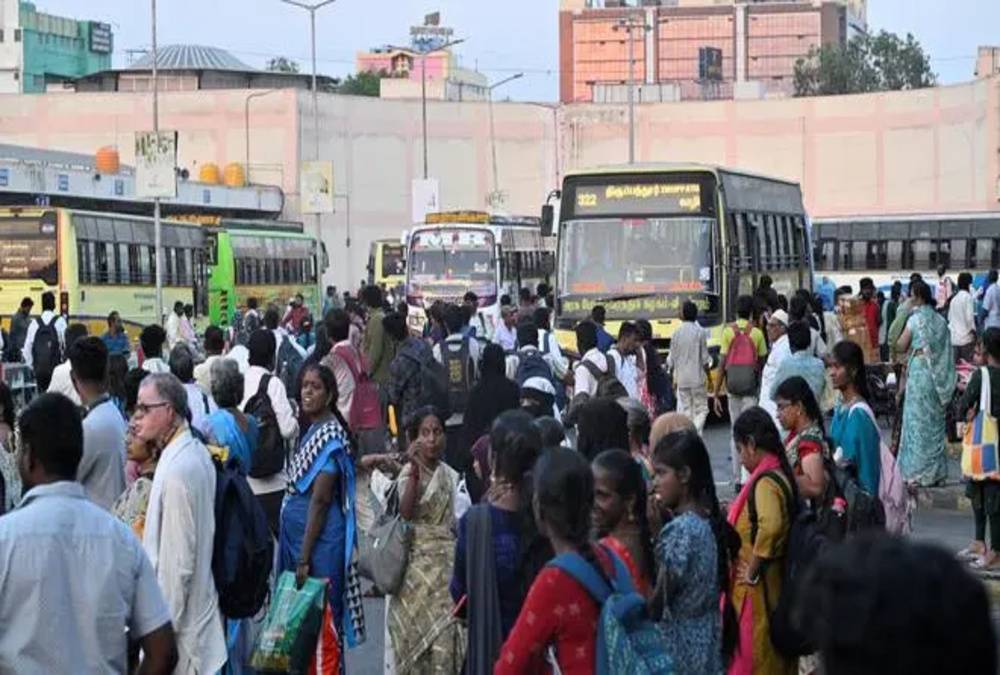

The 2026 Tamil Nadu Assembly elections, held on 23 April, will be remembered not for who wins, but for how they were fought. With a record turnout of 85.05% — the highest in the state’s history — this election marked a genuine democratisation of democracy.
Participation exploded across age groups, genders, and regions. First-time voters, Gen Z, women, and rural citizens turned out in unprecedented numbers. New political forces challenged the decades-old DMK–AIADMK duopoly. Social media, fan networks, and hyperlocal mobilisation replaced traditional top-down campaigns.
Yet this surge in participation has exposed a deeper tension: democracy is expanding faster than governance literacy. Many who voted with enthusiasm have limited understanding of how the state actually functions. This is not a failure of the people — it is the natural outcome of rapid electoral expansion. The question now is whether this moment becomes a lasting democratic renewal or merely a high-turnout spectacle followed by disappointment.
To understand what happened and where Tamil Nadu is headed, we must confront the key issues head-on.
The Core Issues
1. Record Turnout vs Governance Literacy
2. Gen Z Awakening vs Dynastic Continuity
3. Charisma vs Competence: Vijay, Annamalai, and Udhayanidhi
4. Breaking the Duopoly — Opportunity or Dangerous Fragmentation?
5. Social Media Democracy vs Deep Policy Understanding
6. Short-term Excitement vs Long-term Institutional Strength
7. Women and Rural Voters in the New Political Equation
8. The Post-4 May Test: Can Participation Translate into Governance?
1. Record Turnout vs Governance Literacy
The 85% turnout is historic. It reflects genuine faith in democracy and anger against the status quo. However, high turnout does not automatically mean informed choice. Field reports and post-poll conversations reveal that many first-time voters cast their ballots driven by emotion, economic anxiety, or star power rather than a clear understanding of policy trade-offs, fiscal constraints, or administrative realities.
This gap is dangerous. When voters lack governance literacy, they become vulnerable to populism. Unmet promises can quickly turn into cynicism. The real test of this democratisation will be whether parties invest in continuous civic education over the next five years or simply wait for the next election cycle.
2. Gen Z Awakening vs Dynastic Continuity
Gen Z (18–35) emerged as a decisive force. They demanded jobs, quality education,
women’s safety, and an end to dynasty politics. Vijay’s TVK explicitly targeted this demographic with a “whistle revolution” narrative. Annamalai positioned himself as a tough, experienced alternative.
Yet the old order persists. Udhayanidhi Stalin, son of Chief Minister M.K. Stalin and current Deputy Chief Minister, represents the very dynastic model Gen Z claims to reject. While he has real administrative experience as Deputy CM, many young voters view his rise as inherited privilege rather than earned merit.
On the other hand the contender with the most experience, AIADMK, the party with most experience, 31 years out of the 59 years of Dravidian Rule is moving ahead with a promise for stability and law & order. This creates a fundamental contradiction: Tamil Nadu’s youth want change, but the most powerful young leader in the state comes from the most powerful political family. The 2026 election is, in many ways, a referendum on whether dynasty politics can survive Gen Z scrutiny.
3. Charisma vs Competence: Vijay, Annamalai, and Udhayanidhi This election offered three distinct models of leadership for Gen Z:
• Vijay (TVK): Pure charisma and star power. Zero governance experience. His
appeal is emotional and generational. He represents the “democratisation without
governance knowledge” risk most clearly.
• Annamalai (BJP): Former IPS officer with real administrative experience. He
brings competence and a no-nonsense image but carries the baggage of national
politics.
• Udhayanidhi Stalin (DMK): Actual governance experience as Deputy CM, but
burdened by dynasty perception.
Vijay wins on emotional connect. Annamalai wins on credibility of experience. Udhayanidhi struggles because he embodies the system many want to dismantle. The Gen Z vote is split between those who prioritise freshness and those who prioritise proven ability.
4. Breaking the Duopoly — Opportunity or Dangerous Fragmentation?
For the first time in decades, Tamil Nadu moved beyond the DMK–AIADMK binary. TVK,
Naam Tamilar Katchi, and a stronger BJP presence created a genuinely multi-cornered
contest. This is democratisation in action — more choices for voters.
However, fragmentation carries risks. A hung Assembly (widely predicted) could lead to unstable coalitions, policy paralysis, and horse-trading. The very diversity that makes this election exciting could make governance messier. Tamil Nadu must learn to manage coalition politics without descending into the chaos seen in other states.
5. Social Media Democracy vs Deep Policy Understanding
Never before has social media played such a central role. Vijay’s fan networks,
Annamalai’s sharp online presence, and Gen Z peer-to-peer mobilisation created a
bottom-up campaign style. This is positive — it reduces the power of traditional party machines. But social media rewards emotion over nuance. Complex issues like fiscal federalism, irrigation policy, or industrial regulation do not fit into 60-second reels. The danger is that voters make choices based on viral clips rather than substantive understanding. Democracy becomes louder but not necessarily wiser.
6. Short-term Excitement vs Long-term Institutional Strength
The 2026 campaign was exciting. Rallies were massive. Turnout was historic. Yet excitement fades. What matters is what happens between elections.
Tamil Nadu’s institutions — gram sabhas, district planning committees, local bodies — remain weak. If the participative energy of this election is not channelled into strengthening these institutions, we will repeat the cycle of high turnout followed by governance disappointment. The real democratisation will happen only when citizens engage with government every day, not just once every five years.
7. Women and Rural Voters in the New Equation
Women turned out in higher numbers than men in several districts. Their priorities — safety, education for children, healthcare, and economic independence — are now impossible to ignore. Rural voters, long taken for granted, also showed strong participation. Any government formed after 4 May must deliver visibly on these issues. Failure to do so will create a new, powerful opposition bloc that no party can afford to ignore in 2031.
8. The Post-4 May Test: Can Participation Translate into Governance?
This is the most important question. Whatever the result on 4 May, the real work begins the next day. If DMK retains power, it must prove it can govern with fresh ideas and greater accountability. If a new combination emerges, it must demonstrate that outsiders can deliver results, not just promises. If TVK or Annamalai gain significant seats, they must show they understand the difference between campaigning and administering.
The gap between electoral enthusiasm and governance capacity will be tested
immediately. The party or alliance that bridges this gap fastest will shape Tamil Nadu’s future.
The Way Forward
Tamil Nadu has taken a bold step toward deeper democracy. The high turnout, Gen Z
energy, and multi-polar contest are all positive signs. But democratisation without
governance literacy is incomplete.
The state needs three urgent reforms:
• Civic Education: Mandatory political and governance literacy programmes in
schools and colleges.
• Institutional Strengthening: Empowered gram sabhas and ward committees that
function year-round, not just during elections.
• Transparent Governance: Real-time dashboards for scheme delivery, budgets,
and performance so citizens can hold leaders accountable daily.
By 2031, more than half of Tamil Nadu’s voters will be under 35. This generation will not tolerate the old ways. They will demand competence, transparency, and results.
The 2026 election proved that Tamil Nadu’s people are ready for deeper democracy. The question is whether its political class and institutions are ready to meet them halfway. This moment carries both immense promise and real peril. If handled wisely, Tamil Nadu can become a model for how a state transforms electoral energy into lasting democratic strength. If squandered, it risks becoming another example of high hopes followed by quiet disillusionment.
The ballot has spoken loudly. Now governance must answer with wisdom and competence. The next five years will decide whether 2026 was the beginning of a new
chapter — or just another loud election in a long story.
