
India to Get First Semi High-Speed Rail Corridor in Gujarat
Ahmedabad-Dholera rail corridor approved at Rs 20,667 crore with indigenous technology

GG News Bureau
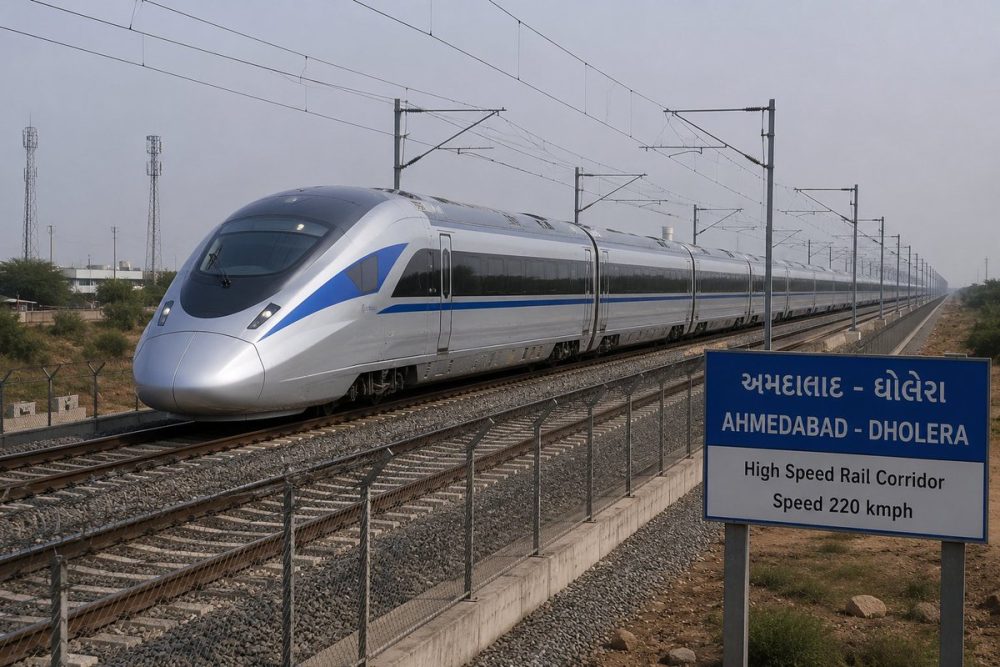
New Delhi, 13th May: The Cabinet Committee on Economic Affairs chaired by Prime Minister Narendra Modi on Wednesday approved the Ahmedabad (Sarkhej)-Dholera Semi High-Speed Double Line railway project at an estimated cost of Rs 20,667 crore.
The Ministry of Railways project will become Indian Railways’ first semi high-speed rail corridor developed using indigenous technology.
Officials said the 134-km railway line in Gujarat is targeted for completion by 2030-31.
Faster Connectivity Between Key Economic Hubs
The proposed corridor will connect Ahmedabad with the Dholera Special Investment Region, the upcoming Dholera Airport and the Lothal National Maritime Heritage Complex.
The government said the project would significantly reduce travel time between Ahmedabad and Dholera, allowing comfortable daily commuting and same-day return travel.
Authorities described the corridor as a pioneering model for phased expansion of semi high-speed railway networks across India.
Focus on Multi-Modal Connectivity
Officials said the railway line has been planned under the PM Gati Shakti National Master Plan with emphasis on integrated multi-modal connectivity and logistics efficiency.
The project is expected to improve mobility, service reliability and transport efficiency in the region.
The government said enhanced rail connectivity would support economic development and generate employment and self-employment opportunities in Gujarat.
Benefits for Villages and Environment
The project is expected to improve connectivity for around 284 villages with a combined population of nearly five lakh people.
The Centre said the environmentally friendly rail project would also help reduce logistics costs and support India’s climate goals.
According to official estimates, the project could help save around 0.48 crore litres of oil and reduce carbon emissions by nearly 2 crore kilograms, equivalent to planting around 10 lakh trees.
