
Bold move Bypassing Strait of Hormuz crisis : $4.8 Billion Deep Sea Pipeline from Oman to Gujarat

Poonam Sharma
Securing India’s Energy Future amid Geopolitical Volatility
In a significant strategic move to fortify its energy security, India is initiating a massive 40,000 crore ($4.8 billion) project: a 2000-kilometer subsea natural gas pipeline that will link Oman to Gujarat. This ambitious undertaking is designed to bypass the geopolitically sensitive Strait of Hormuz, a critical chokepoint that currently handles a staggering 50% of India’s crude oil imports and over 80% of its overall energy supplies.
With growing tensions around the Strait of Hormuz stemming from the ongoing Iran-US conflict, India’s over-reliance on this narrow maritime passage has become a significant vulnerability. The pipeline project, spearheaded by Gale EILIOC and supported by feasibility studies conducted by SAGE, is expected to take five to seven years to complete after receiving all necessary approvals, with the goal of becoming operational by 2033-2035.
Why Bypass the Strait of Hormuz?
The Strait of Hormuz is widely recognized as one of the world’s most critical waterways. Recent geopolitical upheavals have led to severe energy supply shocks and wild price swings, which have had a substantial negative impact on India’s economy and its energy security.
By building this direct underwater pipeline, India aims to drastically reduce its dependence on LNG spot markets and tanker shipments, which are inherently vulnerable to geopolitical uncertainties. This pipeline will offer direct access to natural gas from the Persian Gulf countries, including Oman, UAE, Saudi Arabia, Iran, Turkmenistan, and Qatar – regions blessed with immense gas reserves totaling 2500 trillion cubic feet.
Engineering Marvel Beneath the Arabian Sea
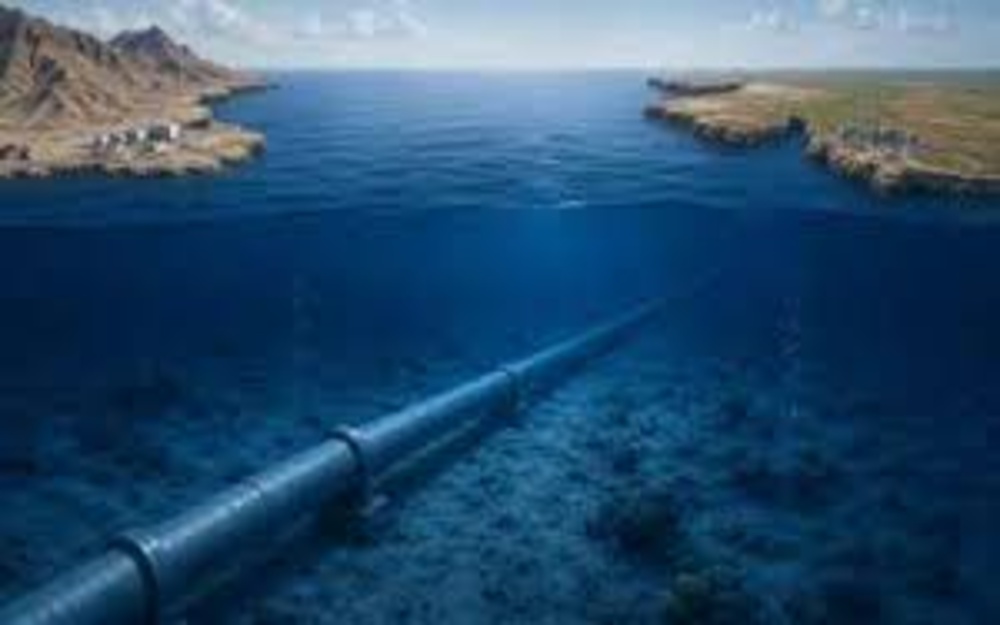
The pipeline will traverse extremely challenging underwater terrains, plunging to depths of up to 3450 meters. If successful, it will rank among the deepest subsea pipelines ever constructed. As part of the feasibility study, a 3000-meter test pipeline was laid to analyze the seabed geology, soil stability, seismic activity, and deep-sea currents.
This comprehensive research, which cost approximately 25 crore, proved the viability of the pipeline project even under the extreme conditions found in the deep ocean. The proposed route meticulously avoids unstable slopes, micro fault lines, and sensitive maritime transit corridors to ensure the pipeline’s long-term durability and reliability.
Pipeline Gas vs. LNG: Cost and Reliability Advantages
There are fundamental differences between transporting pipeline gas and LNG. Pipeline gas flows naturally under its own pressure and does not require any cooling or specialized handling, remaining in its gaseous state throughout the journey. In stark contrast, LNG requires expensive and energy-intensive processing: cooling to -162C, liquefaction, shipment in cryogenic tankers, and then re-gasification upon arrival at the destination.
Pipeline gas is significantly more cost-effective, as it bypasses the additional $3 to $5 per MMBTU that is added to the cost of LNG through logistics and re-gasification. It also helps avoid the global shipping bottlenecks and volatile spot markets associated with LNG, providing India with a much more stable and predictable energy supply.
Meeting India’s Growing Energy Demand
India currently consumes around 190-195 million metric standard cubic meters per day (MMSCMD) of natural gas, a figure that is projected to increase to 290-300 MMSCMD by 2030. This dedicated pipeline will play a crucial role in meeting this rapidly expanding demand and will be vital for key sectors such as fertilizers, power generation, and petrochemicals.
By ensuring a conflict-proof supply, the project directly supports India’s strategic goal of significantly increasing the share of natural gas in its overall energy mix, thereby promoting cleaner and more sustainable energy consumption.
Geopolitical and Economic Implications
Beyond the technical and economic benefits, the pipeline will further strengthen India’s strategic relationship with the Gulf nations. Aware of their own vulnerabilities in the Strait of Hormuz, Gulf countries are increasingly exploring alternative trade routes and investing in new infrastructure. The direct pipeline access offered by India provides Gulf suppliers with a stable and long-term buyer, fostering mutual energy security.
Furthermore, this project underscores the shifting dynamics in the Middle East, where countries like Saudi Arabia and the UAE are positioning themselves as leaders in energy security amidst growing regional complexities.
Next Steps and Future Challenges
The Indian government has rekindled this decade-old initiative. SAGE has completed its pre-feasibility study, and major public sector companies like Gale, Engineers India Limited (EIL), and Indian Oil Corporation (IOC) are involved. The construction phase will require sophisticated subsea engineering expertise, likely necessitating the involvement of major players like Larsen & Toubro.
Final government approval is still pending, after which the construction work will commence, marking a significant milestone for India’s energy infrastructure.
Conclusion: A Transformative Step Towards Energy Independence
The Oman-Gujarat deep sea natural gas pipeline represents a transformative advancement in India’s ongoing pursuit of energy independence. By creating a vital bypass route around the volatile Strait of Hormuz, India aims to ensure stable gas supplies, reduce costs, and insulate itself from the unpredictable vagaries of geopolitical events and the fluctuations of LNG markets.
This visionary project is poised not only to secure India’s energy needs for decades to come but also to solidify the nation’s position as a resilient and proactive player in the global energy arena.
