
BJP Bets on Kewal Singh Dhillon to Expand Punjab Footprint
First Jat Sikh State Chief Faces Task of Winning Rural Trust Ahead of 2027 Polls

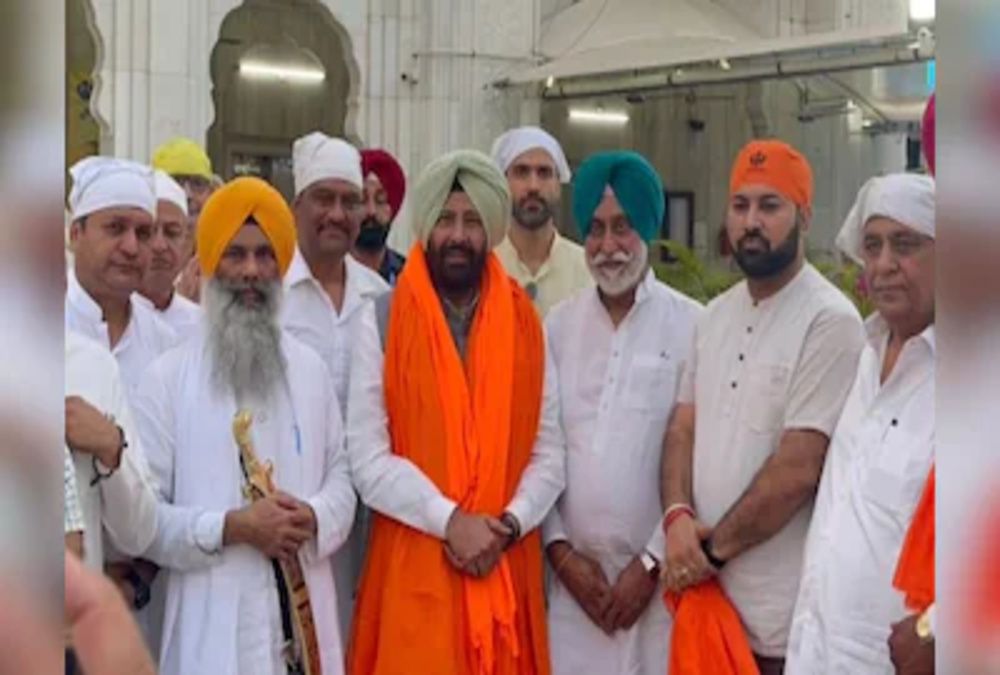
- BJP appoints Kewal Singh Dhillon as Punjab unit chief
- First Jat Sikh leader to head the party’s state organization
- Move seen as outreach to Punjab’s Sikh and rural electorate
- Dhillon faces challenge of expanding BJP’s presence ahead of 2027 Assembly polls
GG News Bureau
Chandigarh, 4th June: The Bharatiya Janata Party (BJP) has appointed Kewal Singh Dhillon as the president of its Punjab unit, marking the first time a Jat Sikh leader has been entrusted with the party’s top organizational post in the state.
The move is being viewed as a strategic attempt by the BJP to broaden its appeal among Punjab’s majority Sikh population and strengthen its presence in rural areas ahead of the 2027 Assembly elections.
Dhillon formally assumed charge in the presence of Haryana Chief Minister Nayab Singh Saini, BJP National General Secretary Tarun Chugh, Union Minister Ravneet Singh Bittu, former Punjab BJP presidents Sunil Jakhar and Ashwani Sharma, former Union Minister Preneet Kaur and other senior leaders.
Political observers see the appointment as a significant symbolic shift for a party that has traditionally been perceived as having a predominantly urban and Hindu support base in Punjab.
However, Dhillon takes charge at a time when the BJP continues to face challenges in expanding its influence in rural Punjab, particularly in the aftermath of the farmers’ agitation against the Centre’s now-repealed farm laws.
Many farmers in the state continue to view the party with skepticism, making rural outreach and confidence-building among agricultural communities one of the new state chief’s most immediate priorities.
Apart from electoral challenges, Dhillon is also expected to address concerns within sections of the party’s traditional leadership. Some senior BJP leaders are reportedly unhappy that a leader who joined the BJP from the Congress only a few years ago has been elevated to the state’s top organizational post.
Political speculation also intensified over the absence of former Punjab Chief Minister Captain Amarinder Singh from the ceremony. While Dhillon has often been seen as close to Amarinder Singh, the former Chief Minister recently stated that he had not met Dhillon since the latter joined the BJP.
Although Amarinder Singh skipped the event, his wife Preneet Kaur and daughter Jai Inder Kaur were present.
Senior BJP leaders dismissed suggestions of any internal rift. Union Minister Ravneet Singh Bittu said Amarinder Singh continues to guide the party despite not being actively involved in organizational events, while Tarun Chugh described him as a respected senior leader.
Despite limited electoral success in Punjab, the BJP’s vote share has steadily increased over the years. The party secured 8.7 per cent of the vote in the 2014 Lok Sabha elections, 9.56 per cent in 2019, 6.6 per cent in the 2022 Assembly elections and 18.56 per cent in the 2024 Lok Sabha polls.
Though it failed to win a Lok Sabha seat in Punjab in 2024, the BJP recorded a higher vote share than the Shiromani Akali Dal, a development viewed as a milestone in the state’s political landscape.
Earlier this year, Union Home Minister Amit Shah had expressed confidence about the BJP’s prospects in Punjab, pointing to the party’s growing vote share.
Addressing a rally in Moga in March, Shah said the BJP had secured around 19 per cent of the vote in the 2024 Lok Sabha elections and argued that in several states, including Odisha, Assam, Manipur, Tripura and Uttarakhand, the party eventually formed governments after reaching a similar level of support.
However, the BJP’s performance in recent local body elections highlighted the scale of the challenge ahead. The ruling Aam Aadmi Party won 958 of 1,977 wards across municipal corporations, municipal councils and nagar panchayats. Congress secured 397 wards, while the BJP won 172.
Political analysts believe that while the BJP’s vote share growth offers encouragement, translating that support into Assembly seats remains a far more difficult task.
For Dhillon, success will depend on his ability to expand the party’s rural footprint, unite different factions within the organization and convert growing voter support into electoral gains in the 2027 Punjab Assembly elections.
His appointment may be historic, but its political impact will ultimately be measured at the ballot box.
