
Language never an impediment for Progress : Vijay Kumar Gupta
Shri Vijay Kumar Gupta, the newly elected MLA of Assam, is a successful businessman and one of the most senior and experienced workers of the BJP. He has held important positions in the BJP Assam unit, including State General Secretary, Vice President, and long-time Core Committee member. Due to his natural, simple, and dynamic personality, he is recognized as an influential leader not only within the party but also in the political landscape of Assam.

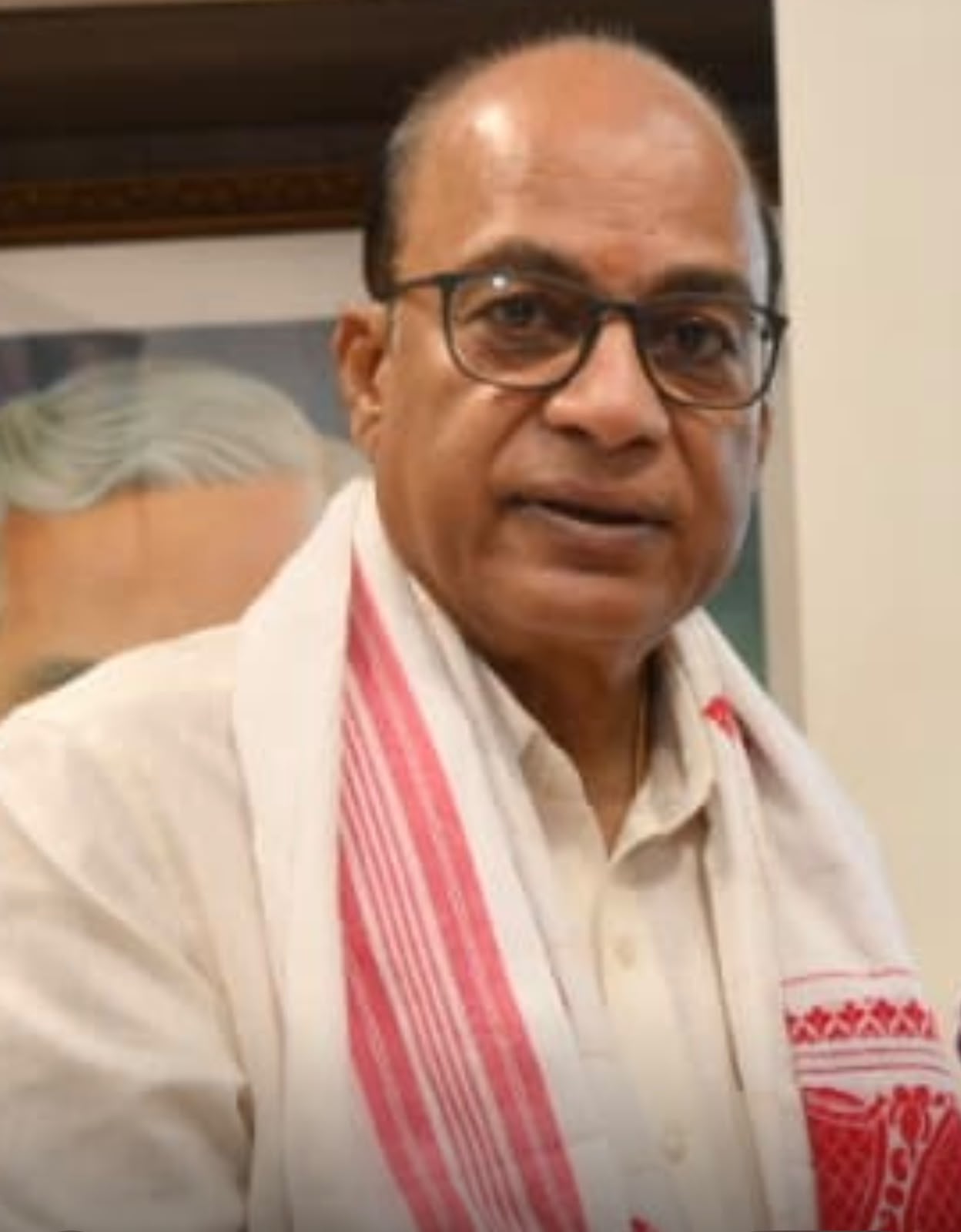
A special interview by Poonam Sharma, Managing Editor of Global Governance News and Samagra Bharat News Group, with the victorious MLA from Central Guwahati Assembly constituency, Honorable Shri Vijay Kumar Gupta, who has played a significant role for a long time in Assam’s social and political life—actively involved in all areas from addressing the problems of the business community to the Assam Movement and the RSS-
Q 1: Why and how did you enter politics?
Ans:“The 1990s were a decisive period in my political life. At that time, Assam’s social and political conditions were very challenging. On one side, separatist forces were influencing the state’s politics and society; on the other, the spirit of ‘One India, Best India’ faced serious challenges. I believed these forces were trying to alienate Assam from the national mainstream. Since my student days, I have been connected with the ideology of the Rashtriya Swayamsevak Sangh (RSS). During this period, I had the privilege of meeting great leaders like former Prime Minister Atal Bihari Vajpayee, Murli Manohar Joshi, and L.K. Advani when they visited Assam. At that time, these BJP leaders were not as popular in Assam as they are today. I was fortunate to host and interact with them. Their thoughts and BJP’s policies inspired me deeply, and I developed a strong conviction that BJP was the only party capable of addressing Assam’s problems, especially foreign infiltration, social instability, and national unity. BJP’s commitment to national interest, organizational discipline, and establishing a healthy socio-political order impressed me greatly. Inspired by these ideals, I joined BJP in 1990 and have since served the party and organization with full dedication, contributing to public and national welfare.”
Q 2: You started your political career with BJP as your inspiration. Were you also active in social work?
Ans:“Before entering politics, I was known as a social worker and businessman for about 35 years. I am a businessman myself and have held important positions in Assam’s commercial organizations. I served as President of the General Merchants Association (Wholesale) and Vice President of the Kamrup Chamber of Commerce. During my commercial and social life, I worked especially to address the problems of Assam’s business community. In the 1990s, Assam experienced severe conditions where outside traders faced discrimination and insecurity. There were incidents of violence, threats, and even murders against traders. In such difficult times, I protested through trade organizations, striving to create an environment of security and trust. I actively gathered public support, raised traders’ issues before the administration and society, and advocated for their rights and safety. Besides, I led several social service projects through trade groups. I believe the business community is the backbone of any state’s or country’s economy. Assam’s traders have significantly contributed to the state’s economic development. I often say, ‘Economy is the fifth pillar of democracy.’ Based on this belief, I continuously worked for addressing traders’ problems, protecting their interests, and strengthening economic activities. This experience later became the strong foundation of my political career.”
Q 3: You are one of the oldest workers in BJP. How much has BJP changed in the last 45 years?
Ans:“It is true that I consider myself one of the senior-most BJP workers in Assam. When I started organizational work in BJP, Assam’s politics mainly revolved around Congress and Asom Gana Parishad. The general perception was that BJP would never be able to form a government in Assam, so the party had few workers and a weak position. Though small in number,yet the workers were dedicated, committed to ideology, and had full faith in the party and leadership. They worked hard and persevered despite difficulties. I believed that this dedication and struggle was BJP’s greatest strength. With consistent effort, the party could be strengthened and attain an important position in Assam politics. This determination and organizational effort gradually led us to where BJP is today—the leading political force in the state.”“I would especially like to mention the BJP membership campaign started after 2014. After the 2014 Lok Sabha elections and during preparations for the 2016 Assembly elections, the party launched a large campaign to expand its grassroots organization. At that time, BJP in Assam had only about 250,000 members. I was entrusted with the responsibility of campaign coordinator, a trust placed in me by the National General Secretary. The goal was to increase membership from 250,000 to 2.5 million. This was a huge challenge, but under my leadership, workers ran extensive public outreach campaigns in every area of the state. The membership grew phenomenally, reaching around 2.5 million. This was not only an organizational success but also a sign of BJP’s growing public support and trust in Assam. This expansion laid a strong foundation for BJP’s political success. Later, as coordinator, I further increased the membership to 4.5 million, and today it has grown to 6.5 million.”
Q 4: To whom do you credit your victory in this election?
Ans:“I credit this election success entirely to my dedicated workers, whose loyalty and hard work are truly commendable. Next, I thank my leadership for their constant support at every step. During the campaign, respected leaders like Sri Amit Shah ji , Sri Nitin Gadkari ji , and Sri Sarbananda Sonowal came to support, and our honorable Chief Minister Shri Himanta Biswa Sarma ji promoted me personally through his social media. Their presence at rallies was very helpful. BJP’s state president, Mr. Dilip Saikia, also supported and encouraged me by attending my meetings, which boosted my morale. I believe first our workers, then our party successfully conveyed the right message to society.”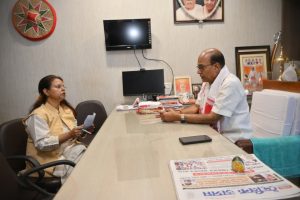
Q 5: Did being from a Hindi speaking background create any difficulty during the campaign? How did you overcome it?
Ans:“I firmly believe that language should never be a barrier to development work. While respecting my mother tongue, I never let language disputes disturb me. Language can never obstruct good work. Assam is my birthplace, and I played an important role during the Assam Movement. At that time, I was accepted by the society, and even today, people accepted me My constituency has three main linguistic groups—Bengali, Hindi, and Assamese speakers. All supported me equally and voted for my victory. About 90% of the votes I received came from these groups combined. It makes me proud that I was supported above linguistic differences.”
Q 6: What are the main problems in your Assembly constituency? Do you have any roadmap to solve them?
Ans:“My constituency has 15 wards, including 3 hilly wards—11, 12, 13, and 27—which remain underdeveloped . These areas lack , community facilities like auditoriums and enough religious places needed for social and cultural bonding. The biggest problems are lack of roads, water, and streetlights. The situation is so serious that children cannot attend school during the rainy season. These are not just problems but are linked to my people’s lives. I raised these issues prominently during my campaign and promised to prioritize the development of these hilly areas. I am working with full dedication to provide clean water, ensure children can attend school, build strong roads, and develop socio-cultural facilities. I believe real development is impossible without fulfilling these basic needs. I want to fight this battle not alone but with everyone for a bright future for all citizens.”
Q 7: The Bharalu river, sluice gates, and waterlogging during rains are major problems in your area. Do you have any plan for a permanent solution?
Ans:“The Bharalu river was once a clean, natural river but has now become a drain. It is surprising that many governments have come and gone without a permanent solution. This troubles me often. Bharalu connects with the Brahmaputra—when water is high in Bharalu, it flows into Brahmaputra, and vice versa. Attempts were made to control the flow, but the problem persists. A major issue is the lack of responsible citizenship and civic sense —people throw plastic, waste, and garbage into Bharalu, polluting it and turning it into a drain. I want to clean the river, fence it from both sides to prevent dumping, and if possible, construct a flyover over it. I will consult experts to find a lasting solution so the flow can be controlled and the river restored to cleanliness and safety. I will urge the government and engineering departments to focus on this critical issue. I will make every effort because I believe collective work will improve the lives of our people.”
Q 8: How do you see law and order in Guwahati? Especially, young people consuming drugs in deserted areas near Maligaon at night—is there any plan to address this?
Ans:“Soon after becoming MLA, I visited Pan Bazar police station to discuss the drug problem. The police in charge expressed deep concern, especially since our constituency faces this issue the most. There are drug dens at several places. A key reason is that this is a busy commercial area attracting many outsiders, making control difficult at times. The problem is linked to railway line slum areas where police cannot take action easily because the land belongs to the railways. I believe the solution requires coordinated action involving top railway officials and police to crack down on drug trade at these spots. Drug trade happens in slums near the railway, and tackling this is my top priority. Strengthening law and order is my main focus, and I am working hard to free our area from this grave problem.”
Q 9: Which social sector do you particularly like to work on?
Ans:“Youth. Developing young people’s personalities is crucial for a bright future of society. I want to connect with more youth, instill our values in them to build strong character. I want them to deeply believe in and be knowledgeable about our Vedic, ancient civilization that identifies our glorious history, so their personalities become strong and responsible. This is the foundation of a responsible and strong society.” ”Today’s youth, called Generation Z, may think differently and sometimes troll me during elections, but I believe proper dialogue can send them positive messages. When youth embrace their cultural and social values, they not only become good citizens but also guide society positively. Youth should gain Vedic knowledge along with modern education and values to set an example in life and society. I sincerely want our youth to walk this path and enrich themselves and their society.”
Q 10: What is your favorite ministry or department?
Ans:“I always remember the Bhagavad Gita verse—’You have the right to work only, but never to its fruits.’ My mindset is to work without worrying about results. Whether I become a minister or hold any other position, I believe everything happens by God’s will. I accept destiny and understand that everything is preordained. Our job is to exert full effort and honesty. I will faithfully perform whatever responsibility is assigned to me in the future. This is my belief and resolve.”
Q 11: Do you consider the victories in Assam and West Bengal as a victory of Hindutva or something else?
Ans:“In my view, the victories in Assam and West Bengal are not just state victories but wins for entire India, its people, and our civilization and culture. We will now be able to control the long border between India and Bangladesh effectively. There is still a part of a river area left in Assam, but controlling Bengal’s border has helped stop infiltration from Bangladesh into Assam and Tripura. I believe it is God’s grace that we can now stop infiltration from these three places. I do not want to talk about Hindu-Muslim politics. Everyone living in India is Hindu by nature, though their worship practices may differ. Our culture is essentially Hindu, and winning Bengal is a historic step to protect this culture. I am confident our government will now firmly unite West Bengal, Assam, and Tripura to stop infiltration and establish Hindutva.”
Q 12: What is your comment on the ‘opposition’ in Assam?
Ans:“The opposition’s role in Assam is quite pitiable. I consider myself politically enlightened and openly say that a strong opposition is essential in democracy. One-sided politics can never be the basis of healthy governance. We learn from the opposition; their questions help us improve. One-sided rule can breed arrogance, which is undesirable. Currently, Congress is in a very poor state in Assam and needs to work hard to improve. They need deep cultural and ideological reform. I believe this change alone can make them strong again and lead democracy in the right direction.”
