
Rs 10000 Cr ATF Price Stabilisation Fund Approved for Airlines
Move Aims to Shield Airlines from Fuel Price Volatility Amid West Asia Crisis

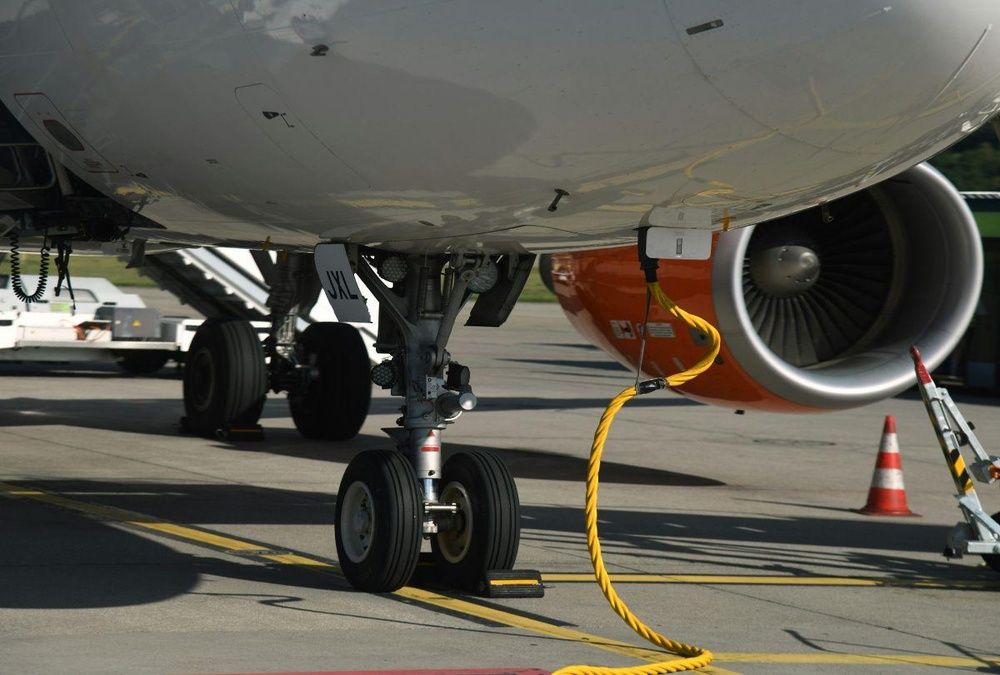
- Cabinet approves ₹10,000-crore ATF Price Stabilisation Fund
- Support to cover domestic and international operations of Indian airlines
- Fixed-price mechanism to reduce exposure to fuel price shocks
- Measure aimed at protecting connectivity and moderating airfare volatility
GG News Bureau
New Delhi, 4th June: The Union Cabinet, chaired by Prime Minister Narendra Modi, on Wednesday approved a one-time ₹10,000-crore Price Stabilisation Fund to support Scheduled Indian Airlines amid soaring Aviation Turbine Fuel (ATF) prices triggered by the ongoing West Asia crisis.
The scheme will provide budgetary support to Oil Marketing Companies (OMCs) through interest-free advances, enabling them to offer ATF price stabilisation support to Indian airlines for both domestic and international operations.
According to the government, the initiative is designed to provide stability and predictability in fuel costs, helping airlines better manage operations and finances during a period of exceptional fuel price volatility.
Under the approved mechanism, up to ₹10,000 crore will be provided as an interest-free advance to OMCs. The fund will compensate oil companies when international ATF prices exceed the benchmark level determined under the scheme.
The government has also incorporated a recovery mechanism. Once international fuel prices decline, the differential amount will be recovered from OMCs and returned to the Consolidated Fund of India until the entire support amount is fully settled.
The scheme will be available to all willing Scheduled Indian carriers and will cover both domestic and international flight operations. A fixed-price arrangement has been introduced to reduce airlines’ exposure to sudden fuel price spikes.
As part of the arrangement, participating airlines will procure ATF exclusively from OMCs for up to three years through agreements signed with the Ministry of Civil Aviation and the Ministry of Petroleum and Natural Gas. The arrangement will be subject to annual review or continue until the advance amount is fully recovered, whichever is earlier.
A Monitoring Committee comprising representatives from the Ministries of Civil Aviation and Petroleum and Natural Gas, along with the Department of Expenditure, will oversee implementation, claim verification and settlement processes. All claims and recoveries will be subject to audit.
The support mechanism will remain in force for 36 months, with provision for annual review and possible extension if required.
The Cabinet noted that the aviation sector has been severely affected by unprecedented fluctuations in global fuel prices. International ATF prices have surged from ₹60.50 per litre in March 2026 to nearly ₹142 per litre in May 2026 due to the West Asia crisis. ATF currently accounts for nearly 40 per cent of airline operating costs and can rise to as much as 60 per cent during periods of extreme volatility.
The situation has been compounded by the closure of Pakistan’s airspace for Indian carriers, forcing longer flight routes to Europe, North America and Central Asia, resulting in higher fuel consumption and operational expenses.
According to the government, the measure will help maintain domestic and international air connectivity, support services to remote and regional destinations, and reduce the pass-through of fuel price shocks to passengers.
Officials said the initiative is expected to benefit not only airlines but also related sectors such as airports, ground handling services, maintenance and repair operations, tourism, hospitality, logistics and trade, while ensuring optimal utilisation of airport infrastructure developed across the country, including airports operationalised under the UDAN scheme.
