
Scientists Monitor Potential Strong El Nino in 2026-27
Climate models indicate powerful Pacific warming that could impact monsoons and global weather

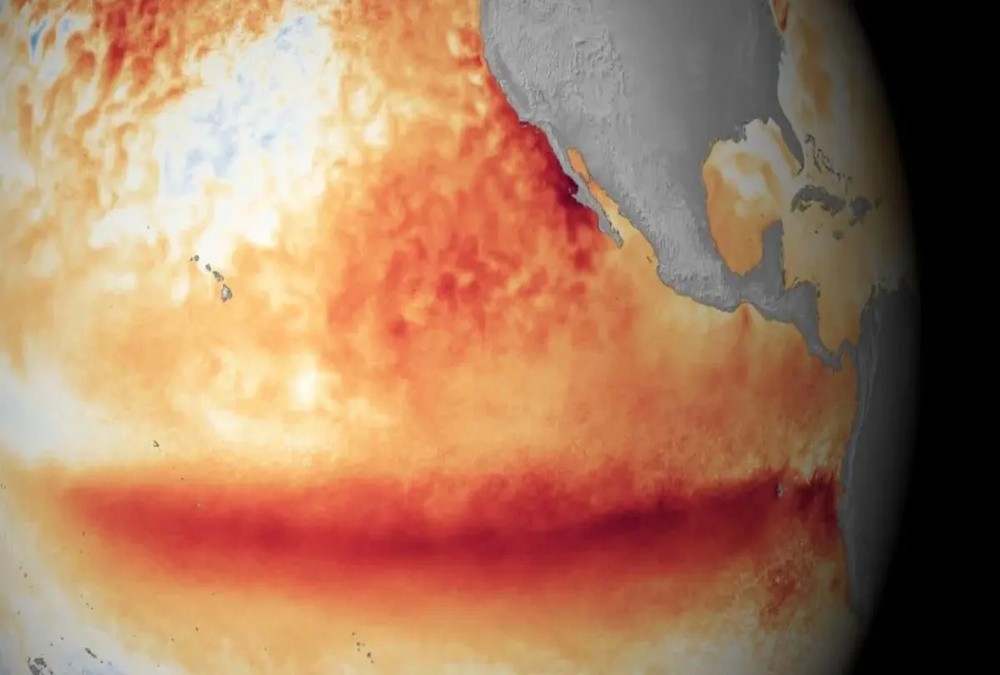
- NMME models indicate a possible strong El Nino developing later in 2026.
- Scientists caution that forecasts remain uncertain but warrant close monitoring.
- A powerful El Nino could affect monsoons, heatwaves, droughts and marine ecosystems.
- Experts say rainfall distribution will be crucial for India’s agricultural outcomes.
GG News Bureau
New Delhi, 18th June: Climate scientists and weather forecasters are closely monitoring the tropical Pacific after the latest projections from the North American Multi-Model Ensemble (NMME) indicated the possibility of a powerful El Nino developing later this year and continuing into 2027, with potential impacts on weather patterns across India and the world.
The NMME, which combines multiple climate models, projects sea surface temperature anomalies of more than 2 degrees Celsius in the central and eastern equatorial Pacific during the November-December-January 2027 period. Some model simulations indicate warming exceeding 5 degrees Celsius in certain areas, which, if realised, could place the event among the strongest El Nino episodes recorded.
Experts, however, stressed that the current projections are an early signal and not a confirmed forecast. Professor Anjal Prakash of FLAME University and an IPCC author said that while multiple climate models showing a consistent warming trend increase confidence in a possible El Nino development, long-range predictions remain uncertain due to complex ocean-atmosphere interactions.
Earth system scientist Raghu Murtugudde said that a super El Nino cannot be declared at this stage, but convergence of multiple climate models towards a strong warming scenario is a development that requires close observation.
Meteorologists are also observing strengthening Pacific warming. Mahesh Palawat, Vice President of Meteorology and Climate Change at Skymet Weather, said sea surface temperatures in parts of the eastern and central Pacific are already around 1.5 degrees Celsius above normal, approaching conditions associated with a strong El Nino.
International forecasting agencies, including the US National Oceanic and Atmospheric Administration (NOAA), are also monitoring the increasing likelihood of El Nino conditions in the tropical Pacific.
Scientists noted that a strong El Nino can influence global weather by increasing drought and wildfire risks in Australia and Southeast Asia, causing heavier rainfall in western South America, and contributing to marine heatwaves, coral bleaching and disruptions to fisheries.
For India, a strong El Nino has historically been linked to weaker monsoons, prolonged dry spells and higher heat stress, though experts said the relationship is not always direct. They added that the timing and geographical distribution of rainfall are often more important than the overall seasonal rainfall total.
Climate scientist Roxy Mathew Koll of the Indian Institute of Tropical Meteorology said that El Nino events now interact with a warmer climate system, increasing the risks of extreme rainfall, heatwaves and marine heat stress.
Experts expect the developing El Nino, if it materialises, to strengthen through late 2026 and potentially peak around January-February 2027, with its effects possibly extending into the following months as stored ocean heat continues to influence global temperatures.
While scientists emphasise that conditions can change significantly before 2027, the latest climate model guidance suggests that the Pacific may be entering a period of heightened climate variability with possible consequences for agriculture, water resources, food security and extreme weather across the globe.
