
SC Ends 70-Year Land Dispute, Upholds 1957 Sale Deed
Top court overturns High Court ruling, says registered conveyance cannot be rejected over minor discrepancies

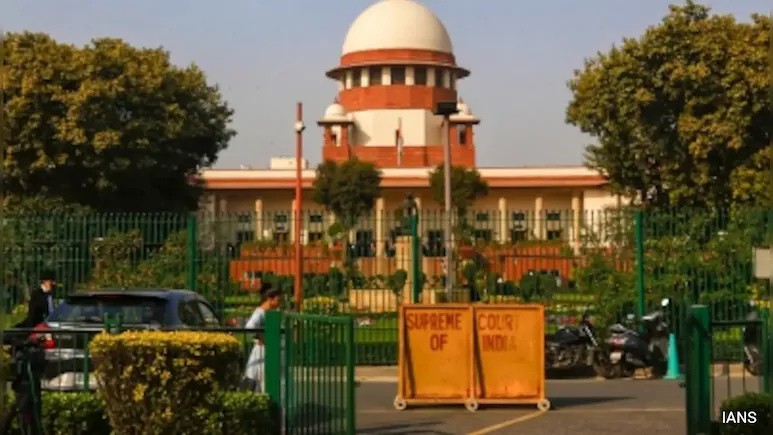
- Supreme Court settled a seven-decade-old land dispute in Uttarakhand.
- Court upheld the validity of a registered 1957 sale deed.
- It ruled minor discrepancies cannot invalidate a registered document.
- The judgment ended litigation spanning four generations of a family.
GG News Bureau
New Delhi, 27th June: The Supreme Court has brought an end to a nearly 70-year-old land dispute by upholding the validity of a registered sale deed executed in 1957, concluding litigation that spanned four generations of a family.
A Bench of Justices Prashant Kumar Mishra and N.V. Anjaria set aside the judgments of the Uttarakhand High Court and consolidation authorities, ruling that a registered sale deed cannot be declared invalid on the basis of minor discrepancies in evidence.
The dispute involved 15.5 bighas of agricultural land in Haridwar district, purchased through a registered sale deed dated June 4, 1957. The appellants claimed continuous possession of the land and secured its mutation in 1984 before seeking recognition of their rights during consolidation proceedings.
However, the claim was rejected by consolidation authorities in 1999, who held that the execution of the sale deed had not been properly proved and that it violated provisions of the Uttar Pradesh Zamindari Abolition and Land Reforms Act. The High Court upheld those findings in 2017.
Reversing the concurrent decisions, the Supreme Court observed that the respondents had never alleged forgery, fraud, coercion or impersonation in the execution of the sale deed. The Bench held that peripheral inconsistencies relating to an attesting witness could not override the legal presumption attached to a registered conveyance.
The court also noted that the appellants’ claim of possession had remained substantially unchallenged and concluded that the findings of the authorities and the High Court were legally unsustainable.
With the ruling, the apex court finally resolved one of the country’s longest-running property disputes, bringing to a close a legal battle that began in 1957.
