
Haryana, Rajasthan Ink Yamuna Water Pact to End 30-Yr Dispute
Agreement signed in Amit Shah's presence to supply drinking water and boost groundwater recharge

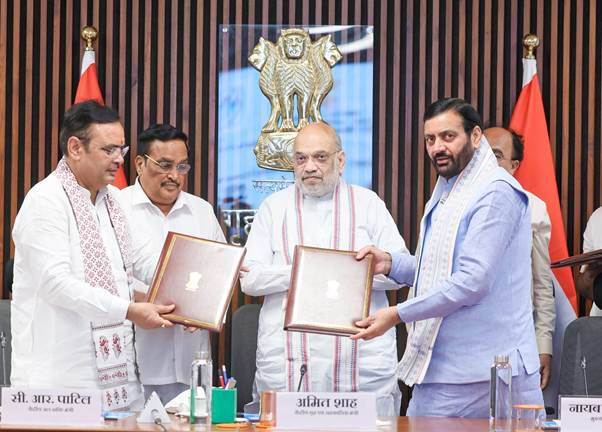
- Haryana and Rajasthan signed the Yamuna Water Project agreement in New Delhi.
- Pact resolves a nearly three-decade-old water-sharing issue between the two states.
- Project will supply drinking water to key districts in Rajasthan and Haryana.
- Centre says the agreement reflects cooperative federalism and dialogue-based dispute resolution.
GG News Bureau
New Delhi, 29th June: Haryana and Rajasthan on Monday signed a landmark agreement for the construction and implementation of the Yamuna Water Project, ending a nearly three-decade-old water-sharing dispute between the two states.
The agreement was signed in the presence of Union Home Minister Amit Shah, Rajasthan Chief Minister Bhajan Lal Sharma, Haryana Chief Minister Nayab Singh Saini, Union Jal Shakti Minister C.R. Patil, and senior officials from the Centre and the two state governments.
Describing the pact as an example of Prime Minister Narendra Modi’s vision of “Solution through Dialogue” and cooperative federalism, Shah said the agreement would ensure the supply of drinking water to Sikar, Churu and Jhunjhunu districts in Rajasthan and Bhiwani and Fatehabad in Haryana.
Under the project, around 580 million cubic metres (MCM) of water will be conveyed from the Western Yamuna Canal to Rajasthan through three underground pipelines between July and October. The project will enable Rajasthan to utilise its allocated share of Yamuna waters under the 1994 Upper Yamuna Basin water-sharing agreement.
Shah said the agreement comprehensively addresses water allocation, cost-sharing, maintenance, monitoring, transparency and dispute resolution, creating a long-term framework for smooth implementation.
He added that rainwater, which previously went unutilised, would now provide drinking water to millions while also being stored in large ponds to help recharge groundwater levels in water-scarce regions.
The Centre said the project is expected to improve drinking water availability, support socio-economic development in Rajasthan’s arid and semi-arid regions, and strengthen cooperation between the Centre and participating states for timely implementation.
