
Schools Must Report Child Abuse Complaints Immediately: SC
Supreme Court says private inquiry cannot replace mandatory reporting under POCSO Act

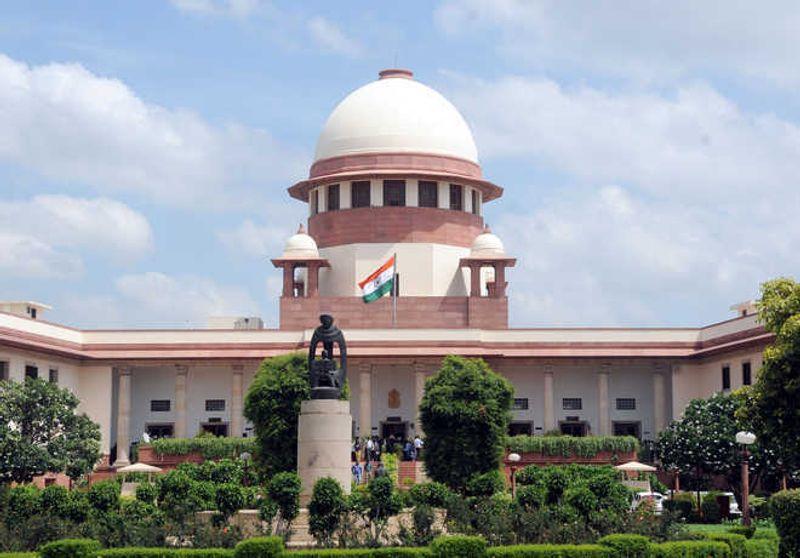
- Supreme Court restores criminal proceedings against Assam school headmistress.
- Court says direct complaint from a child triggers mandatory reporting under POCSO.
- Private verification before informing police held impermissible.
- Top court says prompt reporting is essential to protect children and preserve evidence.
GG News Bureau
New Delhi, 10th July: The Supreme Court has ruled that any person who receives a direct complaint of sexual assault from a child under the Protection of Children from Sexual Offences (POCSO) Act is legally bound to report it to the police and cannot substitute that obligation with a private inquiry.
A Bench comprising Justices Manoj Misra and K.V. Viswanathan restored criminal proceedings against the headmistress of a school in Guwahati, Assam, setting aside the orders of the trial court and the Gauhati High Court that had discharged her from prosecution.
The case relates to an alleged sexual assault complaint made by an eight-year-old student against a senior student. According to the prosecution, the child informed her elder sister, the school’s Head Girl and later the headmistress about the incident.
Instead of reporting the complaint to the police, as required under Section 19 of the POCSO Act, the headmistress allegedly conducted her own verification, examined the child, questioned the accused student and concluded that no offence had occurred. She is also accused of asking students not to disclose the incident.
The Supreme Court held that such a course of action is not permitted under the law.
The Bench observed that the expression “has knowledge that such an offence has been committed” under Section 19(1) of the POCSO Act includes knowledge acquired through credible information received directly from the child victim.
Rejecting the defence, the court said the Act does not permit anyone to determine the truth of the allegations before reporting them to the authorities. It held that any investigation into whether an offence actually occurred must begin only after the matter has been reported to the police.
The court noted that allowing private inquiries before reporting could result in the disappearance of crucial evidence, delay investigations and undermine the protection intended under the POCSO Act.
The Bench also held that the lower courts had erred by effectively conducting a “mini-trial” while considering the discharge application instead of examining whether the prosecution had established a prima facie case.
While restoring proceedings against the headmistress, the Supreme Court upheld the discharge of the principal, teachers and hostel warden, observing that there was no material to show they had received direct information about the alleged offence from the victim.
The court further clarified that the victim’s sister, her friend and the school’s Head Girl, all minors at the relevant time, could not be prosecuted for non-reporting, as Section 21(3) of the POCSO Act exempts children from criminal liability for failing to report such offences.
Under Section 21 of the POCSO Act, failure to report an offence as mandated under Section 19 is punishable with imprisonment of up to six months, a fine, or both. The appeal filed by the victim’s mother was partly allowed.
