
Govt Expands FTAs to Diversify Exports Amid Global Uncertainty
Centre strengthens market access, boosts e-commerce exports and unveils measures to support MSMEs and exporters

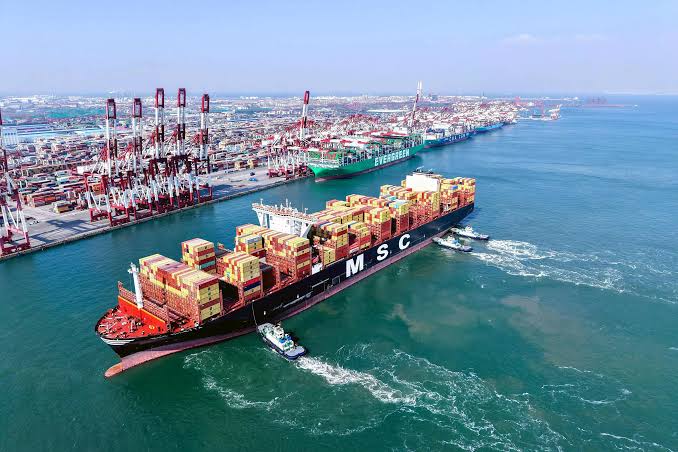
- Government expands Free Trade Agreements to diversify export markets.
- Export Promotion Mission and E-Commerce Export Hubs launched to boost exports.
- Logistics and compliance reforms introduced to support MSMEs.
- Centre pursuing new trade deals with major economies to improve market access.
GG News Bureau
New Delhi, 21st July: The Centre has stepped up efforts to diversify India’s export markets by expanding its network of Free Trade Agreements (FTAs), strengthening export promotion initiatives and introducing reforms to boost cross-border e-commerce, particularly for MSMEs, startups and small exporters.
Minister of State for Commerce and Industry Jitin Prasada, in a written reply in the Lok Sabha on Tuesday, said the government has adopted a multi-pronged strategy to help exporters navigate evolving geopolitical and global economic challenges.
The government is pursuing new FTAs and Comprehensive Economic Partnership/Cooperation Agreements (CEPAs/CECAs) with major economies while promoting exports through Indian missions abroad, Export Promotion Councils, industry bodies and the Districts as Export Hubs (DEH) initiative.
According to the ministry, FTAs are aimed at expanding bilateral trade, improving market access, attracting investment and creating employment, particularly in labour-intensive sectors such as textiles, apparel and leather goods.
The agreements also include provisions to address technical barriers to trade, improve transparency and tackle non-tariff barriers (NTBs) through regular consultations and institutional mechanisms with partner countries.
To strengthen exports, the government launched the ₹25,060-crore Export Promotion Mission (EPM) in 2025 for the period 2025-26 to 2030-31. The programme comprises two components—Niryat Prothsahan, which focuses on export finance and credit support, and Niryat Disha, which supports quality compliance, branding, logistics, warehousing and market intelligence.
The Centre is also implementing the E-Commerce Export Hub (ECEH) initiative on a pilot basis to create an integrated ecosystem for cross-border e-commerce by streamlining logistics, customs clearances and export-related services.
Several regulatory reforms have been introduced to simplify exports. The Reserve Bank of India has eased export reconciliation requirements for shipments valued up to ₹10 lakh, while the government has removed the per-consignment value limit for courier exports and simplified procedures for the re-import of returned goods in cross-border e-commerce.
The government said initiatives such as the PM Gati Shakti National Master Plan, the Refund of Duties and Taxes on Exported Products (RoDTEP) scheme and 65 Export Facilitation Centres established by the Ministry of MSME are helping improve logistics, reduce export costs and support small businesses in accessing international markets.
India has signed several major trade agreements in recent years, including with the UAE, Australia, EFTA, Oman and the United Kingdom, while the India-New Zealand FTA is under ratification. The government is also negotiating trade agreements with partners including the European Union, Canada, Israel, Peru, Chile, Maldives and the Eurasian Economic Union, among others, to further expand India’s global trade footprint.
