
NCPEDP-Mphasis Universal Design Awards 2026 Honour Champions of Accessibility
Fourteen individuals and organisations recognised for advancing universal design and building a more inclusive India

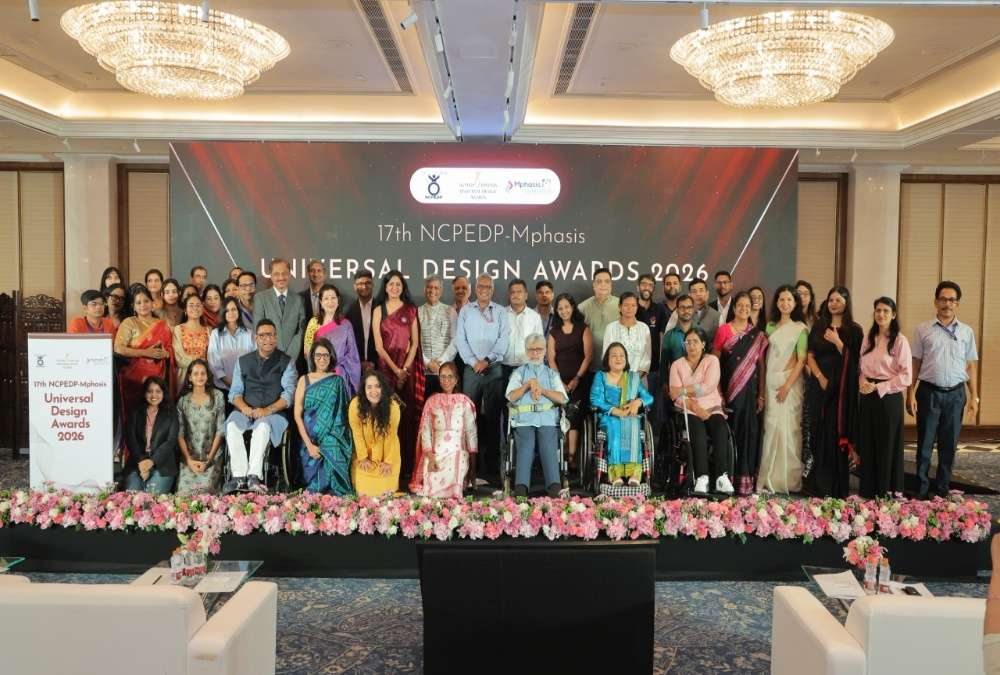
- Fourteen accessibility champions honoured at the 17th NCPEDP-Mphasis Universal Design Awards 2026.
- STPI Director General Arvind Kumar attended the awards ceremony in New Delhi.
- Winners recognised across four categories, including public policy, organisations and professionals.
- Speakers emphasised accessibility as a fundamental principle of innovation and inclusive development.
GG News Bureau
New Delhi, 14th Aug: Fourteen individuals and organisations committed to advancing accessibility, inclusion and universal design were honoured at the 17th NCPEDP-Mphasis Universal Design Awards 2026, held at Hotel Taj Mahal in New Delhi on Friday.
The awards, instituted in 2010 by the National Centre for Promotion of Employment for Disabled People (NCPEDP) and Mphasis, recognise outstanding efforts to integrate accessibility into the design of products, services, workplaces and public policies, making inclusion a core principle rather than an afterthought.
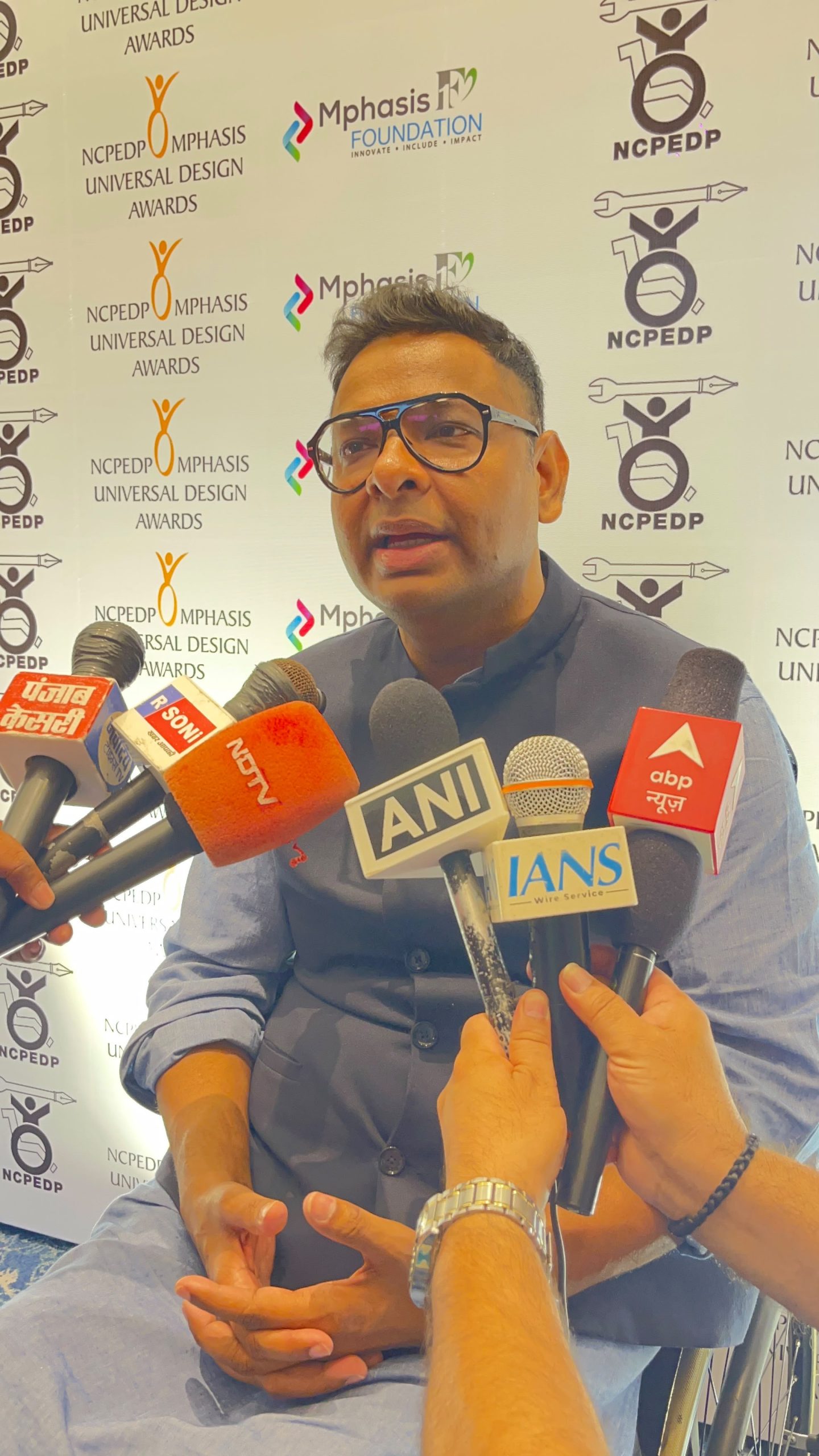
The ceremony was attended by Shri Arvind Kumar, Director General of the Software Technology Parks of India (STPI) under the Ministry of Electronics and Information Technology, along with leaders from industry, technology, public policy and the disability rights sector.
This year’s awards were presented across four categories—Role Model Persons with Disabilities, Role Model Working Professionals, Role Model Companies & Organisations, and the Javed Abidi Public Policy Award.
Among those honoured were Nilesh Singit, Jayna Kothari, Jai Vakeel Foundation and Dr. Sruti Mohapatra. Other awardees included Unilever PLC, NCERT and Gabify, recognising contributions towards accessible workplaces, education, technology and public policy.
Addressing the gathering, Arman Ali, Executive Director of NCPEDP, said that when the awards were launched 17 years ago, universal design was still an emerging concept in India. Today, he noted, accessibility has evolved into both a legal right and a shared responsibility.
He stressed that accessibility should be integrated from the earliest stages of planning, including procurement processes, infrastructure development, product design, public services and technological innovation.
Deepa Nagraj, Senior Vice President and Global Head – ESG, Sparkle Innovation Ecosystem and Communications at Mphasis, highlighted the growing role of artificial intelligence, digital public infrastructure and evolving legal frameworks in making inclusive design scalable.
She said technology delivers its true value only when it reaches every section of society, adding that accessibility should be viewed as a design opportunity rather than an additional requirement.
During a fireside discussion, Arvind Kumar emphasised the importance of innovative financing models for assistive technology. He said blended finance and new funding mechanisms can help transform technological innovations into practical solutions that improve accessibility for persons with disabilities.
The programme also featured a keynote address and discussions reflecting on the 17-year journey of the Universal Design Awards. Participants highlighted significant milestones, including the establishment of India’s first Assistive Technology Hub in 2022 and the Supreme Court’s 2025 recognition of accessibility as a fundamental right for persons with disabilities.
Organisers said that as India’s digital economy and technology ecosystem continue to expand, universal design must become central to innovation, ensuring equal access to education, employment, public services and technology for every citizen.
Concluding the event, speakers reiterated that accessibility is not merely an additional feature but the foundation for building a more inclusive and equitable India.
