

By Anjali Sharma
WASHINGTON – Canada said on Wednesday that it will impose tariffs on C$27.6 billion worth of US goods after suspending trade negotiations with the United States, opened a sharper phase in its trade confrontation with President Donald Trump.
Ottawa’s new C$7.5 billion package includes liquidity assistance, worker training, employment insurance measures and support for businesses seeking new markets.
The counter-tariffs of 15, 25, and 50 per cent will take effect on September 8.
Ottawa also announced C$7.5 billion in new and expanded support for workers and businesses exposed to the dispute.
The Canadian government said it walked away from the negotiations after Washington proposed terms that demanded too much while offering too little in return.
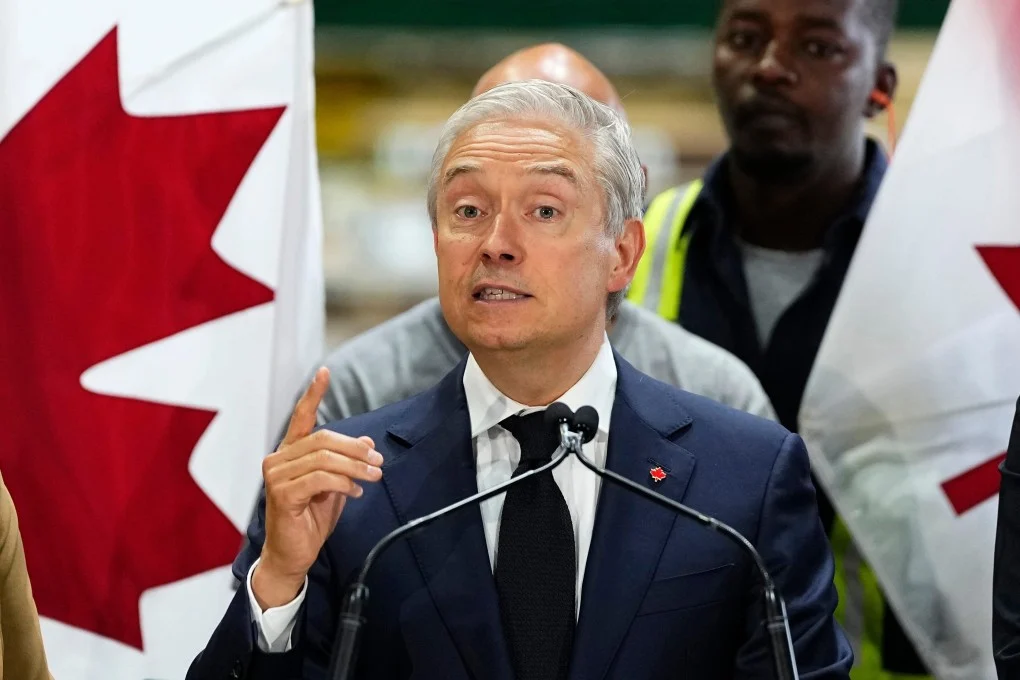
“When the United States asked too much and offered too little, we chose to stand up for Canadians,” Finance and National Revenue Minister François-Philippe Champagne said.
According to the Department of Finance Canada’s response will match the latest American tariffs “dollar for dollar, rate for rate”,.
The measures follow Washington’s decision to impose a 50 per cent tariff on C$27.6 billion of Canadian goods from August 22.
“Our dollar-for-dollar, rate-for-rate counter-tariffs as well as a multi-billion dollar support package will protect workers, farmers, families, and businesses,” Champagne said.
The Canadian tariffs will cover products affected by US Section 338 and Section 232 measures. Each product will face a rate corresponding to the tariff imposed by Washington.
Steel, dairy products, appliances, agricultural equipment, pulp and paper, and electronics are among the sectors covered.
Steel and aluminium products already carrying a 25 per cent Canadian counter-tariff will be moved to the 50 per cent bracket. Furniture, clothing and apparel will also face the top rate.
Appliances, dairy products, fish and seafood, and some steel and aluminium derivatives will attract tariffs of 25 per cent.
The existing Canadian counter-tariffs, including those covering automobiles, will remain in place.
Ottawa will continue to consider requests for exceptional relief through its tariff-remission framework.
The new support package includes C$1.5 billion for the Regional Tariff Response Initiative and a C$500 million liquidity facility under the Business Development Bank of Canada’s Pivot to Grow programme.
Ottawa will also provide C$2 billion through the Canada Strong Diversification Fund.
Media reported that C$3.5 billion has been allocated for rapid assistance to workers and employers.
The measures include temporary Employment Insurance flexibilities, workplace training and improvements to the government’s Job Bank.
A new Worker Retention and Retraining Program is intended to help affected employers retain staff.
The C$7.5 billion package builds on nearly C$25 billion in support announced since the earlier US tariffs took effect.
The White House accused Ottawa of choosing retaliation over negotiation and declared that Trump was ending Canada’s “free ride”.
“Canada has been ripping off the United States for decades — and President Donald J. Trump is done letting them get away with it,” it said.
The White House alleged that Canadian restrictions covering vehicles, alcohol and dairy products had cost American businesses billions of dollars in sales.
It claimed that US vehicle exports to Canada had fallen by 22 per cent over the previous year, while American alcohol exports had dropped by 81 per cent.
The administration also pointed to the disparity in the size of the two economies.
“The United States has the clear leverage,” the White House said.
It went further in describing Canada’s reliance on its southern neighbour.
“Without the United States, Canada could not survive,” it said.
Trump has announced that tariffs on Canadian cars, trucks, automotive parts and steel will rise to 50 per cent from January 1, 2027.
“Build in the U.S. and there are ZERO TARIFFS. Canada will be treated like a State no longer!” he wrote on Truth Social.
Trump also described Canada as one of the most difficult countries for Washington to deal with on trade.
“They feel entitled, and yet, WE DON’T NEED CANADA, THEY NEED US!” he said.
