
Rahul Gandhi’s Lies: The Country Suffers, the Party Remains Unperturbed, and the Government Stays Alert

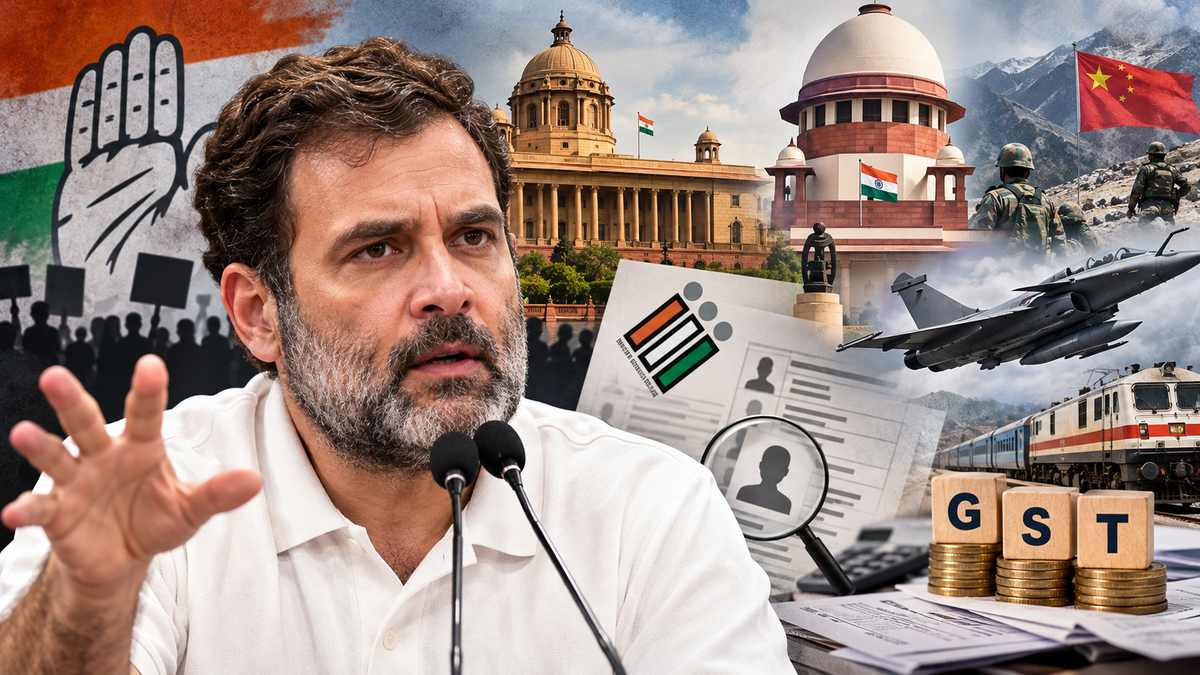
Congress leader Rahul Gandhi, the Leader of the Opposition in the Lok Sabha, has repeatedly come under fire for statements described by his political opponents as false or misleading. These controversies have troubled the country’s political discourse and left the Congress facing criticism on multiple fronts. Today, the party appears to be caught between a rock and a hard place.
Since 2014, the Congress has increasingly struggled to present a clear political vision. It appears to be drifting away from the general public, while its support base has declined. The party has rarely faced the degree of political deterioration it is experiencing today. Rahul Gandhi’s leadership style, his stubborn approach to political disagreements and the repeated controversies surrounding his public statements have contributed to the difficulties confronting the Congress. Even politically aware young people have begun questioning the credibility of his claims.
The Congress’s reported poor performance in the Lok Sabha and Assembly by-elections whose results were announced on October 9, 2026, has added to these concerns. Four Lok Sabha and Assembly seats were reportedly involved in by-elections in Assam, West Bengal and Puducherry.
As the number of controversies surrounding Rahul Gandhi’s statements grows, his political credibility appears to be under increasing pressure. The consequences are being felt by the Congress as well. While the opposition party struggles to defend its position, the BJP and its allies have found opportunities to strengthen their political arguments against it.
Over the past 12 years, Rahul Gandhi has repeatedly made contentious statements and raised serious allegations against the government. The BJP has countered many of these claims by presenting its own interpretation of the facts. In certain cases, Rahul Gandhi has also had to apologise or express regret before the courts. These episodes have raised questions about the importance of accuracy and responsibility in political communication.
The Congress, however, appears to be continuing with its familiar pattern of confrontation. It has levelled allegations against prominent figures, including Rashtriya Swayamsevak Sangh’s Sarsanghchalak Dr Mohan Rao Bhagwat, Prime Minister Narendra Bhai Modi, Union Home Minister Amit Shah and Chief Election Commissioner Gyanesh Kumar. When serious accusations are made without conclusive evidence, they risk undermining public confidence in political debate. The Congress must recognise that allegations alone cannot establish wrongdoing.
The controversies surrounding Rahul Gandhi over the years offer an opportunity to examine the claims, disputes and legal proceedings that have shaped his political career since 2014.
Rahul Gandhi’s Major Controversies and Apologies: From 2014 to the Present
- Rashtrapati Bhavan Controversy — October 9, 2026-:
On October 9, 2026, Rahul Gandhi reportedly made another controversial statement following a meeting at Rashtrapati Bhavan. The controversy threatened to introduce a new dimension to national politics by bringing President Droupadi Murmu into a partisan dispute.
I have been reporting on Presidents & Rashtrapati Bhavan’s affairs since 1991 and continue to follow its functioning. The President’s office normally functions according to established protocols, and official interactions are governed by constitutional conventions and institutional procedures. During meetings with political parties or delegations, the President may listen to representations, indicate that a matter will be examined or request further information. Such responses do not necessarily mean that the President has accepted the delegation’s claims or endorsed its demands.
During the reported meeting, the President asked the delegation to provide evidence supporting its allegations of vote theft. Rahul Gandhi and his fellow opposition leaders reportedly did not provide the requested evidence during the meeting.
The President’s indication that she would see the matter could reasonably mean that the issue might be examined. However, Rahul Gandhi reportedly claimed that the President appeared to agree with all the delegation’s demands, acknowledged that vote theft had occurred and promised to take action.
This is a serious allegation concerning what transpired during a meeting with the country’s constitutional head. The President’s position cannot be represented as an endorsement of political claims without clear evidence. If she merely indicated that she would consider the matter, portraying that response as confirmation of vote theft would be misleading.
Trinamool Congress leader Mamata Banerjee reportedly adopted a more measured approach with protocol during the same episode,as she is more matured leader than Rahul Gandhi.Rahul, by contrast, risked turning a meeting with the President into a political controversy. Misrepresenting the President’s position would be an affront not only to the dignity of the office but also to the constitutional conventions that protect its impartiality.It’s also matter of privelege against Rahul Gandhi to misquote President of India for his vested interests.
Has political confrontation become so important to Rahul Gandhi that even the words of the President must be drawn into partisan battles?Its a matter of great concern.
- Allegations About the Electoral Process and Form 6-:
Rahul Gandhi alleged on social media that Election Commission of India had made changes to Form 6, the voter-registration form, in an “illegal and unilateral” manner. He also alleged that the Chief Election Commissioner was taking decisions within the Election Commission on his own.
The Election Commission of India reportedly rejected these allegations as misleading. It clarified that the instructions concerning Form 6 in connection with the Special Intensive Revision (SIR) exercise in Bihar had been issued through collective decision-making. The article also refers to a Supreme Court judgment dated May 27, 2026, which reportedly upheld the relevant instructions.
The controversy raises an important question: should the functioning of a constitutional institution be challenged through sweeping allegations without first establishing the facts? The Election Commission must remain accountable and open to scrutiny, but criticism of its decisions must be supported by evidence. Disagreement with an electoral procedure is not, by itself, proof of illegality or unilateral action.
- The Claim of 13.27 Crore Stolen Votes-:
The claim that 13.27 crore votes have been stolen is another contentious issue. The figures cited in this debate concern voters reportedly identified during electoral-roll verification for various reasons. These categories must not automatically be equated with votes proven to have been stolen.
The figures cited are as follows:
- 2.77 crore voters: Reportedly deceased.
- 7.91 crore voters: Reportedly shifted from their previous locations.
- 1.01 crore voters: Reportedly identified as duplicates.
- 1.48 crore voters: Whose addresses reportedly could not be traced or established.
Rest more others ,,
These figures relate to several states, including states governed by the Congress as well as states governed by the BJP and the NDA. The presence of such figures across states with different political administrations raises questions about the claim that the exercise was designed exclusively to harm the Congress.
Karnataka, Telangana, Tamil Nadu, Punjab and Kerala are among the states identified in the article in connection with the SIR exercise and opposition-ruled governments.
The Congress must explain precisely how the figures establish that votes were stolen. The identification of deceased voters, duplicate entries, shifted voters or untraceable addresses is not the same as proof that votes were unlawfully removed or that an election result was manipulated. These are distinct questions requiring separate evidence.
If electoral fraud has occurred, it must be investigated. But figures concerning discrepancies in electoral rolls cannot automatically be presented as proof of mass vote theft. Such claims demand transparent data, a clear methodology and evidence that withstands independent scrutiny.
- ‘Students’ Ki Goonj’ and the Digital Fact-Checking Platform, 2026-:
At various events associated with ‘Students’ Ki Goonj’ and other public programmes, Rahul Gandhi reportedly presented several statistics concerning young people, employment and social crimes.
In August 2026, a digital fact-checking platform called Jhooth Ki Goonj, described as independent and driven by netizens, reportedly examined 40 major claims made by Rahul Gandhi. After comparing them with official government data and more than 134 credible sources, the platform reportedly classified 29 claims as false or misleading.
These findings, if supported by the platform’s published evidence and methodology, raise serious questions about the accuracy of the figures presented in political speeches. Employment, youth welfare and social crime are important public issues. They deserve serious discussion based on reliable data rather than statistics that cannot be independently verified.
The credibility of political leaders depends on their willingness to distinguish between verified facts, estimates and allegations. When figures are used to influence public opinion, accuracy is not optional.
- Alleged Falsehoods Concerning the Armed Forces and National Security-:
Rahul Gandhi has made serious allegations against the government in Parliament and at public events concerning border disputes and the strategic preparedness of the armed forces. In some instances, he reportedly referred to an unpublished memoir attributed to former Army chief General M. M. Naravane.
The article states that General Naravane and the Ministry of Defence rejected certain strategic claims made during the political debate. Critics and national-security experts also questioned Rahul Gandhi’s reliance on information they considered unverified, describing his approach as political theatre rather than constructive democratic scrutiny.
National security is too important to become a contest of unsubstantiated assertions. The government must answer legitimate questions about border security and military preparedness, and the opposition must be free to scrutinise its decisions. But claims concerning military operations, strategic assessments and territorial security must be handled with particular care.
The credibility of Parliament depends on members presenting information responsibly. When a claim is disputed, the proper course is to establish what the available records show, rather than treating political rhetoric as conclusive evidence.
- Pawan Khera and the Assam Controversy, 2026-:
Congress spokesperson Pawan Khera made serious allegations against Riniki Bhuyan Sarma, the wife of Assam Chief Minister Himanta Biswa Sarma, in connection with the April 2026 election period in Assam.
The allegations reportedly concerned properties in Dubai, a company in Wyoming, passport-related claims, assets allegedly worth ₹52,000 crore and questions about the spelling of the surname Sarma, including the distinction between “Sarma” and “SHARMA”.
Riniki Bhuyan Sarma reportedly responded to the allegations individually and challenged them in court. Pawan Khera subsequently sought anticipatory bail.
The episode became another flashpoint in the political confrontation between the Congress and the Assam government. Serious allegations concerning property, passports and financial assets can damage reputations, particularly when circulated widely. They must therefore be backed by documentary evidence.
Political leaders cannot escape scrutiny for the claims they make. At the same time, the legal status of each allegation must be established through the available evidence and judicial proceedings. The question is not merely who made the accusation, but whether the accusation can be substantiated.
- Aishwarya Rai and the Ram Temple Ceremony, 2024-:
During the consecration ceremony of the Ram Temple in Ayodhya in January 2024, Rahul Gandhi reportedly claimed that the event was attended by industrialists and celebrities such as Aishwarya Rai, while poor people and members of tribal communities were absent.
The claim concerning Aishwarya Rai was challenged on the grounds that she had not attended the ceremony. The controversy became an example of how an inaccurate reference can weaken a wider political argument.
If Rahul Gandhi wished to argue that economically disadvantaged people or tribal communities were inadequately represented, that argument needed to be supported by accurate examples and evidence. Referring to a celebrity who was not present undermined the credibility of the point being made.
The political debate over the Ram Temple ceremony was significant in its own right. But it should have been conducted through accurate descriptions of the event rather than claims that could be disproved by checking who attended.
- The Claim of Indian Railways’ Privatisation, 2022-:
Rahul Gandhi claimed on social media that the central government was completely privatising Indian Railways’ assets, including 151 trains, railway stations and hospitals.
The Press Information Bureau’s Fact Check unit reportedly examined the claim and described it as false and baseless. The Ministry of Railways clarified that railway assets were not being privatised in the manner alleged.
The distinction between privatisation, private-sector participation and other forms of investment is important. These policies may be debated on their merits, but they should not be treated as interchangeable.
If the government proposes to transfer ownership of railway assets, the public has a right to know. If the policy instead involves private participation under specific arrangements, describing it as the complete privatisation of the railways creates a different impression. Political criticism must reflect the actual policy being challenged.
- China’s Alleged Occupation of Indian Territory, 2020–2024-:
Following the clash in the Galwan Valley, Rahul Gandhi claimed that China had occupied approximately 2,000 square kilometres of Indian territory.
The article states that the Ministry of Defence and military commanders of the time rejected this interpretation, maintaining that India had not lost control of its territory in the manner alleged. It also refers to the disengagement of troops and the creation of buffer zones under arrangements between the two countries.
The issue remains one of the most sensitive aspects of India’s national-security debate. Questions about Chinese military activity, territorial control and border agreements deserve detailed scrutiny. Neither the government’s position nor the opposition’s allegations should be accepted without examining the relevant military and diplomatic records.
The author also raises a historical criticism of former Prime Minister Jawaharlal Nehru, arguing that his decisions concerning China contributed to India losing the opportunity to secure a permanent seat on the United Nations Security Council, which China ultimately obtained.
This remains a disputed interpretation of diplomatic history. The circumstances surrounding the question of India’s potential permanent membership of the Security Council must be examined through historical documents and the diplomatic record. Nevertheless, the broader question of how successive governments have handled relations with China remains central to the national debate.
- The ‘Modi Surname’ Remark, 2019-:
During an election rally in Kolar, Karnataka, Rahul Gandhi asked: “Why do all thieves have Modi as their surname? Whether it is Lalit Modi, Nirav Modi or Narendra Modi.”
The remark led to a criminal defamation case in Surat. A trial court convicted Rahul Gandhi and sentenced him in 2023, resulting in his disqualification from Parliament.
The Supreme Court subsequently stayed the conviction in August 2023, enabling him to return to Parliament. The stay suspended the consequences of the conviction; it was not an acquittal.
The episode highlighted the legal consequences that can follow public statements targeting individuals and communities. Political leaders have every right to criticise their opponents, but criticism must not become an excuse for sweeping personal allegations.
Public life requires a degree of restraint. A statement delivered at an election rally may attract attention in the moment, but its legal and political consequences can continue long after the campaign has ended.
- The Rafale Deal, 2018–2019-:
During the Lok Sabha election campaign, Rahul Gandhi repeatedly alleged corruption in the Rafale fighter-aircraft deal. He claimed that the Supreme Court had acknowledged corruption in the deal and that Anil Ambani had received a direct benefit of ₹30,000 crore.
Following contempt proceedings before the Supreme Court, Rahul Gandhi expressed regret over statements that attributed findings to the Court that it had not made. The article also states that the Court’s review did not establish the procedural irregularities alleged by him.
The distinction between a political allegation and a judicial finding is fundamental. A court’s order cannot be cited as evidence of corruption unless the court has actually reached that conclusion.
The Rafale controversy demonstrated how the attribution of statements to the judiciary can become a major political issue. If Rahul Gandhi believed the deal involved wrongdoing, the proper course was to substantiate the allegation through evidence rather than suggest that the Supreme Court had reached a conclusion it had not reached.
- ‘Chowkidar Chor Hai’ and the Rafale Deal, 2019-:
During the 2019 Lok Sabha election campaign, Rahul Gandhi accused Prime Minister Narendra Modi of corruption in connection with the Rafale fighter-aircraft deal. He also brought the Supreme Court into the political dispute by incorrectly attributing a statement to the Court.
Rahul Gandhi claimed that the Supreme Court had said, “Chowkidar Chor Hai”.
The Supreme Court objected to this attribution. During the contempt proceedings, Rahul Gandhi tendered an unconditional apology for attributing the political slogan to the judiciary without an adequate basis.
The episode raised a fundamental question about political responsibility: can a leader use the authority of the Supreme Court to strengthen an election slogan when the Court has not made the statement being attributed to it?
The judiciary must remain independent of partisan politics. Political leaders are free to challenge government policies and make allegations, but they must accurately represent judicial orders and observations. Misquoting the Court risks weakening public understanding of the judicial process.
- GST and the ‘Gabbar Singh Tax’, 2017-:
During election campaigns in Gujarat and other states, Rahul Gandhi described the Goods and Services Tax (GST) as the “Gabbar Singh Tax”. He argued that the tax had been introduced primarily to destroy small traders and businesses.
The government and several economists disputed this characterisation. They argued that GST had undergone periodic revisions and that amendments and relief measures had been introduced to address the concerns of smaller businesses.
GST has faced criticism over compliance requirements, administrative complexity and its impact on small enterprises. Those concerns deserve a fair hearing. However, describing the entire tax system as a measure designed solely to destroy small businesses is a sweeping claim that requires evidence.
The debate over GST illustrates the difference between criticising a policy’s consequences and alleging a deliberate intention behind it. Political arguments become stronger when they acknowledge the actual provisions of a policy, the changes made over time and the evidence concerning its impact.
Political Rhetoric and the Wider Context-:
Political statements are often viewed through two sharply contrasting perspectives.
The BJP-NDA position: The ruling alliance alleges that Rahul Gandhi deliberately presents false statistics and misleading information at foreign forums and domestic rallies to damage India’s image. According to the BJP, these claims include inaccurate figures concerning unemployment, poverty and other national issues.
On 10th October, BJP Leader Dr Sambit Patra criticised Rahul Gandhi and call him NALAYAK NETA & Union Minister Piyush Goyal said Blot on Bhartiya Democracy (in Hindi he said as” Rahul Gandhi Bhartiya Loktantra ke liye KALANK”)
The Congress and its supporters’ position: The Congress argues that Rahul Gandhi’s statements are frequently distorted by the ruling party. It maintains that excerpts from his speeches are sometimes presented through short video clips taken out of context, making his remarks appear to be falsehoods when, according to the party, their original meaning is different.
These competing positions must be assessed against the available evidence. Political rivalry can encourage selective presentation of facts, but that is precisely why public claims must be checked against original statements, official records, reliable data and relevant judicial decisions.
The Congress cannot dismiss every criticism as political propaganda, just as the BJP cannot establish the truth of every allegation merely by repeating it. Both parties have a responsibility to distinguish fact from interpretation and political rhetoric from evidence.
Conclusion: Political Credibility Depends on the Facts
The controversies discussed above show how allegations, political rhetoric and disputes over facts have become central to the confrontation between the Congress and the BJP. Several statements attributed to Rahul Gandhi have been challenged by government agencies, political opponents and the courts. Some controversies have led to legal proceedings or expressions of regret, while others remain disputed political claims.
The Congress has, in turn, accused the BJP of spreading falsehoods and misleading narratives for political advantage. Such allegations also require evidence.But Congress & Rahul Gandhi never produced EVIDENCE in their counter attack,all are verbal for mere political drama.
However, the repeated controversies surrounding Rahul Gandhi raise an important question about the standards expected of a national political leader. The Leader of the Opposition occupies a position of considerable responsibility. His duty is to question the government, expose wrongdoing where evidence exists and present credible alternatives. That responsibility cannot be fulfilled effectively if political claims repeatedly become embroiled in disputes over their accuracy.
The same standard applies to the ruling party. The government must answer legitimate questions, respect the right of the opposition to scrutinise its decisions and provide transparent information about public policy.
Democracy depends on both accountability and credibility. The opposition must be free to challenge the government, but it must also substantiate serious allegations. Constitutional institutions must be scrutinised without being misrepresented. Judicial decisions must be quoted accurately. National-security questions must be discussed responsibly, and electoral claims must be supported by verifiable data.
If the Congress wants to regain public confidence, it needs more than slogans and allegations. It needs a coherent political vision, credible leadership and a commitment to evidence-based debate. Rahul Gandhi must recognise that political credibility cannot be sustained by confrontation alone.
Ultimately, the country does not benefit when political parties compete to produce the loudest accusations. It benefits when leaders tell the truth, correct their mistakes and accept responsibility for their words. The future of the Congress, the credibility of the opposition and the quality of India’s democracy depend on that basic principle.
About the Author:
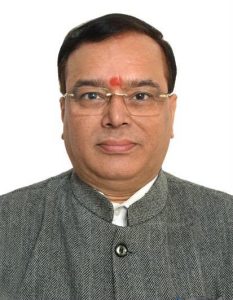
Dr Kumar Rakesh is a senior journalist, writer, commentator and political analyst based in New Delhi, India. Dr. Rakesh has been a member of the core team involved in launching nine TV channels, with around 39 years of experience across print, television, radio, online and digital media. He has travelled to and written from more than 50 countries, covering issues concerning India and the wider world. His work has earned him several honours and awards. Currently, Dr Kumar Rakesh is the Editorial Chairman of Global Governance News Group and Samagra Bharat Media Group. Contact: krakesh8@gmail.com
