
Nadda Inaugurates Advanced Diagnostic Facilities
New bladder diagnostics and PET-CT, SPECT-CT services to strengthen specialised healthcare at Safdarjung Hospital

GG News Bureau
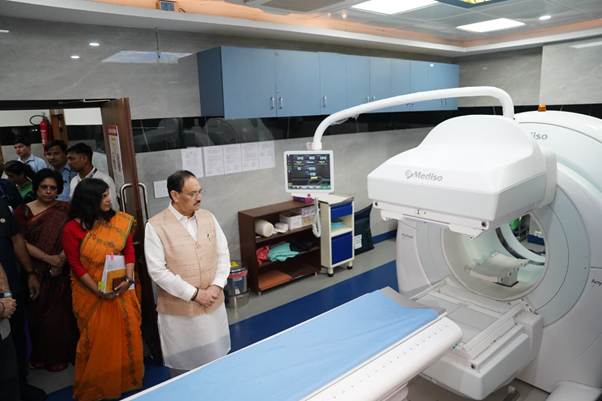
New Delhi, 3rd Set: Union Health and Family Welfare Minister J.P. Nadda on Thursday inaugurated the Centre for Advanced Bladder Diagnostics in the Department of Urology and PET-CT and SPECT-CT facilities in the Department of Nuclear Medicine at VMMC and Safdarjung Hospital, New Delhi.
The Centre for Advanced Bladder Diagnostics combines Video Urodynamics (VUDS) with Near Infrared Spectroscopy (NIRS) to enable detailed assessment of bladder function and support the diagnosis of urinary bladder disorders, including complex cases linked to neurological conditions.
The facility integrates VUDS with NIRS-based brain mapping, an approach being attempted for the first time in India. It can assess changes in cerebral blood oxygenation during bladder filling and emptying, helping clinicians determine whether a bladder disorder is bladder-related, neurological or a combination of both.
The centre is expected to cater to around 5,000 patients annually, strengthening access to specialised urological diagnostic services.
The newly installed PET-CT and SPECT-CT facilities in the Department of Nuclear Medicine will enhance diagnostic capabilities in areas including cancer care, cardiology, neurology, renal diseases and endocrinology.
PET-CT will support cancer diagnosis, staging, treatment planning and follow-up, while also facilitating advanced imaging for specialised therapies. The facility will support multidisciplinary care involving Medical Oncology, Radiation Oncology, Hematology, Urology, Nephrology and Pediatric Oncology.
The SPECT-CT facility will strengthen diagnosis of cardiac, renal, endocrine, orthopaedic and gastrointestinal conditions. The advanced nuclear medicine services are expected to benefit approximately 600–700 patients annually and will be available at an affordable cost.
During his visit, Nadda also visited the Heart Command Centre and Sports Injury Centre and reviewed their services and ongoing activities.
Reviewing the functioning and ongoing projects of Safdarjung Hospital, the Health Minister stressed regular reviews and periodic inspections of projects in the pipeline. He called for practical and achievable timelines to ensure timely completion of projects.
The new facilities will also support postgraduate education and training and improve access to specialised diagnostic and therapeutic services, particularly for economically disadvantaged sections of society.
