
Indian Markets Open Higher Despite Middle East Tensions
Sensex gains 413 points and Nifty rises 110 points as investors track crude prices, inflation and RBI policy

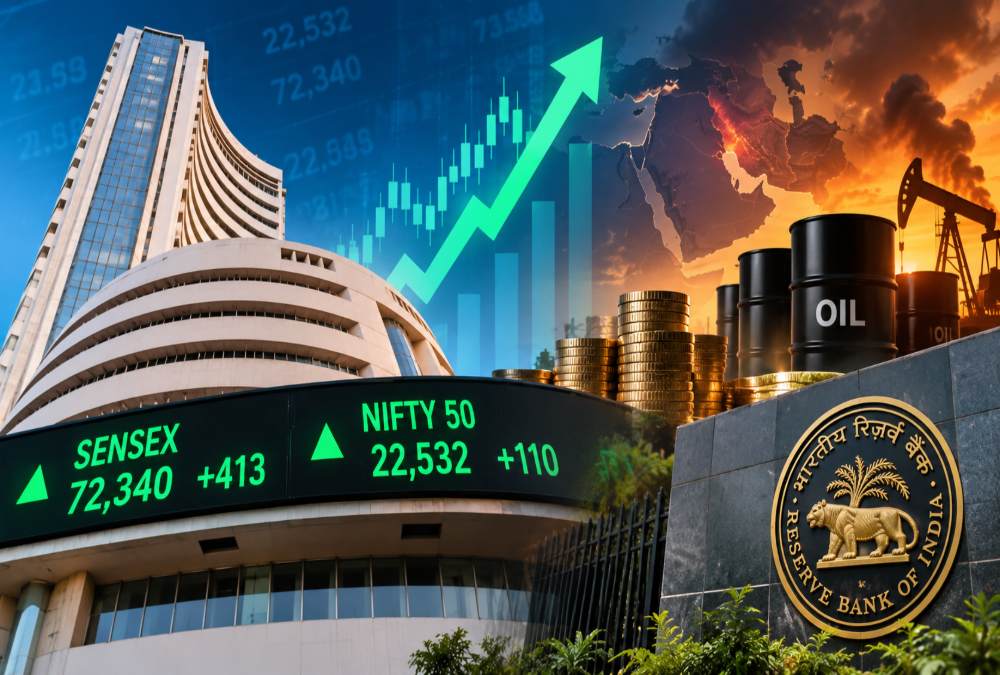
- Nifty opens 110 points higher at 22,532.
- Sensex gains 413 points to open at 72,340.
- RBI MPC meeting begins amid inflation and crude price concerns.
- Markets await the RBI’s October 7 policy decision.
GG News Bureau
Mumbai, 5th Oct: Indian equity markets opened higher on Monday despite continued tensions in the Middle East, with benchmark indices registering strong gains in early trade.
The Nifty 50 opened at 22,532, gaining around 110 points, while the BSE Sensex opened at 72,340, up around 413 points from the previous close.
HDFC Bank, Reliance among early gainers
Shares of HDFC Bank, Reliance Industries, Bajaj Finance, PC Jeweller, Punjab National Bank, Shriram Finance and ITC were among the stocks gaining during early morning trading.
On the other hand, Avenue Supermarts, TVS Motor Company, Apollo Hospitals, Infosys and Max Healthcare were among the major losers.
Market sentiment remained influenced by developments in the Middle East, while investors also kept a close watch on global crude prices and domestic macroeconomic indicators.
RBI policy meeting begins
The Reserve Bank of India’s Monetary Policy Committee (MPC) began its three-day meeting on Monday. The policy decision is scheduled for Wednesday, October 7.
The central bank has kept the repo rate unchanged at 5.25%, and markets are closely watching whether the RBI could raise rates for the first time since February 2023.
The policy deliberations come against the backdrop of rising inflation, crude oil prices crossing $100 a barrel and weakness in the Indian rupee.
Inflation and crude prices add to policy pressure
India’s CPI inflation rose to 4.82% in August, compared with 4.45% in July, indicating increasing price pressures.
The inflation outlook could also face risks from weather conditions. Strong El Niño conditions and below-normal rainfall in October could affect Rabi crop output, potentially adding to food inflation pressures.
At the same time, higher global bond yields and elevated crude oil prices have reduced the RBI’s room to maintain the status quo on interest rates.
Investors will now closely track the RBI’s policy stance, crude oil movements, global market cues and developments in the Middle East for further direction in the domestic equity markets.
