
“Viksit Bharat 2047 Will Be Realised”: Nitin Nabin
BJP president highlights PM Modi’s 25-year public journey, welfare initiatives, national security and India’s global standing

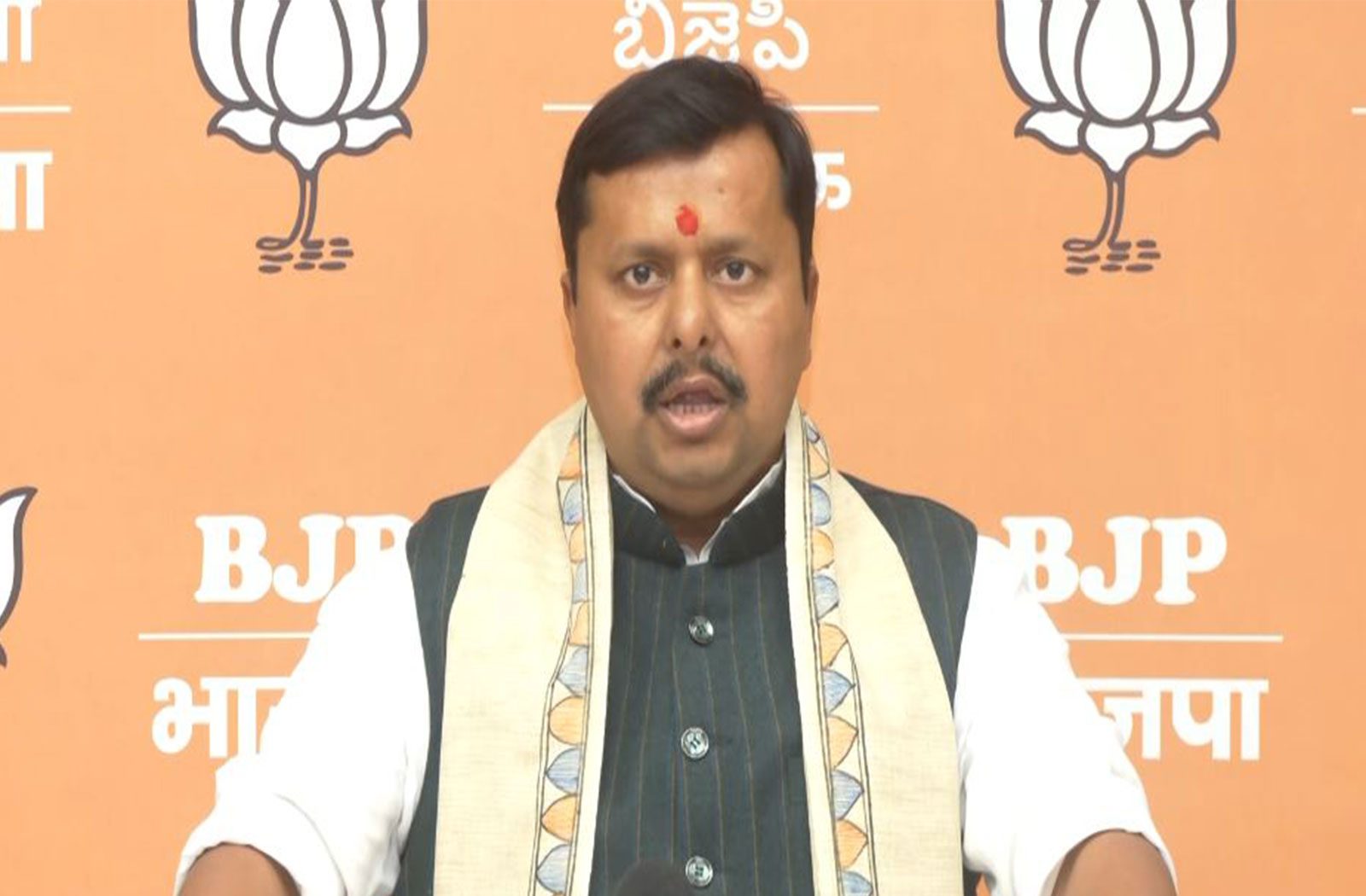
- Nitin Nabin hails Modi’s 25-year public journey.
- BJP chief highlights welfare and women’s empowerment.
- Nabin cites Surgical Strike and Operation Sindoor.
- He calls for collective efforts towards Viksit Bharat 2047.
GG News Bureau
New Delhi, 8th Oct: Bharatiya Janata Party (BJP) National President Nitin Nabin on Wednesday hailed Prime Minister Narendra Modi’s 25-year public life as a journey from struggle and determination to public and national service, while outlining the party’s vision of a Viksit Bharat by 2047.
Addressing the Viksit Bharat Sankalp Sabha at the Indira Gandhi Indoor Stadium in New Delhi, Nabin congratulated Modi on completing 25 years as the head of a government and said his journey had been marked by “Tapasya”, dedication and an unwavering commitment to public service.
Nabin said Modi’s political journey had transformed Jan Seva into Rashtra Seva, describing public service as the central purpose of his political life. He extended greetings to Modi on behalf of BJP workers and supporters across the country.
The BJP president said the 25-year journey represented a period of struggle, resolve and achievement and credited Modi’s leadership with placing development, welfare, national security, heritage and India’s global standing at the centre of governance.
‘Public trust, not political legacy’
Nabin highlighted the 2014 Lok Sabha election as a significant point in Modi’s political journey. He said Modi was presented as the prime ministerial face before the electorate and received a direct public mandate.
Referring to former President Pranab Mukherjee’s writings on the 2014 election, Nabin described it as a major shift in Indian politics and contrasted Modi’s rise with the political legacies of earlier prime ministers.
He said Modi’s journey to the Prime Minister’s Office was based on his public life, organisational experience and electoral mandate rather than a political family legacy.
Focus on women, farmers, poor and youth
Nabin credited the Modi government with expanding welfare programmes for women, farmers, poor families and young people.
He highlighted initiatives such as the Ujjwala Yojana, housing under the Pradhan Mantri Awas Yojana, PM-KISAN, women’s political reservation and the Lakhpati Didi initiative.
He said the government’s focus had moved beyond women’s development towards women-led development, while welfare schemes had increasingly been linked with self-reliance and public participation.
Nabin also pointed to Khelo India and the growth of opportunities for sportspersons, saying Indian athletes were bringing greater recognition to the country.
COVID response and entrepreneurship
Recalling the COVID-19 pandemic, Nabin said the government worked to provide vaccines and food security during the crisis.
He also highlighted the growth of India’s startup ecosystem, saying the country’s young people were increasingly becoming job creators rather than only job seekers.
According to Nabin, the government’s approach had placed the poor, farmers, youth and women at the centre of its development policies.
He also linked the government’s approach to the ideas of Antyodaya, “Ek Bharat, Shreshtha Bharat” and good governance.
Development alongside heritage
Nabin said development had been accompanied by renewed attention to India’s cultural and religious heritage.
He referred to projects and sites including the Kashi Vishwanath Corridor, Mahakal Corridor, Ram Temple in Ayodhya and Somnath Temple, arguing that the focus had been not only on infrastructure but also on preserving and showcasing centres of faith and heritage.
He also mentioned the National War Memorial and Statue of Unity as examples of initiatives aimed at strengthening public engagement with India’s heritage.
Security and global recognition
On national security, Nabin cited the 2016 Surgical Strike and Operation Sindoor as examples of what he described as India’s stronger security posture.
He said the government had sought to convey that national security, self-respect and the interests of the country were central to its approach.
Nabin also referred to the civilian honours awarded to PM Modi by several countries, saying such recognition reflected India’s growing prominence internationally.
He highlighted initiatives associated with Indian culture, including the global promotion of Yoga, and said India’s border villages were being presented as the country’s “first villages” rather than its last.
‘India will lead the world’
Concluding his address, Nabin connected Modi’s 25-year political journey with the BJP’s Viksit Bharat 2047 objective.
He said Modi’s journey represented a progression from struggle to resolve, from resolve to achievement and from public service to national service.
Nabin said India’s development would continue alongside the preservation of its heritage and expressed confidence that India would play a leading role globally in the 21st century.
He urged BJP workers and citizens to contribute collectively to the goal of building a developed India by 2047.
