
SC Shields Journalist from Arrest in Delhi Protest Case
Court bars coercive action as it examines sexual assault allegations against police officer and calls for a time-bound probe

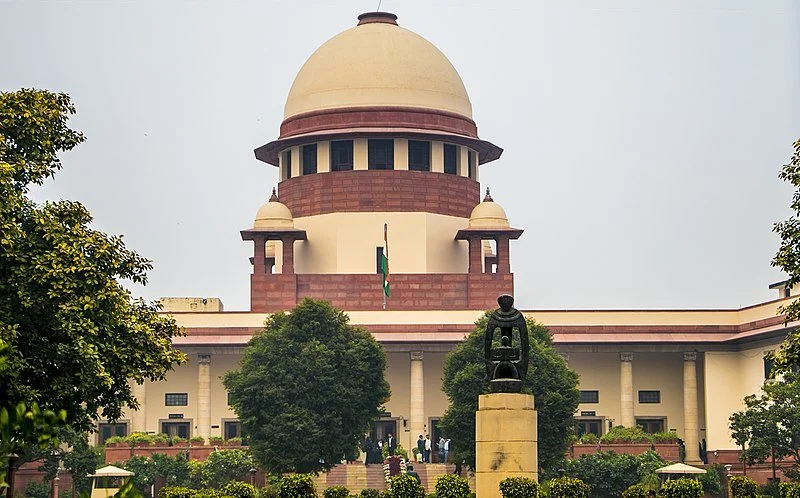
- Supreme Court bars coercive action against journalist
- Sexual assault allegations against police officer under probe
- Court orders time-bound investigation by Delhi Police
- Bench examines additional safeguards for journalists
GG News Bureau
New Delhi, 15th Oct: The Supreme Court on Thursday directed the Delhi Police not to take coercive action against a journalist who alleged that she was sexually assaulted by a police officer during a recent protest at Jantar Mantar over the Special Intensive Revision (SIR) of electoral rolls.
A bench led by Chief Justice of India Surya Kant and comprising Justice Joymalya Bagchi observed that the allegations against the police officer were serious. The court said it was examining whether an independent investigation was necessary and directed the police to complete the probe into the journalist’s allegations within a time-bound period.
Solicitor General Tushar Mehta, appearing for the Delhi Police, told the court that the authorities would examine the matter and place their findings before it. He also assured the bench that the journalist would not be arrested, while urging her to cooperate with the investigation.
Cross-Complaints Under Investigation
The journalist had filed a sexual assault complaint against Assistant Commissioner of Police Vivek Bhagat following a protest demanding the resignation of Chief Election Commissioner Gyanesh Kumar. The Delhi Police Crime Branch is investigating her allegations.
Days later, the police registered a separate FIR against the journalist and others following a complaint by Bhagat. He alleged that he had been subjected to casteist remarks, public humiliation and defamation during the protest.
The two complaints have brought the conduct of the parties and the handling of the investigations under judicial scrutiny.
Court Examines Protection for Journalists
During the hearing, Mehta questioned how freelance journalists could be distinguished from people who create social media content. He argued that carrying a microphone or producing online reels did not, by itself, establish journalistic credentials.
The Supreme Court acknowledged the need to examine the issue, observing that some journalists hold official accreditation while others work with media organisations. It also raised the question of whether certain categories of journalists might require an additional layer of protection.
The bench indicated that the issue required consideration, while cautioning against allowing anyone to claim special protection simply by describing themselves as a journalist.
Earlier on Thursday, the Delhi High Court declined an urgent hearing to the journalist, who had sought protection from coercive action in the case filed by Bhagat over the alleged casteist remarks and public humiliation.
The Supreme Court’s direction against coercive action and its call for a time-bound investigation mark the latest development in the case. The allegations remain under investigation, and the court is yet to decide whether an independent probe is required.
