
Guwahati Bullet Train Gets Centre’s Approval
Himanta Biswa Sarma welcomes the decision but says a separate railway corridor and a solution to the Siliguri Corridor challenge are still needed

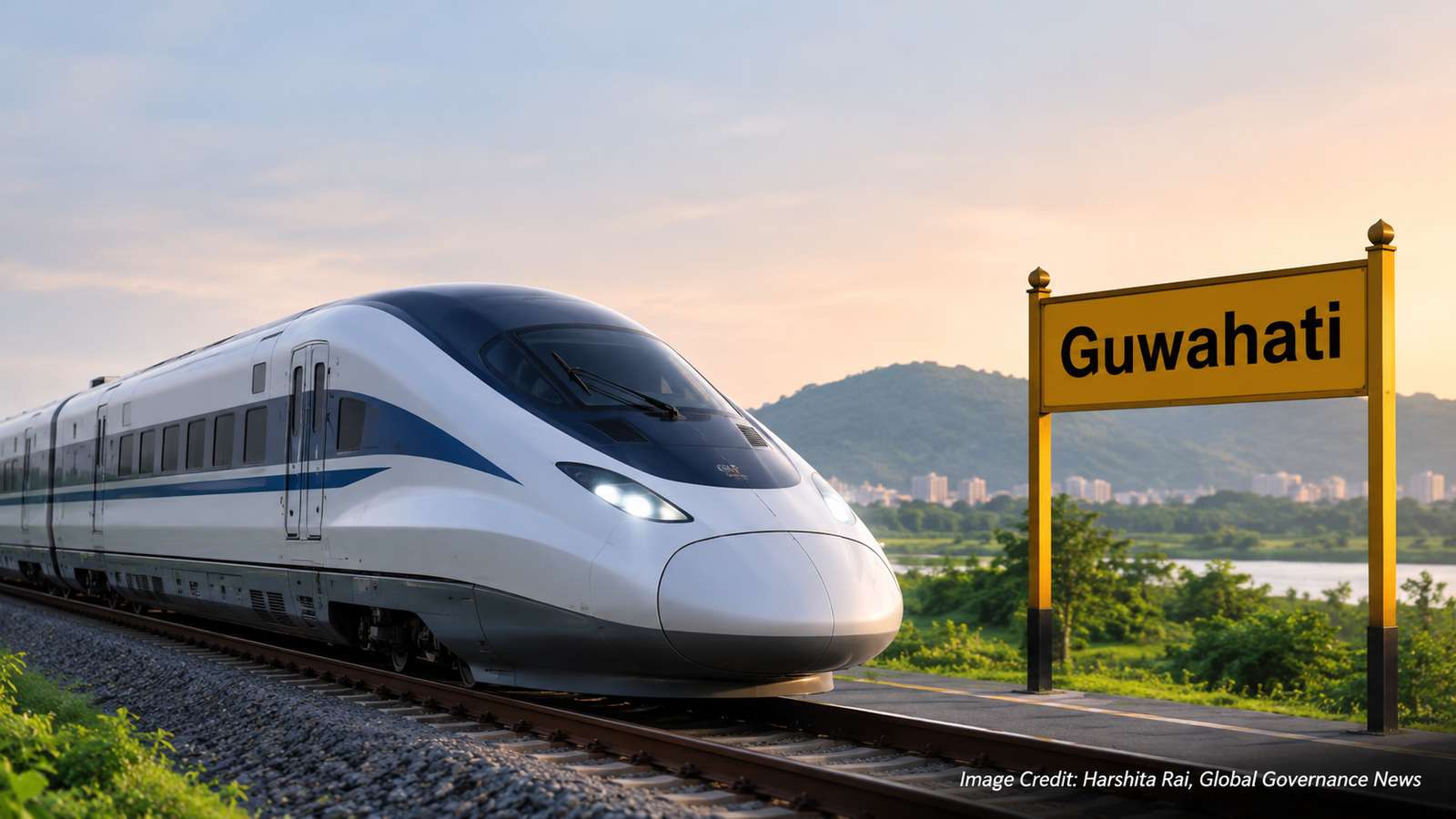
- Centre approves Guwahati’s inclusion in the proposed bullet train network.
- Siliguri Corridor presents a major engineering challenge.
- Dedicated railway tracks will be required for bullet trains.
- Sarma plans further discussions with Railway Minister Ashwini Vaishnaw.
GG News Bureau
Guwahati, 4th Nov: The Guwahati bullet train project has received the Centre’s approval, marking a major step towards extending high-speed rail connectivity to the Northeast. Assam Chief Minister Himanta Biswa Sarma welcomed the decision on Tuesday, while cautioning that surveys, technical planning and construction arrangements are yet to be finalised.
Sarma said the approval was an important first step, but the project would require a completely separate railway line, as bullet trains cannot operate on existing tracks.
The biggest engineering challenge, he noted, would be crossing the strategically sensitive Siliguri Corridor, popularly known as the Chicken’s Neck. The narrow passage, which connects the Northeast with the rest of India, measures around 22 kilometres at certain stretches, with some sections only 16 kilometres wide.
With an existing national highway and railway line already passing through the corridor, authorities will have to examine whether the bullet train track can be constructed underground or above ground.
Sarma indicated that the cost could be two to three times higher, depending on the technology and construction method selected for the crossing.
The Chief Minister said the proposal had initially faced difficulties. Following discussions with Railway Minister Ashwini Vaishnaw and his request to Prime Minister Narendra Modi, approval was eventually granted to extend the proposed high-speed rail connectivity to Guwahati.
Sarma said he would meet Vaishnaw during his next visit to Delhi to discuss the technical details and proposed alignment. He credited the Prime Minister and the Railway Minister for the decision, while stressing that detailed surveys, technology selection and execution planning remained pending.
