
Ancient Bharatiya Metallurgy Lecture Held in Delhi
Experts discuss ancient Indian metal science, traditions and its global impact at special lecture series

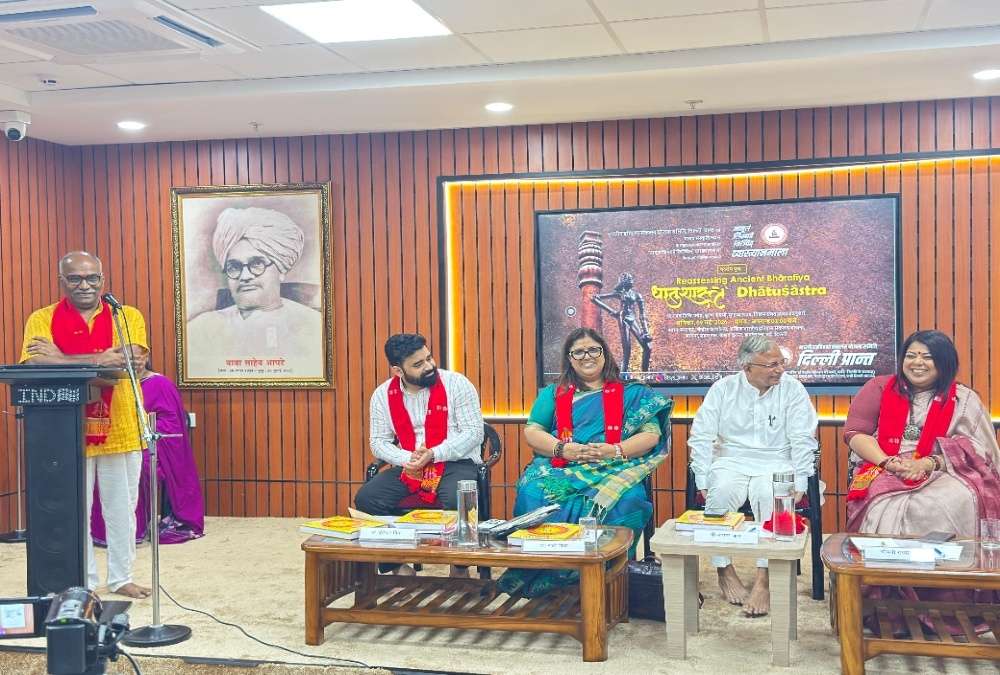
- Special lecture organised under ‘Naamoolam Likyate Kinchit’ series
- Prof Ruby Mishra speaks on ancient Indian metallurgy and science
- Speakers stress environmental protection and India-centric research
- More than 150 scholars and students attend programme
GG News Bureau
New Delhi, 10th May: A special lecture on “Reassessing Ancient Bhāratīya Dhātuśāstra: Text, Technology, Tradition & its Global Impact” was organised on Friday at Keshav Kunj, Jhandewalan, New Delhi, under the ‘Naamoolam Likyate Kinchit’ lecture series jointly organised by the Delhi unit of Akhil Bharatiya Itihas Sankalan Yojana and Madhav Sanskriti Nyas.
The programme began with a ceremonial invocation by Akash Awasthi. Senior social worker Sandhya Singh introduced the theme and linked the use of metals in Indian knowledge traditions with sustainable development. She said metallurgy in India was not merely a technical subject but reflected the country’s cultural and scientific traditions. She also said the growing use of plastic appears contrary to Indian knowledge traditions.
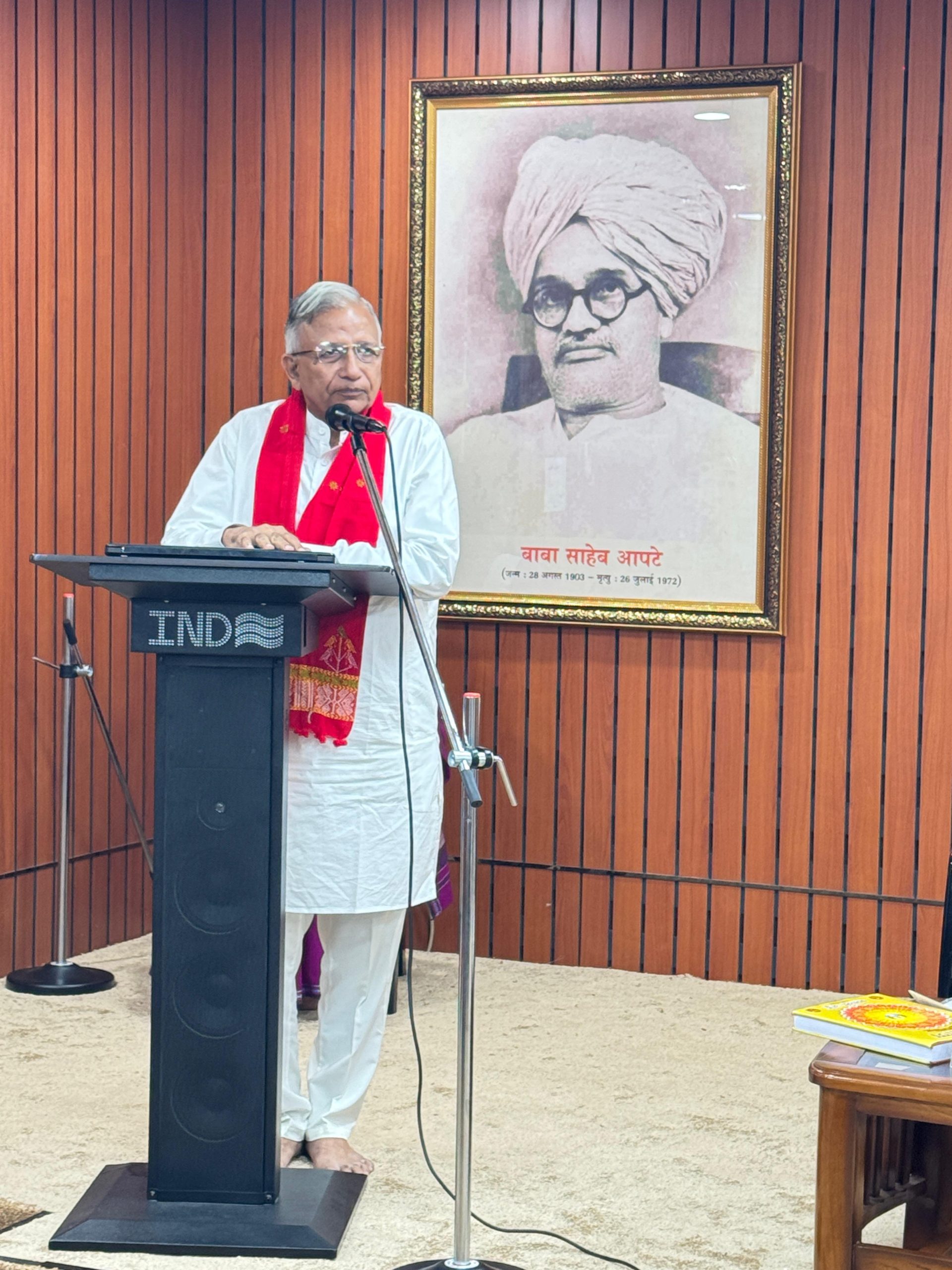
The keynote address was delivered by Ruby Mishra, Principal of Bhagini Nivedita College and Professor of Chemistry at Delhi University.
Prof Mishra said Indian metallurgy did not receive sufficient importance after Independence, though the present period has seen renewed efforts to establish its significance. Through a detailed presentation, she explained the development of metallurgy from the Vedic age to modern times and cited examples from ancient texts and contributions by Indian scientists. She also presented graphical analysis related to India’s GDP growth and metallurgical traditions from ancient to modern times.
As a special guest speaker, Gopal Arya urged participants to save water, plant trees and remove polythene from daily use. Referring to a traditional story of a bird trying to empty the sea after losing its eggs, he encouraged people to contribute individually towards environmental protection.
Scholar Yogeshwar Mishra said India should not seek Western approval for its achievements and referred to the discovery of zero and the Iron Pillar of Ashoka as examples of India’s scientific strengths.
In his concluding address, Balmukund Pandey spoke about references to artificial gold and metallurgy in ancient Indian traditions and stressed the need for India-centric research approaches.
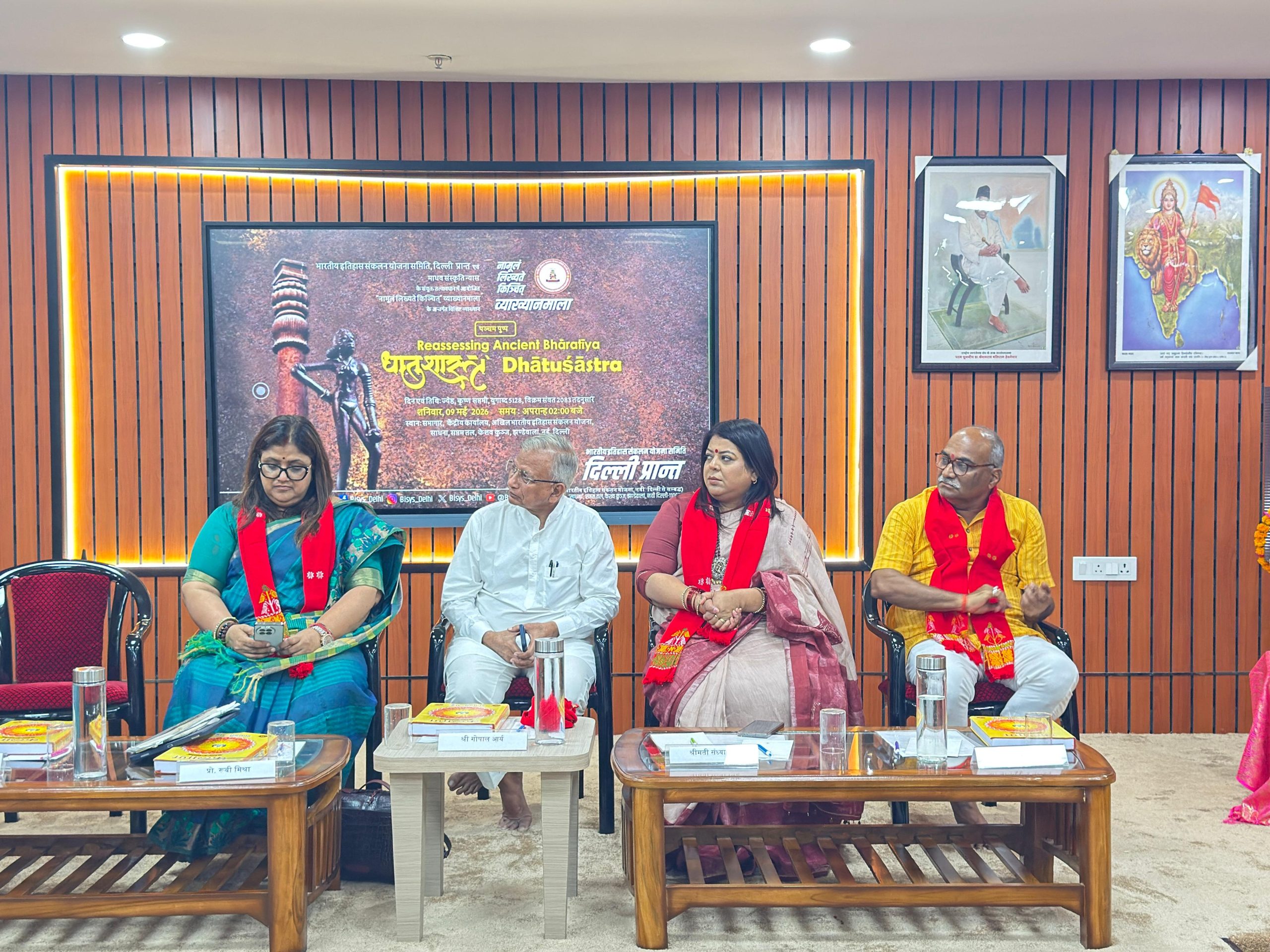
The programme was conducted by Prof Reena Kapoor and the vote of thanks was delivered by Dr Ajay Singh. More than 150 teachers, researchers, students and academicians from various universities attended the lecture.
