
Astronomers Uncover Origin of Mysterious Cosmic X-ray Flashes
Study links rare fast X-ray transient to massive star collapse or neutron star merger

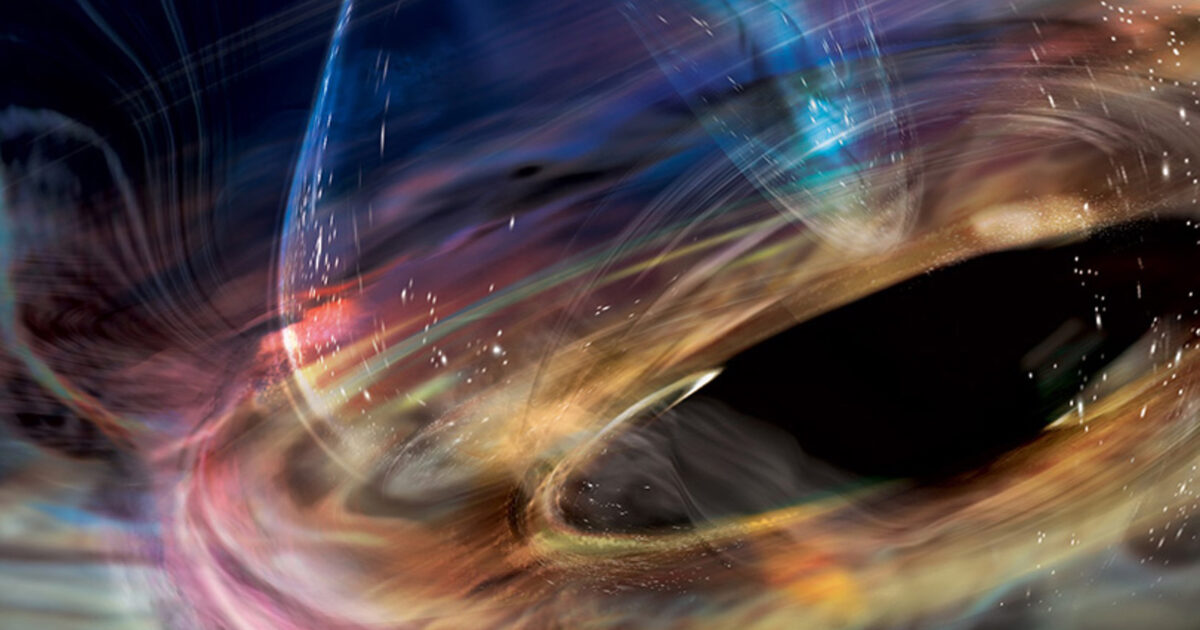
- Scientists trace origin of rare cosmic X-ray flash.
- Event linked to gamma-ray burst-like explosion.
- Indian telescopes played key role in observations.
- Findings offer insights into extreme cosmic events.
GG News Bureau
New Delhi, 19th June: Astronomers have uncovered new clues behind the origin of Fast X-ray Transients (FXTs) — rare and powerful bursts of X-rays from deep space — linking one such event to a gamma-ray burst-like explosion caused either by the collapse of a massive star or the merger of two neutron stars.
The study focused on the FXT event EP241107a, detected on November 7, 2024, by China’s Einstein Probe mission. Researchers led by Deepak Eappachen and Arvind Balasubramanian from the Indian Institute of Astrophysics used optical and radio observations to identify its counterpart and study its nature.
The team used the Karl G. Jansky Very Large Array in the United States along with several telescopes, including the Himalayan Chandra Telescope and GROWTH India Telescope in Hanle, Ladakh, and the Upgraded Giant Metrewave Radio Telescope in India.
Their analysis suggests that EP241107a was likely an “orphan afterglow” — a rare explosion linked to a gamma-ray burst that was not directly detected in gamma rays. The event released an enormous amount of energy through a powerful jet, comparable to the total energy emitted by all stars in the Milky Way over several months if emitted in all directions.
The findings, published in the journal Monthly Notices of the Royal Astronomical Society, improve scientific understanding of these short-lived and extreme cosmic phenomena and may help researchers decode the physics behind some of the universe’s most energetic explosions.
