
Bengal at Crossroads as BJP Challenges TMC Stronghold
High-stakes contest unfolds as voter list row reshapes electoral arithmetic

By Harshita Rai
As voting begins in West Bengal and Tamil Nadu, the political spotlight remains firmly on Bengal — a state that has consistently resisted the electoral advances of the BJP. While Tamil Nadu presents a structured, alliance-driven contest, Bengal stands at the centre of a far more volatile and layered political battle.
At the heart of this election is a direct confrontation between the BJP and the ruling All India Trinamool Congress led by Mamata Banerjee. The stakes are unusually high. For the BJP, it is an opportunity to breach one of the last major political bastions it has not captured. For the Trinamool Congress, it is a test of survival after more than a decade in power.
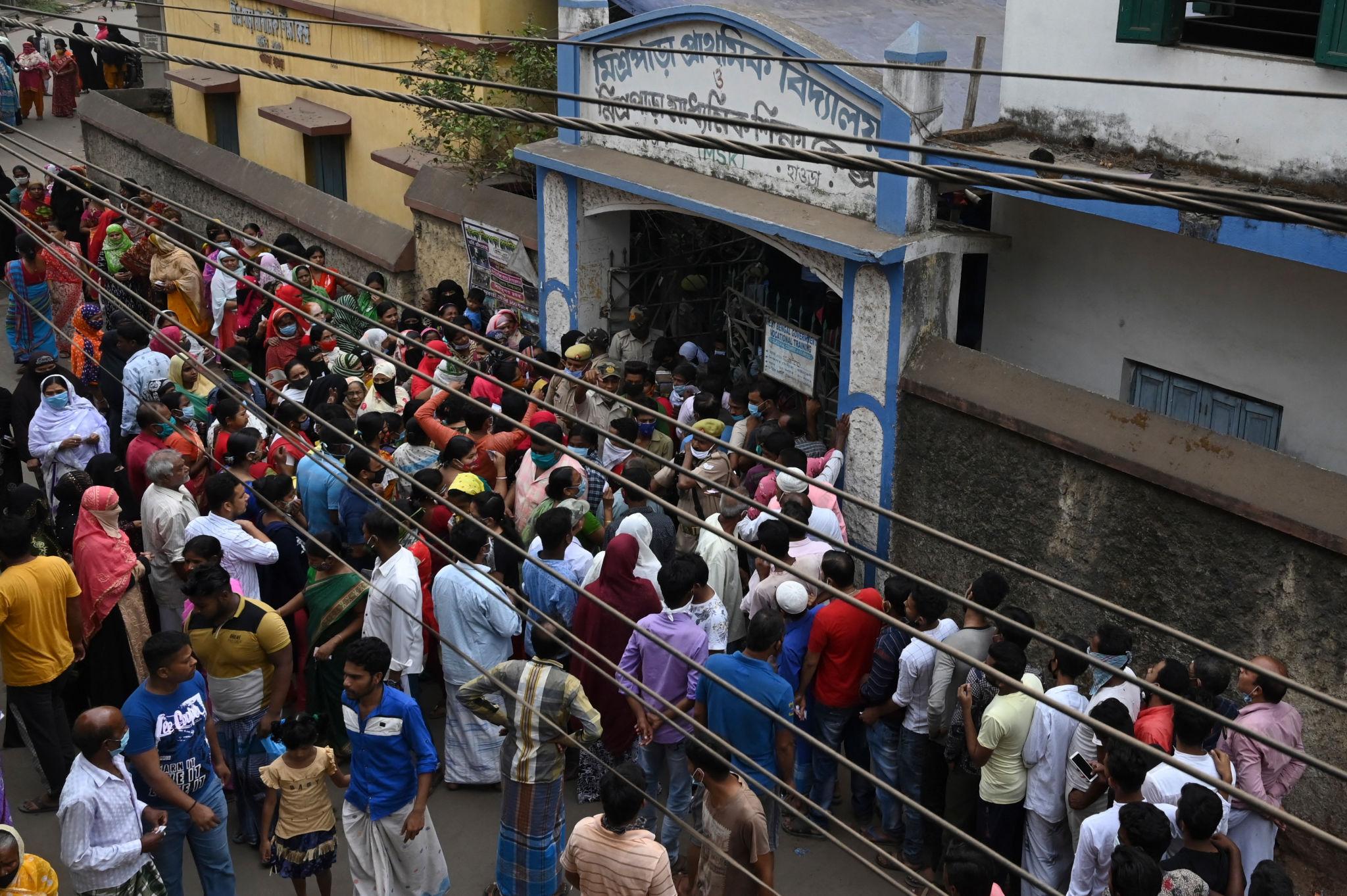
Nearly 3.6 crore voters are casting their ballots in 152 constituencies across 16 districts in the first phase. Key battlegrounds include Nandigram and politically sensitive regions in north Bengal such as Darjeeling, Siliguri, Jalpaiguri and Cooch Behar. What stands out is that close contests are expected in nearly half of these seats — a sign of shrinking margins and rising unpredictability.
Mamata Banerjee’s dominance since 2011, when she ended the 35-year Left rule, has rarely appeared this challenged. Yet, similar predictions were made in 2021, when the Trinamool Congress delivered its strongest performance, winning 215 seats. The BJP, however, emerged as a formidable opposition with 77 seats, marking its rise in the state.
Since then, the BJP has sharpened its campaign, focusing on allegations of corruption, law and order concerns, and the narrative of stalled development. The Trinamool, in response, has framed the election as a battle of identity and federal autonomy — positioning itself as a defender of Bengal’s culture against what it describes as external political forces.
The most contentious factor this time is the voter list revision carried out by the Election Commission of India. The removal of approximately 89 lakh voters — about 11.6 per cent of the electorate — has injected a new layer of uncertainty. The figure is politically sensitive, as it exceeds the Trinamool’s victory margin in several constituencies in 2021.
Data trends indicate that this revision could alter outcomes in districts where past victories were secured by narrow margins. Whether this translates into electoral gains for the BJP or triggers consolidation in favour of the Trinamool remains an open question.
The candidate line-up reflects the intensity of the contest. The Trinamool has fielded key leaders across crucial constituencies, while the BJP has deployed high-profile faces including Suvendu Adhikari, who remains central to the party’s strategy in Nandigram and beyond.
Security deployment has reached unprecedented levels, with over 2.4 lakh personnel from Central Armed Police Forces stationed across the state. The scale underscores both the importance of the election and concerns around maintaining a free and fair process.
In contrast, Tamil Nadu’s contest — though politically relevant — lacks the same degree of volatility. The structured alliance system and entrenched political narratives there make outcomes more predictable compared to Bengal’s fluid electoral dynamics.
Ultimately, this election is not just about numbers. It is about narrative control, institutional trust, and the evolving nature of India’s electoral politics. Bengal, once again, stands as a test case — not just for parties, but for the broader democratic process.
The results on May 4 will determine whether the BJP’s long pursuit of Bengal yields a breakthrough, or whether Mamata Banerjee reaffirms her hold over the state in the face of sustained political pressure.
