

By Poonam Sharma
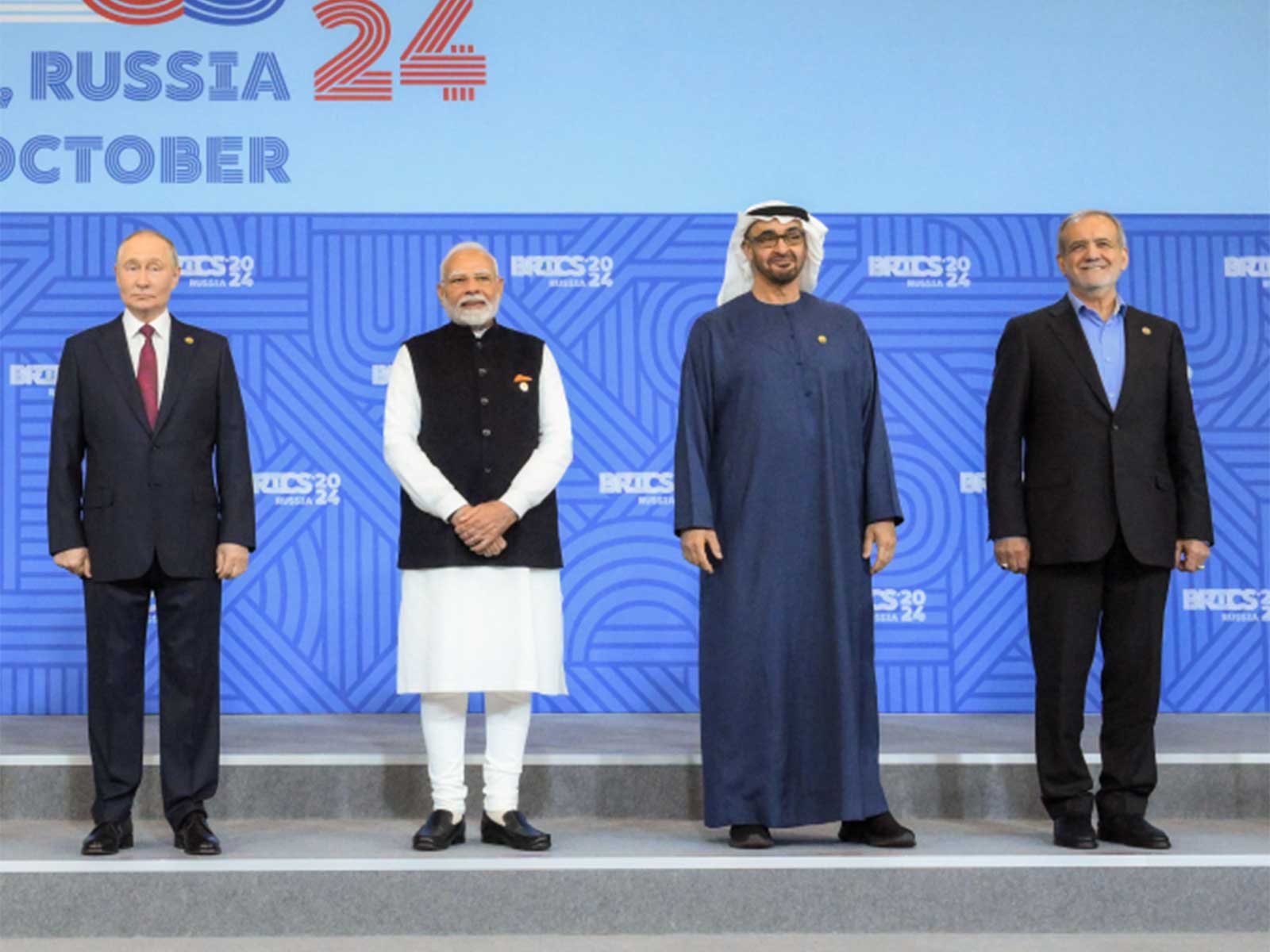
The 18th BRICS Summit in New Delhi has provided an important opportunity for India to go beyond the traditional language of emerging economies and ask a question that is much larger before the world: Who gets to make the rules of the global order ?
Under the leadership of Prime Minister Narendra Modi in the BRICS process, India has tried to make the BRICS a more practical, responsive and people-oriented platform. The consensus adoption of the New Delhi Declaration is a major achievement in itself, especially as BRICS has grown to include countries with divergent strategic interests and positions on major geopolitical conflicts.
Perhaps the most consequential message from the summit was Modi’s exhortation to the Global South to progress from being a “rule-taker” to a “rule-shaper.” The current global governance system, he argued, is like a pyramid, with the locus of decision-making at the top while countries affected by those decisions often remain on the margins. He has laid out a 10-point roadmap to replace this “pyramid of privilege” with a “platform of partnership”.
India and the United Nations: A Greater Role at the Table
For India, the issue of reforming the United Nations Security Council remains central to its long-term global ambitions. The Security Council, as it stands today, reflects the geopolitical realities of the post-Second World War era, not the economic, demographic and political realities of the 21st century.
At BRICS, Modi was clear that there can be no more endless postponement of reforms of the UN. India’s argument is increasingly tied to the wider demand for fair representation in international institutions from the Global South.
However, it is important not to overstate the outcome: India has not yet been given a permanent UNSC seat.What has progressed is the diplomatic and political momentum behind reform and greater representation. The UNSG’s engagement with Modi before the summit also demonstrated the shared understanding that multilateral institutions, including the UNSC, should be representative of the current realities.
But this is still a big positive development in India. A permanent seat would mean more than a token of prestige. This would give India a more powerful institutional voice in decisions related to international peace, security, conflict resolution and global governance.
Global South: From Representation to Rule-Making
The most important strategic dimension of India’s BRICS presidency is perhaps its bid to make the Global South a participant in writing global rules rather than simply responding to them.
Today, the Global South constitutes an important portion of the world’s population, economic activity, natural resources and future growth. Yet many of the institutions that set the rules that govern the world’s finance, security, technology and trade still work within structures created decades ago.
India’s BRICS approach aims to address this imbalance, without portraying BRICS as an anti-Western bloc. And that makes a difference. India has always projected BRICS as a platform of cooperation and development for a more representative international order and not as an alliance against certain countries.
Economic Cooperation: From Political Declarations to Practical Benefits
Economic cooperation is one of the strongest pillars of BRICS. The expanded membership of the grouping has given it a wider geographical and economic footprint, bringing together major energy producers, manufacturing economies, emerging markets and large consumer populations.
For India, the opportunity is to strengthen trade, investment, supply-chain resilience, financial cooperation, connectivity, technology and development partnerships.
The larger aim should be to make BRICS useful for common citizens and businesses, and not merely another diplomatic forum. This emphasis on practical and forward-looking cooperation during India’s chairship is a reflection of this approach.
Technology and the Future of Global Governance
Technology is also at the center of the future international order, the summit says. Artificial intelligence, biotechnology and other new technologies will become more important for economic competitiveness, national security, healthcare and jobs.
A handful of advanced economies and big tech companies setting the rules for these technologies could see developing countries become rule-takers once again. India’s call for greater participation of the Global South in technology governance is therefore of long-term significance.
It’s not just about access to technology. It’s about who sets the standards, safeguards, ethical frameworks and economic rules for that technology.
A Stronger Voice on Terrorism And Security
Another significant outcome for India was the BRICS condemnation of the Pahalgam terror attack and reiteration of zero tolerance approach to terrorism, terror financing and cross-border terrorism. This provides India with an important diplomatic platform to reiterate its long-standing position that terrorism cannot be justified on any political grounds.
The summit also showed the importance of dialog in difficult geopolitical circumstances. Although there are differences between individual members, BRICS members were able to reach consensus on West Asia around dialog, diplomacy and restraint.
The Larger Context to India’s Leadership
For the fourth time, India takes over the BRICS chairmanship at a time when the international system is undergoing profound change. Conflicts, trade tensions, technological competition, energy insecurity and fragmentation are challenging old assumptions of globalization.
So the New Delhi summit’s importance goes beyond the individual declarations.
India has put three themes at the center of the conversation: representation, responsiveness and rule-making. It has interlinked the demand for UNSC reform with the wider economic and political aspirations of the Global South.
The next challenge is to execute. A roadmap is only as good as the proposals that become institutions, mechanisms and measurable outcomes. The proposed BRICS continuity mechanism and other initiatives are designed to ensure that decisions are not lost on change of chairmanship.
For India the BRICS summit, therefore, is more than a diplomatic victory. It is a chance to demonstrate that an emerging India can serve as a bridge between developed and developing economies, safeguarding the interests of the Global South, while also facilitating a stable, multipolar and cooperative international order.
A permanent seat on the Security Council is still an aspiration, not an existing fact. But the political momentum in favor of reform, India’s rising diplomatic clout and stewardship of the Global South conversation are meaningful progress.
Ultimately, the true success of BRICS 2026 will not be measured by the number of declarations signed but by whether the world moves toward a system where those affected by global decisions have a meaningful say in them.
