
BRICS Adopts New Delhi Declaration
Leaders back global governance reform, stronger Global South representation, peace, economic cooperation and sustainable development

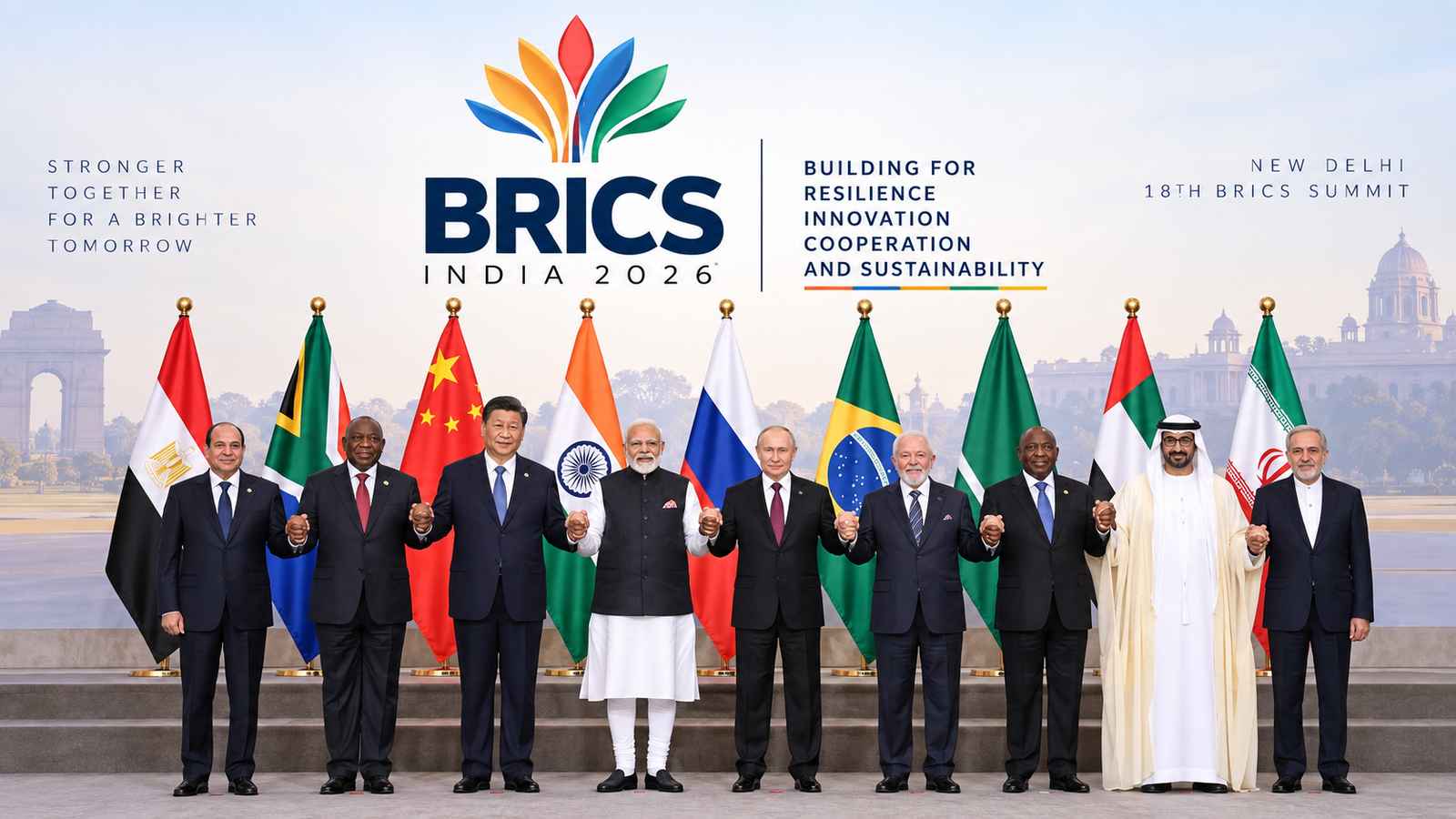
- BRICS reaffirms commitment to a fairer and more representative global order
- Leaders call for greater representation of developing countries in global institutions
- Declaration backs UN Security Council and Bretton Woods reforms
- BRICS strengthens cooperation on trade, finance, AI, health, climate and technology
Kumar Rakesh
New Delhi, 12th Sept: Leaders of BRICS countries adopted the New Delhi Declaration at the 18th BRICS Summit, reaffirming their commitment to a more inclusive, representative and effective global governance system. The summit was held under India’s 2026 chairship with the theme “Building for Resilience, Innovation, Cooperation and Sustainability.”
The declaration, issued on the occasion of BRICS’ 20th anniversary, called for strengthening multilateralism and multipolarity and ensuring greater participation of Emerging Markets and Developing Countries in global decision-making.
BRICS leaders reiterated support for comprehensive reform of the United Nations, including the Security Council, with a view to making it more democratic, representative and effective. China and Russia also reiterated support for the aspirations of Brazil and India to play a greater role in the UN, including its Security Council.
The declaration also called for reforms of the Bretton Woods institutions to better reflect the changing global economy and increase the voice and representation of emerging and developing economies. Leaders backed greater participation of developing countries in the WTO and a stronger, rules-based multilateral trading system.
On international peace and security, BRICS called for disputes to be resolved through dialogue, consultation and diplomacy. The declaration expressed concern over conflicts and rising military spending and urged greater international efforts towards peaceful settlements.
The grouping expressed concern over escalating tensions in West Asia and called for maximum restraint, protection of civilians and civilian infrastructure, and greater diplomatic efforts towards lasting peace. It also reaffirmed support for a two-state solution to the Israeli-Palestinian conflict and opposed forced displacement of Palestinians.
BRICS leaders strongly condemned terrorism, including the April 2025 terrorist attack in Jammu and Kashmir that killed 26 people, and called for zero tolerance towards terrorism, its financing and safe havens.
The declaration also outlined cooperation in digital technology, artificial intelligence, cybersecurity, health, agriculture, energy, critical minerals, industrial innovation and disaster resilience. Leaders endorsed cooperation for safe, secure and inclusive AI and reaffirmed the importance of resilient digital infrastructure.
In the economic sphere, BRICS backed stronger cross-border payment mechanisms, including work on interoperability of payment systems and the use of local currencies for trade settlements and investments. Cooperation on MSME finance, resilient global value chains and sustainable infrastructure was also welcomed.
The declaration highlighted climate action, sustainable development and community-based adaptation, while stressing the need for greater climate finance and resilience in developing countries.
BRICS also endorsed deeper cooperation in education, skills, youth engagement, culture, tourism and sports. The declaration welcomed initiatives to strengthen women’s economic participation and digital inclusion.
Leaders commended India’s BRICS Chairship in 2026 and expressed gratitude to the Government and people of India for hosting the summit in New Delhi. They extended full support to China for its BRICS Chairship in 2027 and the 19th BRICS Summit.
