
CAIT Writes to Rahul Gandhi Over Disruption of Delhi Trade
Traders’ body questions Congress over November 1 rally and alleges that repeated protests and road blockades have affected businesses and livelihoods.

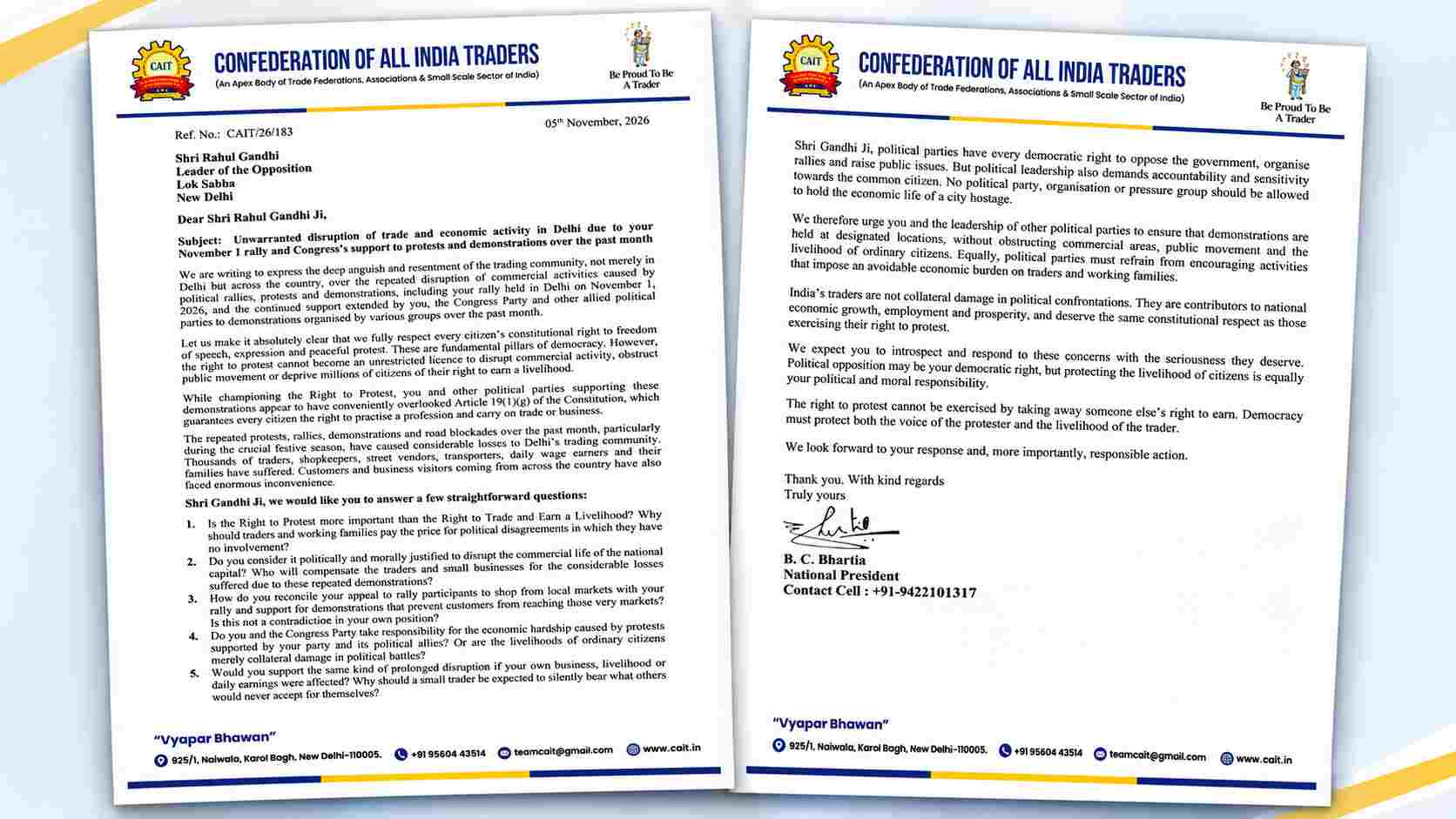
- CAIT writes to Rahul Gandhi over disruption of Delhi’s commercial activities.
- Traders’ body questions Congress over its November 1 rally.
- Letter cites losses to shopkeepers, vendors and daily-wage earners.
- CAIT urges political parties to hold protests at designated locations.
GG News Bureau
New Delhi, 5th Nov: The CAIT letter to Rahul Gandhi has brought the concerns of the trading community over repeated disruptions to commercial activities in Delhi into focus. The Confederation of All India Traders (CAIT) has written to the Leader of the Opposition in the Lok Sabha, expressing what it described as deep anguish and resentment over political rallies, protests and demonstrations held over the past month.
In its letter dated November 5, CAIT questioned the Congress rally held on November 1 and the party’s continued support, along with that of other political parties, for demonstrations organised by various groups.
The traders’ body said repeated protests, rallies and road blockades, particularly during the festive season, had caused considerable losses to Delhi’s trading community. It said thousands of traders, shopkeepers, street vendors, transporters, daily-wage earners and their families had been affected. Customers and business visitors travelling to the city, it added, had also faced inconvenience.
While acknowledging the constitutional right to freedom of speech, expression and peaceful protest, CAIT argued that such rights should not result in unrestricted disruption of commercial activity or deprive citizens of their livelihoods.
The organisation also referred to Article 19(1)(g) of the Constitution, which guarantees citizens the right to practise a profession or carry on a trade or business. It questioned whether the right to protest should take precedence over the right of traders and working families to earn a livelihood.
The letter posed five questions to Gandhi, asking whether the economic losses suffered by traders due to demonstrations were justified, who would compensate affected businesses, and whether political parties should take responsibility for the hardships caused by protests they support.
CAIT also questioned what it described as a contradiction between appealing to people to shop from local markets and supporting demonstrations that prevent customers from reaching those markets.
Urging Gandhi and other political leaders to ensure that demonstrations are held at designated locations without obstructing commercial areas, CAIT said no political party or pressure group should be allowed to hold the economic life of a city hostage.
The letter concluded by stating that the right to protest should not be exercised by taking away another person’s right to earn, and called on political leadership to protect both democratic expression and the livelihoods of traders.
