
From Mamata Aide to Bengal CM: Suvendu Adhikari’s Big Moment
BJP’s historic Bengal victory ends TMC’s 15-year rule as Modi and Shah attend oath ceremony

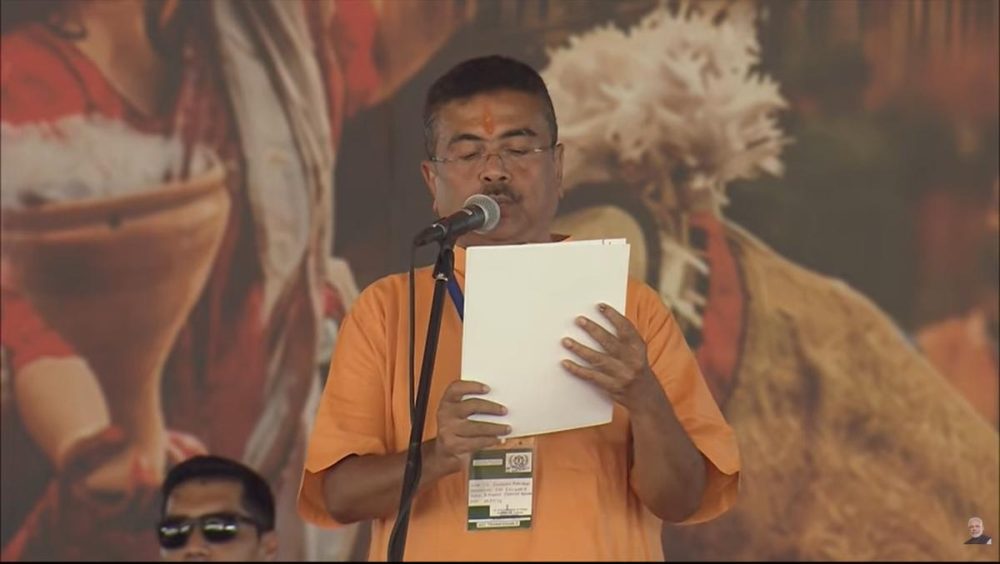
- Suvendu Adhikari sworn in as Bengal’s first BJP Chief Minister
- BJP wins 207 seats, ending TMC’s 15-year dominance
- PM Modi and Amit Shah attend Kolkata oath-taking ceremony
- New cabinet reflects OBC, tribal, Matua and Rajbanshi representation
GG News Bureau
Kolkata, 9th May: Suvendu Adhikari on Saturday took oath as the first BJP Chief Minister of West Bengal, marking a dramatic political rise for a leader who once served as a close aide to former Chief Minister Mamata Banerjee.
The BJP’s victory in the eastern state ended the All India Trinamool Congress’s 15-year rule and marked the party’s first-ever government in Bengal.
Adhikari took oath at the Brigade Parade Grounds in Kolkata in the presence of Prime Minister Narendra Modi and Union Home Minister Amit Shah, highlighting the political significance of the BJP’s breakthrough in the state.
Governor RN Ravi administered the oath of office and secrecy to Adhikari and his cabinet colleagues on the birth anniversary of Rabindranath Tagore.
The BJP secured 207 seats in the 294-member Assembly, scripting one of the biggest political shifts in Bengal’s recent history.
Dramatic Political Journey
Adhikari’s rise has been one of the most closely watched political transformations in Bengal politics.
Once regarded as a trusted lieutenant of Mamata Banerjee during the rise of the Trinamool Congress, Adhikari later emerged as one of the BJP’s strongest faces in Bengal. His political influence in regions like Nandigram and Bhabanipur helped him build a mass base beyond party lines.
Political observers described his swearing-in as a defining moment in Bengal politics, symbolising the BJP’s successful challenge to decades of regional political dominance.
Cabinet Reflects Social Balance
Adhikari inducted five ministers into his first cabinet — Dilip Ghosh, Agnimitra Paul, Ashok Kirtania, Kshudiram Tudu and Nisith Pramanik.
The BJP appeared to have carefully balanced caste and regional representation in the new cabinet.
Dilip Ghosh represents the OBC community and played a key role in expanding BJP’s organisational network after 2014. Agnimitra Paul emerged as one of BJP’s most visible women leaders after joining the party in 2019.
Ashok Kirtania is seen as a representative of the influential Matua voter base in southern Bengal, while Kshudiram Tudu has strengthened the BJP’s outreach among tribal communities in Jungle Mahal.
Nisith Pramanik, known for his youth appeal and organisational influence in North Bengal, represents the Rajbanshi political base.
The BJP leadership described the cabinet as a reflection of Bengal’s social diversity and the party’s wider electoral coalition.
