
No Cause for Panic Over Seasonal Flu: ICMR
Government monitors influenza trends; no new or unusual H1N1 strain detected

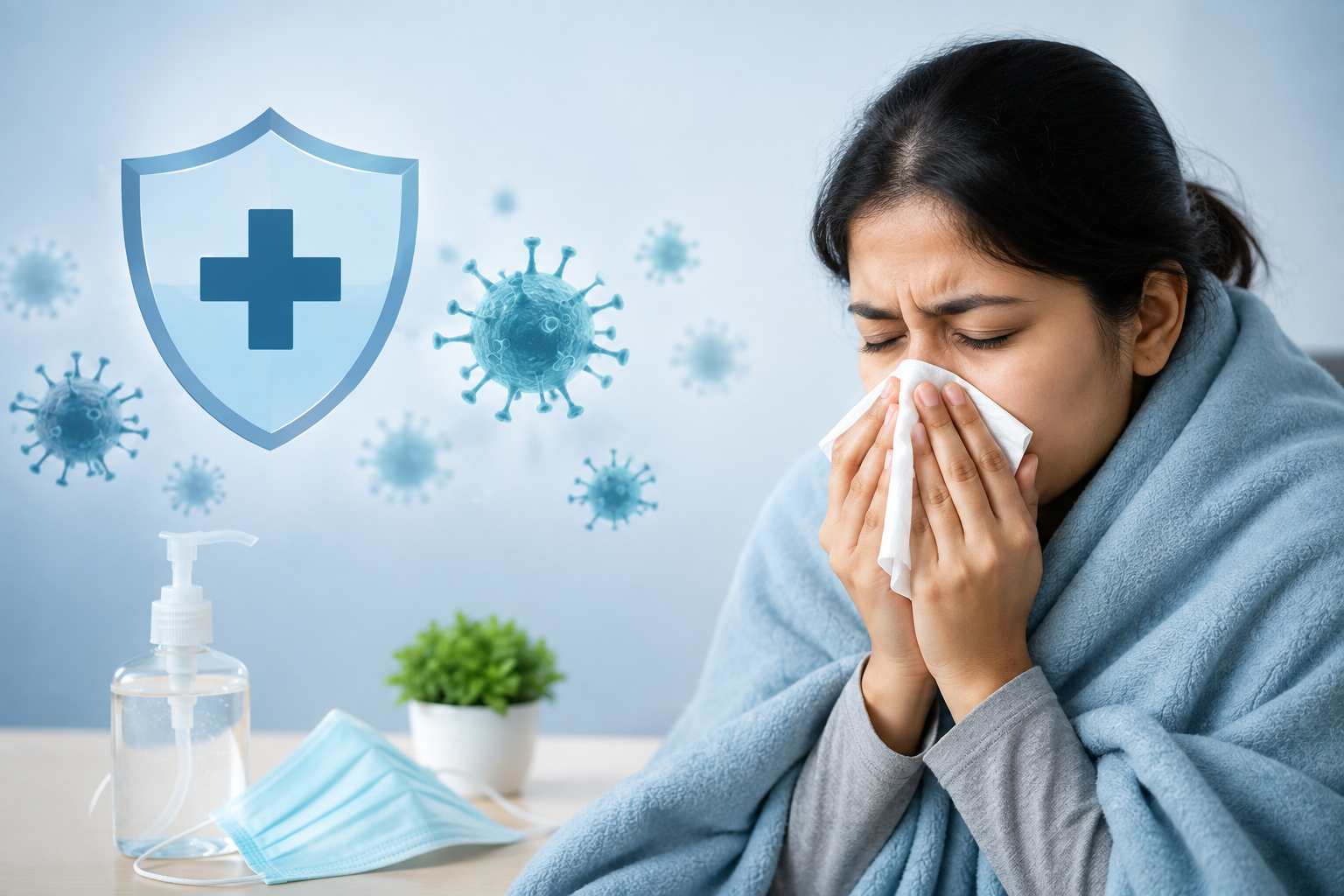
- Health authorities are conducting nationwide epidemiological and genomic surveillance.
- ICMR says circulating H1N1 remains consistent with seasonal influenza patterns.
- No unusual genetic shift or new influenza threat has been detected.
- Public advised to follow respiratory hygiene and seek medical advice when needed.
GG News Bureau
New Delhi, 25th Aug: The Union Health Ministry, along with the Department of Health Research, ICMR and NCDC, is closely monitoring seasonal respiratory illness trends across India, with authorities stating that there is no cause for panic.
DHR Secretary and ICMR Director General Dr Rajiv Bahl said the influenza viruses currently circulating in the country are consistent with seasonal patterns observed in recent years.
Surveillance through 73 DHR-ICMR Virus Research and Diagnostic Laboratories has identified circulating Influenza A (H1N1) viruses as A/Missouri/11/2025 (H1N1) pdm09-like viruses. Genetic analysis has placed them in clade 6B.1A.5a2a, subclade D.3.1.1.
Dr Bahl said the lineage has been circulating in India since 2025 and that the observed genetic changes represent normal antigenic drift associated with seasonal influenza. He said the findings do not indicate a new or dangerous strain.
Seasonal influenza is generally mild and self-limiting in otherwise healthy people. Symptoms can include fever, cough, sore throat, headache, body ache, fatigue and weakness.
The Health Ministry advised people to maintain respiratory hygiene, wash hands regularly, stay home when unwell and remain adequately hydrated. People were also advised against taking antibiotics or antiviral medicines without medical advice.
Elderly people, young children, those with underlying health conditions and people with compromised immunity were advised to exercise greater caution and seek timely medical attention if symptoms become severe or persistent.
The government said epidemiological, virological and genomic surveillance would continue to track influenza activity, circulating strains and disease severity across the country.
