
Three Indian Seafarers Killed in Hormuz Tanker Attack
FSUI Calls for International Investigation, Enhanced Naval Protection and Compensation for Victims' Families

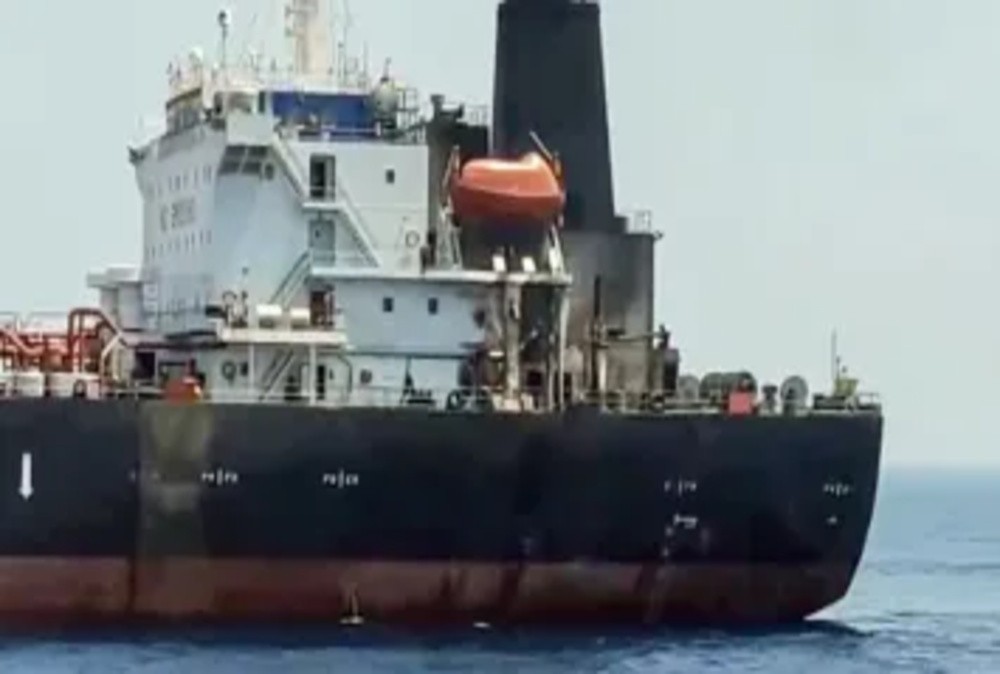
- Three Indian crew members killed in attack on oil tanker MT Settebello near the Strait of Hormuz.
- Twenty-one other Indian seafarers rescued following the incident.
- FSUI demands independent international investigation and stronger maritime security.
- Union warns commercial shipping routes are becoming increasingly dangerous due to regional conflicts.
GG News Bureau
New Delhi, 11th June: The deaths of three Indian seafarers in an attack on the oil tanker MT Settebello near the Strait of Hormuz have triggered fresh concerns over the safety of merchant shipping crews operating in conflict-prone waters, with India’s largest maritime labour organisation demanding urgent international action.
The Forward Seamen’s Union of India (FSUI) on Thursday strongly condemned the attack and called for an independent international investigation, enhanced naval protection for commercial vessels and comprehensive measures to safeguard civilian seafarers.
According to the union, MT Settebello, carrying 28 crew members, came under attack off the coast of Oman near the Strait of Hormuz, one of the world’s most strategically important maritime routes.
Three Indian crew members — Deck Cadet Aditya Sharma, Engine Fitter Shivanand Chaurasia and Chief Engineer Patanala Suresh — lost their lives in the incident. The vessel reportedly suffered extensive damage, particularly in its engine room, while 21 other Indian seafarers were rescued.
Expressing “serious concern” over the deteriorating security situation in the Gulf region, FSUI said merchant sailors were increasingly becoming victims of geopolitical conflicts despite being non-combatants.
“The lives of civilian maritime workers must never be endangered by military actions,” the union said in a statement, emphasising that seafarers play a critical role in sustaining global trade and energy supply chains.
The Strait of Hormuz, which connects the Persian Gulf with the Arabian Sea, remains one of the world’s most sensitive maritime chokepoints, handling a substantial portion of global oil and gas shipments.
FSUI argued that the attack was not an isolated incident and pointed to recent reported attacks involving commercial vessels, including MT Marivex and MT Jalveer, as evidence of growing risks to civilian shipping.
“The continuous targeting of commercial vessels operating in conflict-affected waters has transformed civilian shipping routes into dangerous zones where innocent maritime workers are increasingly becoming victims of geopolitical and military confrontations,” the union stated.
The organisation also expressed concern about reports of another attack involving MT Jalveer, which reportedly carried 20 Indian seafarers, saying information regarding the crew’s condition was still unclear.
While acknowledging the efforts of the Government of India through diplomatic channels, FSUI stressed that diplomatic engagement alone cannot adequately protect seafarers working in high-risk maritime regions.
“Seafarers are workers. They are not soldiers. They do not participate in wars, military operations or geopolitical confrontations,” the union said.
India is among the world’s largest suppliers of maritime manpower, with hundreds of thousands of Indian sailors serving aboard merchant vessels across international waters, including regions affected by armed conflict and security threats.
In response to the latest tragedy, FSUI has demanded stronger naval escorts for vessels carrying Indian crew, creation of a permanent maritime crisis-management mechanism, improved insurance coverage for seafarers deployed in conflict zones and a review of voyages through high-risk waters.
The union also called for adequate financial compensation, rehabilitation assistance, employment support and educational assistance for the families of the deceased sailors.
FSUI said a transparent and independent international investigation was necessary to establish accountability and prevent similar incidents in the future.
Concluding its statement, the union pledged solidarity with the families of the victims and urged governments, shipping companies and international maritime authorities to strengthen protections for civilian maritime workers operating in increasingly volatile waters.
