
Trump Cites India-Pak War, Attack Nobel, ‘I should have won 8 Nobel Prizes’

By Anjali Sharma
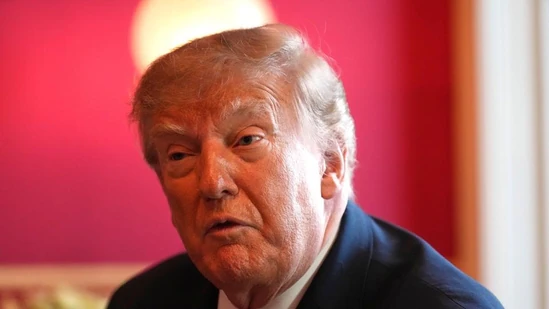
WASHINGTON – US President Donald Trump on Sunday claimed world leaders had backed his Nobel nomination and accused the UN of contributing little to his diplomatic efforts, as per media reports.
Media reported that Pakistan renewed its support for his candidacy, while New Delhi’s position on the May 2025 ceasefire remains unchanged.
Trump has claimed that his role in ending the India-Pakistan military confrontation was enough to earn him the Nobel Peace Prize, as he launched a sharp attack on the Norwegian Nobel Committee for overlooking him in favor of Indian-origin South African jurist Navi Pillay.
He argued in a lengthy Truth Social post that each of the eight international conflicts he claims to have resolved warranted a separate Nobel Peace Prize.
He singled out India and Pakistan as a particularly strong example of his diplomatic record, despite New Delhi’s repeated rejection of his mediation claims.
The latest remarks came hours after the committee announced Pillay as the recipient of the 2026 Nobel Peace Prize for her contributions to international law and efforts to hold perpetrators of serious international crimes accountable.
Trump claimed that leaders from countries where he had helped resolve conflicts had written to the Norwegian Nobel Committee in support of his nomination.
He said any of the eight conflicts, particularly the India-Pakistan confrontation, would have been sufficient grounds for the award.
“In actuality, I should have won 8 Nobel Peace Prizes, not just 1,” Trump wrote.
Apart from India and Pakistan, Trump cited conflicts involving Cambodia and Thailand, Kosovo and Serbia, the Democratic Republic of the Congo and Rwanda, Israel and Iran, Egypt and Ethiopia, Armenia and Azerbaijan, and Israel and Hamas.
He also claimed to be making progress towards resolving the conflicts involving Russia and Ukraine, as well as Iran.
Trump’s latest assertion puts his account of the May 2025 India-Pakistan ceasefire back in focus.
New Delhi has consistently maintained that the decision to halt military action was reached directly between the two countries, without third-party mediation.
According to India’s Ministry of External Affairs, the understanding followed a telephone conversation between the Directors General of Military Operations of India and Pakistan on May 10, 2025.
India has said Pakistan initiated the contact, after which both sides agreed to halt firing and military operations.
The confrontation followed India’s launch of Operation Sindoor on May 7, 2025, targeted terror infrastructure in Pakistan and Pakistan-occupied Jammu and Kashmir.
The operation was launched in response to the April 22 terrorist attack in Pahalgam, which killed 26 people.
Trump has taken credit for securing the ceasefire, India has maintained that the arrangement was negotiated bilaterally.
He attacked the Nobel Committee’s choice of Pillay, questioned her international recognition and accusing her of hostility towards Israel.
“I know nothing about this woman, and neither does anyone else!” he wrote.
He claimed that Pillay was known primarily for her opposition to Israel, while arguing that his own diplomatic record had gone unrecognized.
Trump accused the United Nations of failing to contribute to the conflict-resolution efforts he cited.
He described the Nobel Committee’s decision as “an indelible stain on Norway, one that will never be forgotten.”
Trump also alleged that ideological considerations had undermined the credibility of the award.
His remarks followed renewed support from Pakistan Prime Minister Shehbaz Sharif, who reiterated Islamabad’s position that the US President deserved recognition for his diplomatic efforts in South Asia.
Sharif said Pakistan had nominated Trump for the Nobel Peace Prize in recognition of his role in easing tensions between India and Pakistan.
He credited Trump’s intervention with helping avert a wider confrontation, a position that contrasts with New Delhi’s account of the ceasefire.
Sharif expressed hope that Trump’s efforts to promote peace would receive international recognition.
The Norwegian Nobel Committee awarded the 2026 Peace Prize to Navanethem “Navi” Pillay for her work to promote peace and international law.
Pillay, who was born into an Indian-origin Tamil family in South Africa, built her legal career during the apartheid era before taking on prominent roles in international justice.
She served as a judge at the International Criminal Tribunal for Rwanda and the International Criminal Court and later as the United Nations High Commissioner for Human Rights.
Pillay also chaired a United Nations commission investigating alleged violations of international law in the occupied Palestinian territories.
She serves as an ad hoc judge at the International Court of Justice in proceedings concerning allegations of genocide against Myanmar.
The Nobel Committee highlighted her contribution to strengthening international legal institutions and establishing accountability for war crimes, crimes against humanity and genocide.
The award coincided with fresh US sanctions against the International Criminal Court on Friday.
Washington said the measures were intended to protect American sovereignty and prevent the court from exercising jurisdiction over US citizens without the country’s consent.
The ICC condemned the sanctions, marked another escalation in Washington’s confrontation with the international judicial institution.
