
UPI Revolution Transforms India’s Digital Payments
A decade of UPI has expanded financial inclusion, enabled micro-payments and positioned India’s digital public infrastructure globally

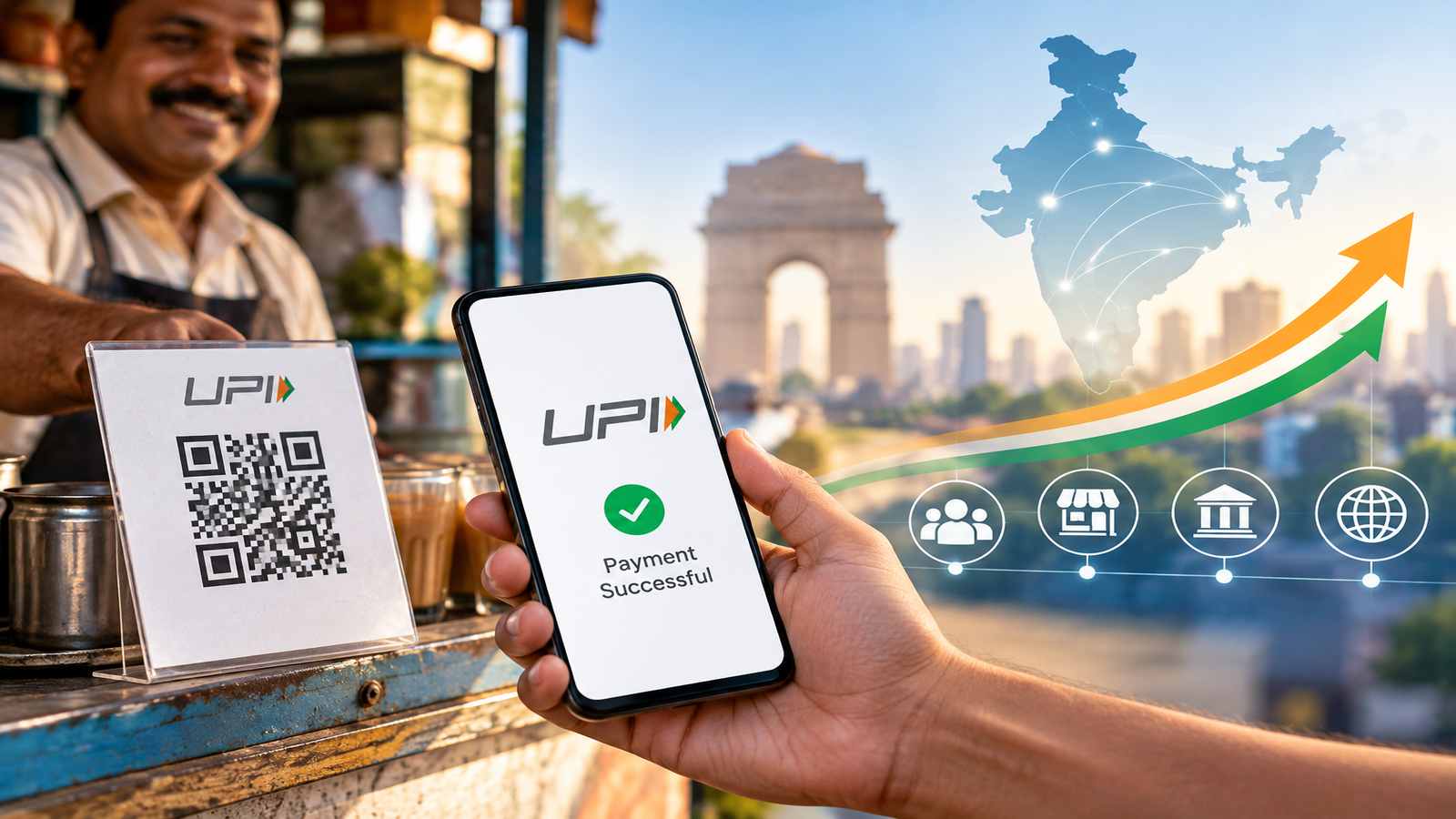
- UPI has grown from 21 banks in 2016 to nearly 700 banks by January 2026.
- Monthly transactions crossed 21 billion in January 2026.
- Street vendors and small businesses have emerged as major users of digital payments.
- UPI-linked systems are now live in 11 countries.
GG News Bureau
New Delhi, 9th Sept: India’s Unified Payments Interface (UPI) has emerged as a major driver of the country’s digital payments transformation, completing a decade of expansion that has reshaped financial transactions for citizens, small businesses and vendors.
Launched in 2016, UPI enabled seamless bank-to-bank transactions by connecting banks and technology platforms through interoperable public digital infrastructure. The system reduced dependence on cash and physical banking processes while making instant digital payments accessible to a wider section of the population.
The growth of UPI has been closely linked to the expansion of the Jan Dhan-Aadhaar-Mobile framework. More than 55 crore bank accounts were opened for underserved sections, while Aadhaar and widespread mobile connectivity created the infrastructure for broader participation in formal financial services.
UPI has expanded significantly since its launch. From 21 banks and 374 transactions in its first month in 2016, the network grew to nearly 700 banks and processed more than 21 billion transactions worth over ₹28 lakh crore in January 2026.
Annual UPI transactions reached around ₹314 lakh crore in the last fiscal year, according to the figures cited in the government narrative on the platform’s decade-long journey. UPI now accounts for more than 80 per cent of retail digital transactions in the country.
The platform has also expanded digital payments at the grassroots level. QR-code-based payments have enabled street vendors, autorickshaw drivers, small merchants and roadside businesses to accept bank-to-bank payments without requiring expensive card terminals.
The increasing use of UPI for low-value transactions has further widened its reach. The average transaction value declined from more than ₹1,800 in 2021 to around ₹1,300 in 2026, reflecting growing use for everyday purchases and micro-payments.
Digital transaction records are also creating new opportunities for small entrepreneurs to access formal financial services. Transaction histories can help financial institutions assess cash flows and provide credit to individuals and businesses that may lack conventional collateral or salary records.
India’s digital payments infrastructure has also gained international attention. UPI and UPI-linked systems are live in 11 countries, including France, the UAE, Singapore, Bhutan, Nepal, Sri Lanka, Mauritius, Qatar and Cambodia. India has also signed MoUs with 23 countries for cooperation on Digital Public Infrastructure.
The expansion of UPI has strengthened India’s position as a major global example of interoperable digital public infrastructure. Its open and scalable approach has also generated interest among countries seeking to develop sovereign digital payment ecosystems.
The next phase of the digital payments journey is expected to focus on technologies such as artificial intelligence, voice-enabled transactions, secure offline payments and the wider international expansion of Indian fintech solutions.
The decade-long growth of UPI has placed digital payments at the centre of India’s financial inclusion and digital transformation agenda, supporting the broader vision of a technologically empowered and financially inclusive Viksit Bharat by 2047.
