
Walking Down Kartavya Path: British Distorted 24 Villages to Make New Delhi

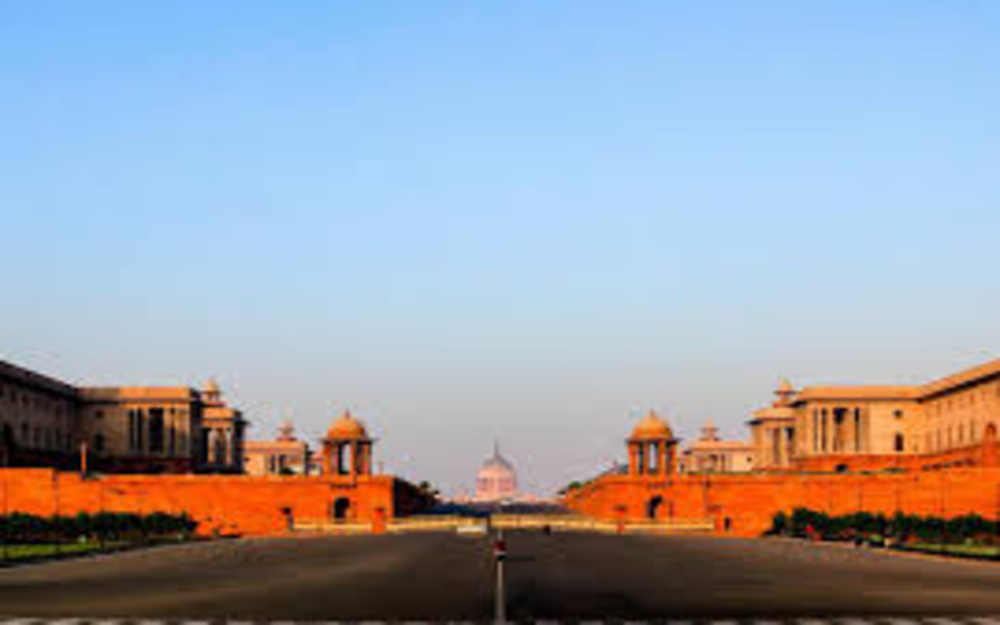
Alok Lahad
Walking down the Kartavya Path for the first time I felt a sense of completeness. This sprawling lush green area where I had spent my childhood riding a boat at the Boat Club and eating Chana Jor Garam in the parks of India Gate while my father enjoyed his massage from a champi tel malish — these memories are too deep to be forgotten. New Delhi ended at Lodhi Gardens; after that there was only barren land till Qutub Minar. But this stretch was our second best spot after Laxmi Narayan Temple, where behind the temple we could play in the gardens full of artificial caves and huge life-size elephant sculptures.
Sitting in the lawns of India Gate, I often asked my father questions — he was, as informed as he was, the source of my information.
“Daddy, who built all this?”
“The British,” he said. “They shifted the capital from Calcutta to Delhi in 1911.”
“And what was here before?”
He paused. “Villages,” he said. “Twenty-four of them.”
That number stayed with me for decades. I imagined little hamlets moved aside like toys. Only now do I understand: they were not moved. They were erased. The land I walked as a child — the Boat Club, the lawns, the Rajpath (now Kartavya Path) — was not barren. It was someone’s ancestral farm. This is the story of how Edwin Lutyens and Herbert Baker built a portrait of the Empire and charged India for the frame.
Why Calcutta Could No Longer Hold the Raj
On 12 December 1911, at the Delhi Durbar, King-Emperor George V announced that the capital of British India would move from Calcutta to Delhi. The proclamation was read in English and Urdu. The crowd cheered. The Viceroy, Lord Hardinge, called it a “bolt from the blue.” Even senior officials hadn’t been told.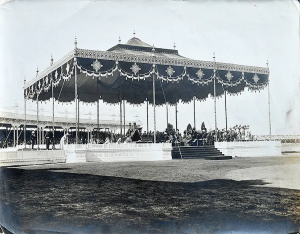
The official reasons were administrative: Calcutta was too far east, Delhi was central, better rail links. The unofficial reason was panic.
By 1911, Calcutta had become ungovernable for the Raj. Lord Curzon’s 1905 Partition of Bengal into East and West Bengal — designed to fracture Bengali nationalism — instead lit the fuse of Swadeshi. Bomb-makers in Maniktala, trials in Alipore, Tilak’s Kesari, Aurobindo’s Bande Mataram — all flowed from Calcutta. The city’s lawyers, professors, and babus used British law, British press, and British universities to argue the Raj into a corner. To govern India from the heart of Indian dissent was no longer tenable.
Delhi answered three needs at once. One, distance from Bengali agitation. Two, a central geography with rail lines extending to Punjab, Bombay, and Madras. Three, symbolism. Calcutta was a company port. Delhi was the throne of Hindustan. Curzon had said it plainly in 1903: “If we are to govern India, we must do it in the manner of the Mughals, from Delhi.”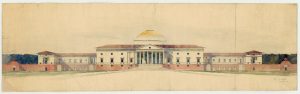
It was myth-making. The British had taken Delhi not from the Mughals, but from the Marathas. Mahadji Shinde had controlled Shah Alam II since 1785. Lord Lake defeated Daulat Rao Scindia in 1803 and occupied Delhi. The last Mughal, Bahadur Shah Zafar, was a pensioner even before 1857; after the revolt he was exiled to Rangoon. The dynasty was dust. But “Mughal successor” sounded imperial. “Maratha successor” would have admitted that Indians had ruled themselves. So the Raj chose the ghost over the fact, and built a capital to wear it.
24 Villages for One Vista
To stage that ghost, the British needed land. Between 1911 and 1916, the Land Acquisition Act of 1894 was run through south Delhi like a plough. About 35,000 acres were taken. Under them lay 24 villages: Raisina, Malcha, Talkatora, Jaisinghpura, Kushak, Madhoganj, Pilanji, Banskoli and others.
Raisina village sat on the very hill Lutyens wanted for Viceroy’s House. The village was cleared. The hill was shaved. A dome was placed where huts had stood. Malcha became Chanakyapuri. Pilanji became Sarojini Nagar. The names survived on bus stops; the gram sabhas did not.
The acquisition was brutal in its mechanics. Compensation was paid at colonial collector rates: Rs 35 per acre for arable land, Rs 15 for non-arable. But many villagers never received a single rupee. The British deposited the money in banks that the villagers could not access. Notifications were poorly published. And there was a deeper cruelty: if the land records were in the name of a father or grandfather, the sons and daughters had to prove they were indeed the legal heirs. Most could not. They walked away with nothing.
Cultivators became landless. Small scale industry was destroyed, small businessmen unrooted. This was not city planning. It was an erasure for aesthetics — a three-kilometre axis from India Gate to Viceroy’s House, so the palace would terminate the view. Lutyens and Baker fought over the gradient of the Raisinha Hill. Lutyan wanted a spectacular view of his masterpiece from India Gate. There were no funds. Baker was the businessman who wanted the funds to keep rolling, Lutyens was an artist. The axis was redesigned and the revenue records were rewritten. Post that Lutyans and Baker did not have a very amicable relationship. The villages were distorted, literally and legally, to make a photograph.
As late as 2011 — a full century after the acquisition began — descendants of Raisina and Malcha villagers were still approaching the courts, saying compensation was never paid or was inadequate. Some had demanded Rs 2,400 per acre for their fertile land. They lost then. They lost again.
The Money Ran Out Before the Stone Was Up
The original estimate in 1912 was £6.6 million. Then came 1914. Word War bled the Treasury. Funds were diverted to France and Mesopotamia. By the 1920s, the Great Depression strangled budgets again. The project that was to be finished by 1916 limped to 1931. Corners were cut. The dome at Viceroy’s House is reinforced concrete, not solid stone. Secretariat wings were simplified.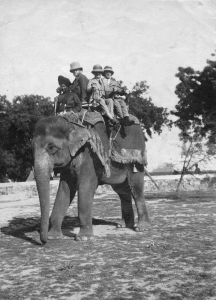
And then there was the rift. Lutyens and Baker, once collaborators, became bitter enemies. Lutyens mocked Baker’s seven bungalows as “bungle-ohs” — a portmanteau of bungalow and bungle. He thought Baker compromised for budget and government pressure. Baker thought Lutyens was an aesthete who didn’t understand governance. The irony: Baker’s “bungle-ohs” are now called “Lutyens bungalows” and are among the most expensive real estate on earth. But the real bungle was the whole premise — that you could buy legitimacy with stone while the capital remained incomplete.
The British did not build a living capital. They built a ceremonial core. Limited housing for officers and none for clerks. No colleges. No hospitals for Indians beyond Civil Lines. It was a capital you could inaugurate, salute, and leave. Which they did, 16 years later.
The Princely Houses: A Budget Hierarchy in Stone
A vista needs sides. Kingsway (now Kartavya Path) looked bare with only the Secretariat and Viceroy’s House. So the princes were called. Not asked — summoned. To prove loyalty, to spend their treasuries, to give the new city a “durbar frontage.”
The result was a hierarchy in stone. Top tier: Hyderabad House, 1926-28, by Lutyens himself. The Nizam was the richest man alive; he could afford red and cream Dholpur sandstone and eight and a half acres. Jaipur House, 1936, by Blomfield, with a dome and chhatris. Both look grand today because they had money, good architects, and the Government of India still maintains them for the Ministry of External Affairs and the National Gallery of Modern Art.
Bottom tier: Jaisalmer House, Jodhpur House, Kota House, Dholpur House — smaller states, smaller budgets, local PWD architects. No grand stone. Some used brick and plaster. After 1947 they became babu offices. Patiala House became district courts. Baroda House became Northern Railways headquarters. No restoration. Air conditioning ducts punched into facades. Whitewashed every decade. They look poor today because they were built poor, and maintained poorer. Hutments where the stone was cut were given to the army.
The princes did not come to Delhi for India. They came because the Viceroy’s invitation was an order. The palaces were tribute, not homes. When the British left, the Government of India inherited them — Hyderabad House for banquets, Jaipur House for the art museum, the rest for Ministries and Courts. The vista was complete, but the bill was Indian.
Sobha Singh: Adhi Dilli Ka Malik
No Indian gained more from New Delhi than Sir Sobha Singh. He arrived from Sargodha, won small CPWD contracts in 1911, and by 1931 had built Viceroy’s House, Parliament, North and South Blocks, and much of Connaught Place. He was supposedly knighted for it, the real reason was different. The title was British. The method was older.
Sobha Singh’s genius was post-construction. He did not take his payment only in cash. He took it in land. While other contractors cashed their cheques and went home, Sobha Singh bought. Connaught Place at Rs 2 per square yard — freehold. Civil Lines. Queens Way (Janpath). Bengali Market. At the time, New Delhi was still a dusty construction site. People called it a “barren wasteland.” There were few other takers. Sobha Singh had faith.
By the 1950s he was “Delhi’s largest private landlord.” It was said that “a significant portion of government officials, businesses, and elites lived or worked in properties owned by him.” He owned approximately 50% of Connaught Place. In 1945, he built Sujan Singh Park — Delhi’s first apartment block, named after his father, who had also been a contractor. The family still owns it. That’s where New Delhi ended.
The Witness Against Bhagat Singh
And there is one fact that strikes any Indian’s heart. On 8 April 1929, Bhagat Singh and Batukeshwar Dutt threw two low-intensity bombs and leaflets in the Central Legislative Assembly. Their intent was to protest, not to kill. They surrendered immediately.
Sobha Singh was present in the Assembly that day as a nominated member. He testified for the prosecution. He identified Bhagat Singh and Batukeshwar Dutt in court, confirming they were the ones who threw the bombs. His testimony helped secure their conviction.
Bhagat Singh, Sukhdev, and Rajguru were hanged on 23 March 1931. Sobha Singh was knighted in 1944.
The man who built Viceroy’s House deposed the Crown against the men who would be hanged for challenging it. He was rewarded with contracts, titles, and land. They were given the gallows. That is the meaning of gaddar and sarkari vakil in one man’s life. No Indian can read it without anger.
His son, the writer Khushwant Singh, later defended him: Sobha Singh was simply stating facts. He saw Bhagat Singh throw the bomb, so he told the court. He wasn’t lying. But critics say he could have refused or stayed silent like others. He did not. His business empire depended on the British. So he spoke.
Then the Empire left in 1947. But Sobha Singh’s leases did not. Independent India’s government was larger than the Secretariats could hold. Ministries spilled into private buildings — many in Connaught Place, Janpath, and Barakhamba Road. The Government of India became Sobha Singh’s tenant.
For 70 years, the Government of India paid an estimated ₹1,000 to ₹1,500 crore per year in rent to private entities. Ministry of Housing data confirms it. Prime Minister Modi said it himself on 6 August 2025 at Kartavya Bhavan: “We will save ₹1,500 crore rent annually.” Court records from the 1990s show Sir Sobha Singh & Sons leasing Connaught Place properties to public sector undertakings at Rs 75,000 per month. Multiply that by dozens of buildings, decades of occupancy, and inflation.
So the British built New Delhi as a theatre. Sobha Singh built it as a business. When the actors left in 1947, the landlord kept collecting rent from the new cast.
What They Didn’t Build: Legacy vs Extraction
The Romans built aqueducts that Italy still uses. The Mughals built monuments, mosques, and sarais . The British, in 200 years, built: Railways — to move troops and raw cotton to ports. New Delhi — to house themselves and No universities in the capital. No public hospitals. No industry. When they left in 1947, Delhi had no sewerage for Indians outside Civil Lines, no housing for clerks, no power grid beyond the Lutyens Bungalow Zone. They built a capital you could photograph, not one you could live in.
Even the “legacy” of New Delhi was extractive. The land was taken. The labour was Indian. The profit went to contractors like Sobha Singh. The rent, after 1947, went to the same families. The capital shifted, but the extraction did not.
The Final Bill: Paid Thrice
India has paid for New Delhi three times.
First payment: 1911 to 1931. Villagers lost their land. Indian labour built it. Indian taxes funded it. The final cost exceeded £10 million during World War I and the Great Depression. It was inaugurated in 1931. The British used it for only 16 years.
Second payment: 1947 to 2025. The Government of India paid rent to occupy buildings that Sobha Singh and other landlords owned — buildings around the capital the British had built. ₹1,500 crore per year by 2025. Money that could have built schools, hospitals, and housing went to private landlords because the government never built enough of its own office space.
Third payment: 2020 to 2026. The Central Vista redevelopment. ₹13,450 crore. Kartavya Bhavan opened in 2025. Nine more Common Central Secretariat buildings followed by 2026.
Central Vista: India Completes What Lutyens Left Unfinished
And that is why the Central Vista project matters. For the first time since 1931, India is building its own capital, on its own terms.
Indian architects, Indian firms: HCP Design, L&T, Tata Projects, Shapoorji Pallonji. Not Lutyens and Baker arguing by letter from London. Indian money, Indian labour, Indian design: The new Parliament, Kartavya Bhavan, and the 10 CCS buildings are being built by Indians, for Indians, to house an Indian government.
The economics are plain: The project costs ₹13,450 crore over four years. The rent saved is ₹1,500 crore every year. In nine years, the buildings pay for themselves. After that, it is pure saving for the exchequer. Money that went to landlords for 70 years will now build schools, hospitals, railways.
The symbolism is plainer: Lutyens left his project unfinished. He wanted a complete administrative centre. War and Depression stopped him. The princes’ palaces were ornaments, not offices. The British never housed the whole government. Central Vista does. Kartavya Bhavan already houses seven ministries: Home, External Affairs, Rural Development, MSME, DoPT, Petroleum, and the Principal Scientific Adviser.
This is not vanity. This is a correction. The British built a capital to look imperial. The Government of India is building a capital to work. The British erased 24 villages for a vista. India is reclaiming that vista to end rent to the heirs of the men who helped erase them.
Sobha Singh testified against Bhagat Singh. Today, the Government of India is building on that same land so no future government pays rent to any landlord. That is the answer history was waiting for.
The Theatre Closed, But We Finally Built Our Own Set
My father passed away in 1998. In his last years, he finally spoke of the villages again. “You kept asking,” he said. “I didn’t have an answer then. I thought it didn’t matter. But it does matter. We were walking in someone’s house, and we didn’t even know.”
The British didn’t build an Indian capital. They built a portrait of themselves and charged India for the frame. Lutyens and Baker fought over sightlines to a dome while farmers from Raisina were moved off the hill. Sobha Singh laid the stones, then bought the streets around them. The princes built houses to impress a Viceroy who left within a generation.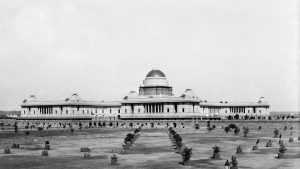
New Delhi is beautiful. I cannot pretend otherwise. Walking down Kartavya Path today, the lawns are green, the boats are still there, the chana jor garam vendors still call out but the champi tel malish walas have vanished. But beauty is not innocence. This capital was a monument to insecurity — an Empire so unsure of its right to rule that it spent 20 years and millions to look eternal, then left. It left behind a vista, a rent roll, and 24 villages you cannot find on any modern map and erased for memory.
That was the distortion. Not just of land, but of purpose. A capital built not to govern India, but to pose over it. And for 70 years, we paid for the pose.
Now, for the first time, Delhi is being built by India, with Indian hands, to Indian accounts. The crores saved in rent will pay for the ministry buildings. The villages cannot be brought back. But the cycle of paying for our own capital has ended. It is ending on Raisina Hill, in concrete and stone, under Indian architects.
Lutyens would not recognise it. Bhagat Singh would.
The author’s father was a government servant in New Delhi. The 24 villages are drawn from land acquisition records, oral testimonies, and court documents from the National Archives of India. Rent data is compiled from Ministry of Housing and Urban Affairs statements, court records, and parliamentary replies between 2014 and 2025. The Central Vista project was completed in 2026.
