
Govt Rebuts Global Claims on India’s Textile Recycling Sector
Government rejects claims of environmental neglect, highlights strong recycling ecosystem and reforms

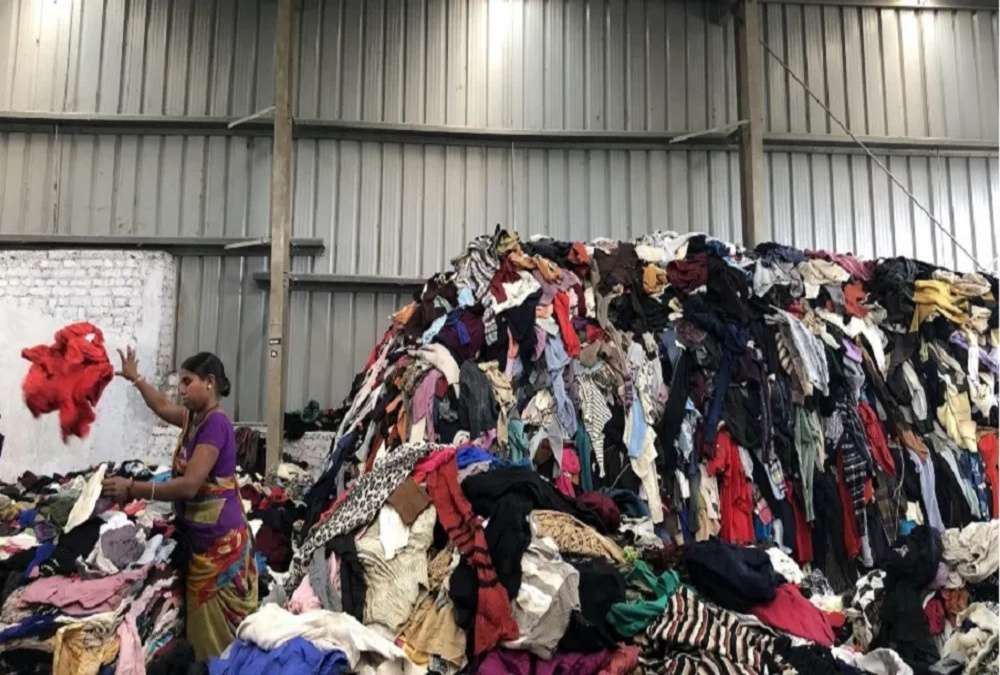
- Centre counters international report on textile recycling
- Government says India recycles nearly 97% pre-consumer textile waste
- Assam, Panipat and Tiruppur cited as major recycling hubs
- Textile sector projected to generate Rs 22,000 crore annual value
GG News Bureau
New Delhi, 14th May: The Centre on Wednesday rejected recent international media reports portraying India’s textile recycling industry as environmentally negligent and exploitative, asserting that the country possesses one of the world’s largest and most established textile recovery ecosystems.
In a detailed rebuttal issued by the Ministry of Textiles, the government said isolated instances of non-compliance should not be used to broadly characterise India’s textile recycling sector.
The ministry said India has long-standing systems for reuse, repair, recycling and repurposing of textile waste, unlike many countries where discarded textiles are largely sent to landfills.
India Recycles Majority of Textile Waste
According to the ministry, India generates nearly 7,073 kilo tonnes of textile waste annually, including pre-consumer and post-consumer waste streams.
Citing the “Mapping of Textile Waste Value Chain in India 2026” study, the government said almost 97 per cent of pre-consumer textile waste generated during manufacturing processes is recycled, reflecting strong material circularity within the domestic textile industry.
The ministry also rejected suggestions that India serves mainly as a dumping ground for Western fast-fashion waste.
Officials said over 90 per cent of textile waste processed in India originates domestically, while imported post-consumer waste accounts for only around 7 per cent and is strictly regulated under existing waste management rules.
Panipat Recycling Cluster Highlighted
The government highlighted specialised textile recycling hubs such as Panipat, Tiruppur, Ludhiana and Surat, describing them as major contributors to India’s circular economy.
Panipat, frequently referenced in international reports, was described as one of the world’s major textile recycling centres processing large volumes of woollen and blended textile waste.
The ministry cited a peer-reviewed Journal of Cleaner Production study conducted by researchers from Indian Institute of Technology Delhi, which found that textile recycling in Panipat reduces greenhouse gas emissions, fossil fuel depletion and acid rain potential by 30 to 40 per cent compared to virgin fibre production.
Regulatory Oversight and Sustainability Measures
The Centre acknowledged challenges related to worker safety, blended textile waste and environmental compliance among smaller informal units, but stressed that the sector is moving towards greater formalisation and cleaner technologies.
Officials said textile recycling units operate under established environmental and labour laws, including the Water Act, Air Act and Occupational Safety, Health and Working Conditions Code, 2020.
The ministry noted that enforcement action by the National Green Tribunal and State Pollution Control Boards against non-compliant units demonstrates active regulatory oversight.
Push Towards Advanced Recycling
The government said organised recyclers and export-oriented textile units are increasingly adopting advanced recycling technologies, zero-liquid discharge systems, renewable energy and energy-efficient processing infrastructure.
It also highlighted India’s progress in recycling high-value technical textile waste, including defence-grade fibres and aerospace composites.
The Atal Centre of Textile Recycling and Sustainability at IIT Delhi has developed technology for recycling aramid fibre waste used in bulletproof jackets and protective gear under the National Technical Textiles Mission, the statement added.
The ministry reiterated its commitment to building a globally competitive, environmentally responsible and socially inclusive textile sector aligned with India’s sustainability and circular economy goals.
