
Rakhigarhi Human Remains Sent for Advanced Scientific Study
ASI transfers Harappan-era skeletal remains to AnSI for DNA, health and ancestry research

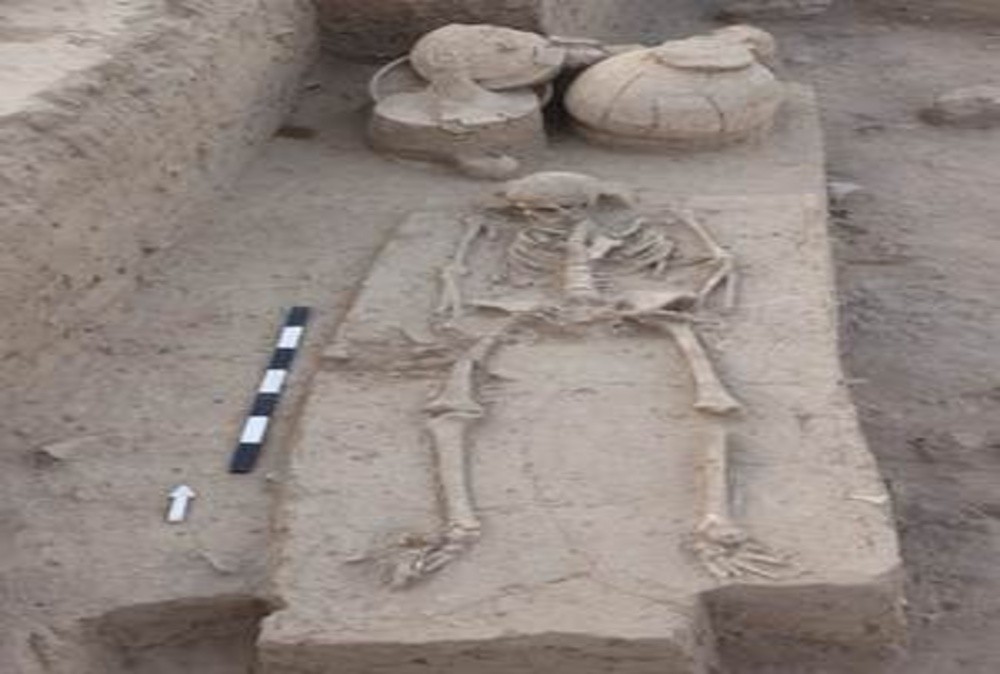
- Rakhigarhi remains handed to AnSI.
- Ancient DNA studies to be conducted.
- Research to uncover Harappan lifestyle.
- National and global experts to collaborate.
GG News Bureau
New Delhi, 23rd June: Human skeletal remains excavated from the ancient site of Rakhigarhi in Haryana have been formally transferred by the Archaeological Survey of India (ASI) to the Anthropological Survey of India (AnSI) for detailed scientific research into the Indus-Saraswati Civilization.
The remains, including three complete human skeletons and other skeletal fragments recovered from eight burials at Mound No. 7 during the 2025–26 excavation season, will be examined at AnSI’s ancient skeletal laboratory in Kolkata.
Researchers will employ modern techniques such as ancient DNA analysis, isotope studies, osteological examinations and palaeopathological investigations to understand the ancestry, migration patterns, diet, diseases and lifestyle of the Harappan population.
The study will be carried out in collaboration with leading institutions, including the Birbal Sahni Institute of Palaeosciences, University College London and Banaras Hindu University.
Spread over nearly 550 hectares, Rakhigarhi is regarded as the largest known settlement of the Indus-Saraswati Civilization and has yielded evidence of planned urban settlements, advanced drainage systems, trade networks and burial practices.
Officials said the collaboration between ASI and AnSI will strengthen multidisciplinary research and provide deeper insights into the biological history, health and evolution of one of the world’s earliest urban civilizations.
