
UPI: India’s Digital Payment Revolution
From a domestic payment platform to a global symbol of India’s Digital Public Infrastructure

By Harshita Rai
A decade ago, digital payments in India were still far from being a part of everyday life for millions. Today, a small QR code at a roadside shop, a mobile number or a UPI ID can move money in seconds. The transformation is not merely technological; it has changed the relationship between citizens, businesses and the financial system.
At the centre of this transformation stands the Unified Payments Interface (UPI).
Developed by the National Payments Corporation of India, UPI was designed around a simple but powerful idea: different banks and payment services should be able to communicate through a common, interoperable platform. That principle has proved to be one of its greatest strengths.
UPI’s journey began in 2016 with 21 member banks. Since then, the ecosystem has expanded through innovations such as BHIM, UPI 2.0, UPI AutoPay, UPI 123PAY, UPI Lite, Credit Line on UPI and UPI Circle. Each development has attempted to address a different part of the payment ecosystem — from recurring payments and low-value transactions to feature-phone users and delegated payments.
The numbers illustrate the scale of the transformation. Annual UPI transactions increased from around 2 crore in FY 2016-17 to more than 24,162 crore in FY 2025-26. Transaction value rose from ₹0.07 lakh crore to around ₹314 lakh crore. By July 2026, 741 banks were live on the platform, while monthly transactions stood at about 2,365.8 crore.
But UPI’s importance cannot be measured only in transaction numbers.
Its deeper achievement has been the democratisation of digital payments. A large retailer and a small roadside vendor can participate in the same payment ecosystem. A customer does not necessarily need cash, while a merchant can receive money instantly without maintaining an elaborate payment infrastructure.
This is where UPI represents something larger than a payment application. It is an example of Digital Public Infrastructure being built at population scale.
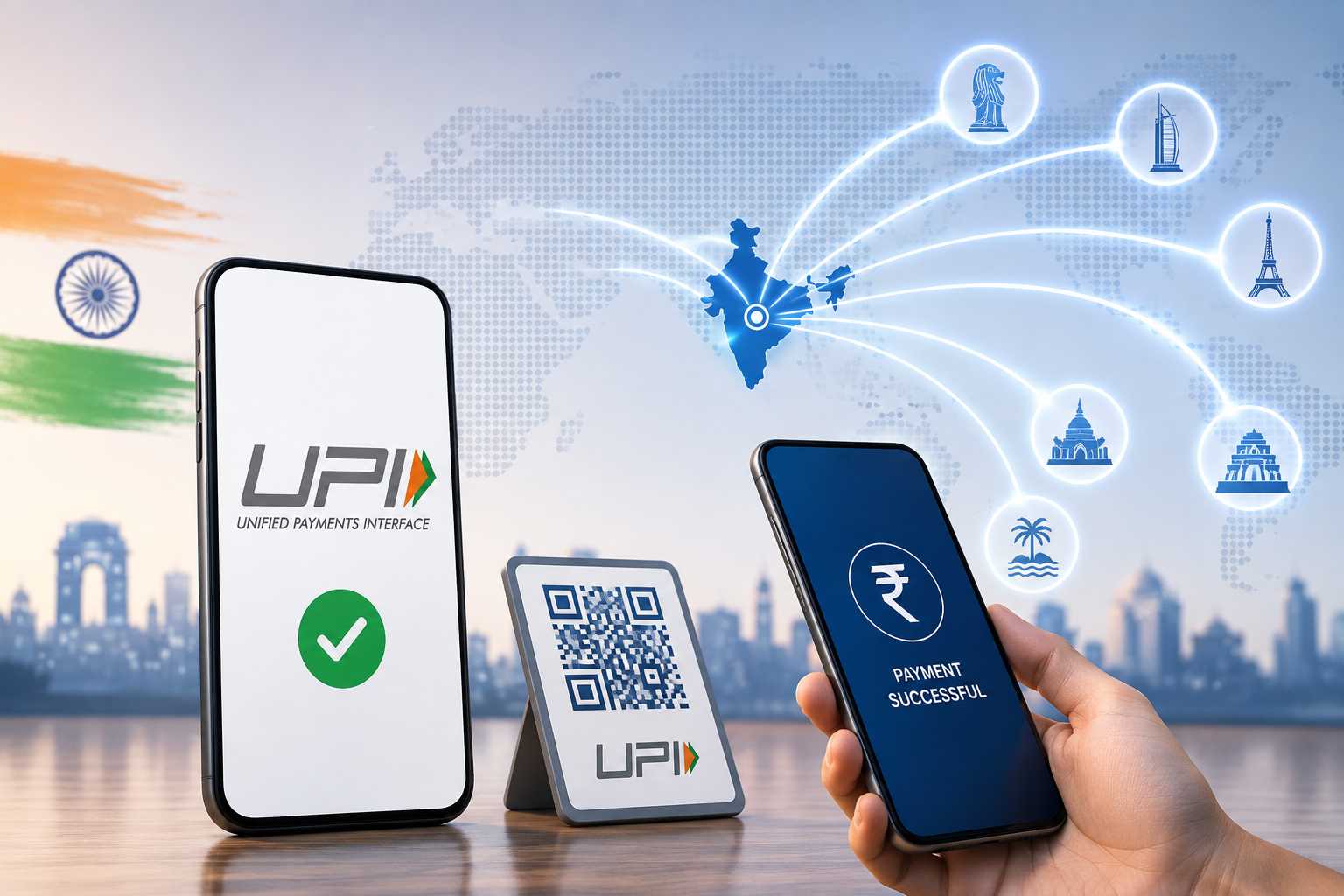
The international expansion of UPI adds another dimension. The platform is now operational in 11 countries, including the UAE, Singapore, France, Sri Lanka, Mauritius, Qatar, Cambodia, Greece and the Maldives. Its expansion demonstrates that India’s digital infrastructure is increasingly becoming part of its economic and diplomatic outreach.
Yet success also creates new responsibilities.
As digital payments become indispensable, reliability, cybersecurity and consumer protection become critical. A system handling enormous volumes of transactions cannot afford complacency. Greater adoption must be accompanied by stronger safeguards against fraud, better digital literacy and robust protection of users’ financial information.
There is also a larger question about inclusion. Digital transformation should not leave behind people who lack smartphones, reliable connectivity or familiarity with digital systems. Initiatives such as UPI 123PAY and UPI Lite show the importance of designing technology around users rather than expecting every user to adapt to technology.
The next decade, therefore, should not simply be about processing more transactions. It should be about making digital payments safer, more inclusive, more resilient and more globally interoperable.
UPI began as an experiment in simplifying payments. It has evolved into a foundational component of India’s digital economy. Its greatest contribution may ultimately be that it has made sophisticated financial infrastructure almost invisible in everyday life.
That is the real measure of technological success: when innovation stops feeling like innovation and simply becomes part of how society functions.
