
Fanta Sugar Difference Sparks Food Labelling Debate
UK and India formulations highlight concerns over sugar levels and front-of-pack warnings

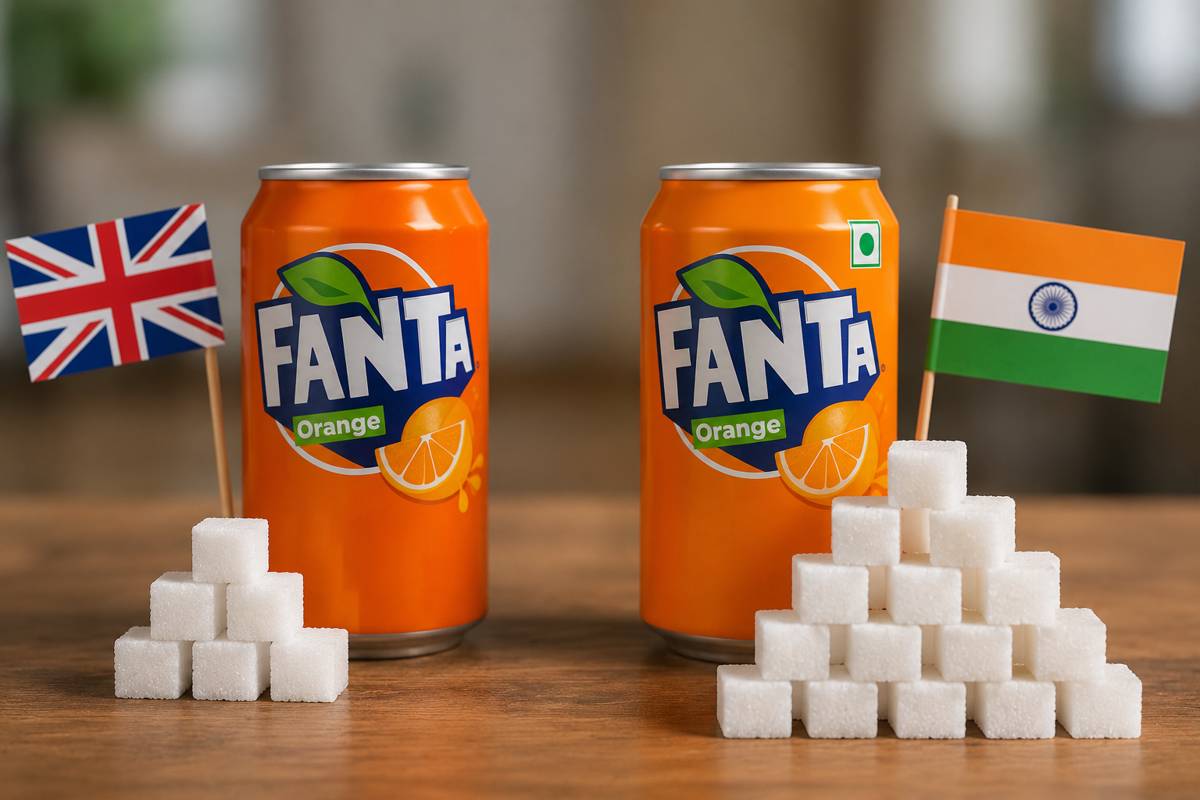
- A report has highlighted a significant difference in sugar content between Fanta sold in the UK and India.
- Experts link the UK formulation partly to its soft drinks tax, which incentivises lower sugar content.
- The debate comes amid scrutiny of India’s food labelling and nutritional warning rules.
- Industry estimates cited in the report suggest a large share of India’s packaged food market is high in fat, sugar and salt.
GG News Bureau
New Delhi, 28th Aug: Packaged food and beverage products sold in India have come under renewed scrutiny following a report highlighting differences between the formulation of Fanta sold in the UK and India, particularly in sugar content.
The comparison has triggered fresh debate over nutritional labelling and the need for prominent front-of-pack warnings on packaged foods containing high levels of sugar, salt and saturated fats.
Food safety educator Urvashi Agarwal told NDTV Profit that differences in soft-drink formulations between India and the UK are influenced by factors including taxation and the regulatory environment.
She pointed to the UK’s Soft Drinks Industry Levy, commonly known as the soft drinks tax, which creates a financial incentive for manufacturers to reduce sugar levels in beverages.
“In the UK, there is cold drink tax. So the manufacturer, the more sugar the manufacturer puts in the cold drink, the more tax he pays,” Agarwal said, explaining that such an incentive is not currently present in India.
Differences Extend Beyond Soft Drinks
A Reuters report cited in the source material said a can of Fanta sold in the UK contains 63 calories, while the Indian version contains substantially more sugar. The report also highlighted the presence of artificial colouring in the Indian product, with the information appearing in smaller print on the back of the packaging.
In Europe, the source noted, certain artificial colours require a prominent health warning.
The differences are not limited to beverages. The report also highlighted variations in products such as Maggi, noting that several versions sold in Britain use sunflower oil, while variants sold in India use palm oil.
The report further raised concerns about the absence of prominent warnings about high salt levels on packaged products in India.
FSSAI Labelling Rules Under Scrutiny
The issue comes amid an ongoing debate over India’s nutritional labelling framework. The Supreme Court recently criticised the Food Safety and Standards Authority of India (FSSAI) over the issue of front-of-pack warning labels for packaged foods containing high levels of sugar, salt and saturated fats.
Since 2017, Indian regulators have considered proposals for prominent colour-coded warnings and nutritional ratings on packaged food products. However, manufacturers are currently required to provide basic nutritional information and ingredient details on the back of packaging.
According to industry estimates cited in the Reuters report, nearly 80 per cent of products in India’s packaged food and beverage market, valued at more than $100 billion, could be classified as high in fat, sugar and salt.
Affordability Remains a Concern
Agarwal also highlighted the affordability challenge, noting that although companies are increasingly developing products with different ingredients and cleaner labels, a significant section of consumers may not be able to afford such alternatives.
The debate therefore extends beyond product formulation to questions of consumer awareness, affordability, taxation and regulatory standards.
The differences between products sold in India and other markets are likely to keep the focus on whether stronger front-of-pack nutritional information could help Indian consumers make more informed choices.
