
The Global Power Game: RAC Axis, BRICS Fractures and India’s Strategic Chessboard RAC and the Evolving World Order

Poonam Sharma
In the shadowy hallways of world diplomacy, a new axis is forming: RAC – Russia, America, China. The traditional power balance is in flux, and the three giants are re-adjusting their strategies, seeking to carve the world into spheres of influence. The reasons are obvious. Russia, battered by sanctions and war, needs leverage; America wants to maintain its global dominance; and China wants to secure resources, manufacturing, and regional hegemony.
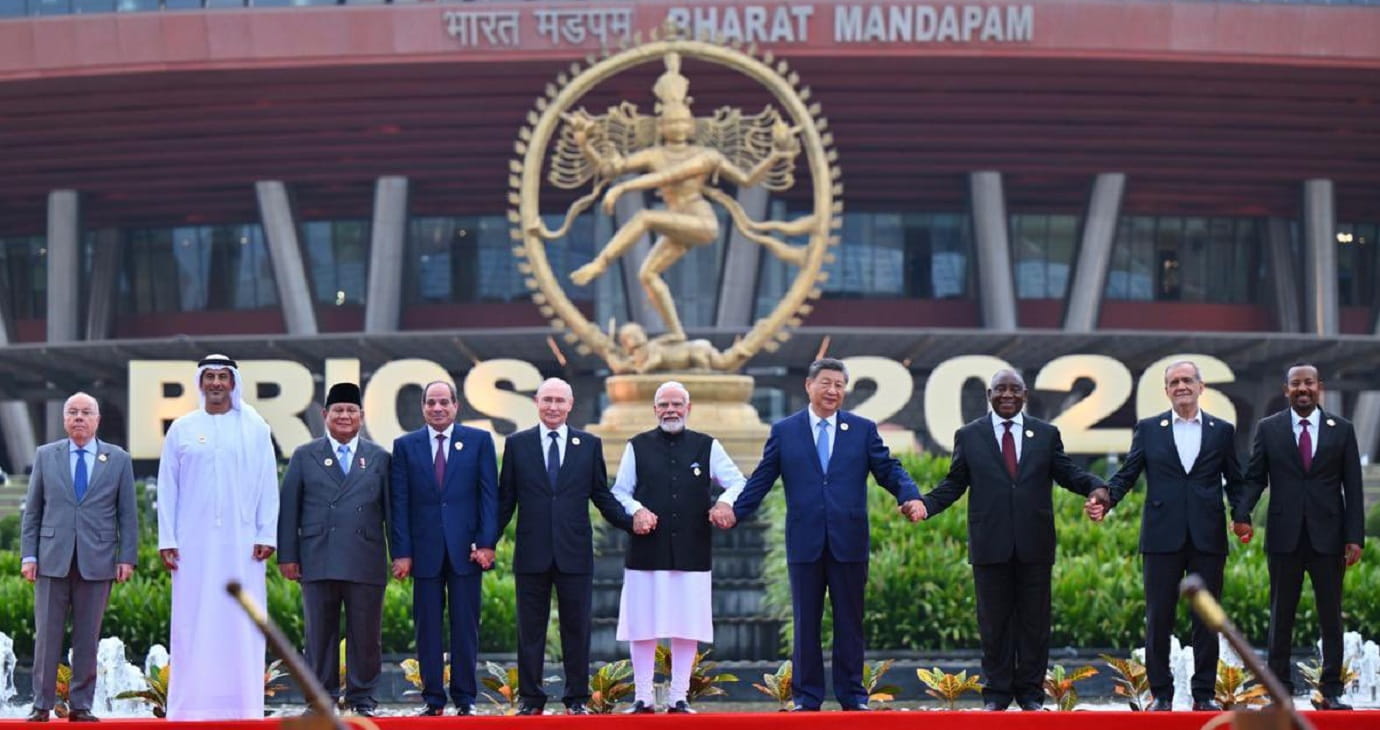
The recent summit of the BRICS bloc in New Delhi highlighted the rifts within what was once a promising global bloc. China’s aggressive posture and its nuanced tactics of control at BRICS and the wider Global South have encountered strong pushback, particularly from India under PM Modi’s leadership.
China’s cloak-and-dagger moves and the BRICS problem
Beijing wanted to quietly marginalize competitors and slowly turn BRICS into an Asia-focused bloc in its own image. But the Indian Government was always a step ahead of them, being fully aware of the threat. A “no-nonsense” Modi refused to be sucked into China’s language of partnership without substantive concessions (especially on the Himalayan border and trade), and set a new precedent.
The symbolic retreat was highlighted by China’s President Xi Jinping’s absence from key dinners and bilateral events. That was a sign that China’s vision of a “Asian Century” would not happen without India’s buy-in—a buy-in Modi flatly denied. The message was clear: as long as the border provocations and unfair trade practices continue, India will not partner China for an Asia-led world order.
America’s Calculation, Russia’s Risk
Russia, meanwhile, is in a corner. Moscow, under Western sanctions, losing its share of the energy market, seeking new relevance, is desperate for new alliances. The proposed RAC framework – a strategic triangle between Russia, America and China – provides a lifeline, but carries its own risks. If it were to be implemented, the world could be carved into three spheres: America in the West, Russia dominating energy and China controlling manufacturing and emerging markets.
But the reality on the ground is more complex. India is quietly emerging as a kingmaker. New Delhi’s voice now matters more, with strong ties to the US, growing defense ties, and a refusal to be pushed around by Moscow or Beijing. The shifting alliances have put China on the defensive, forcing it to rethink its “go-it-alone” strategy.
The BRICS Breakup and The Global South
The summit demonstrated a new assertiveness from the Global South. Over 120 smaller countries, many in Africa and Latin America, are turning to India because they see New Delhi as a more reliable, democratic alternative to Beijing’s debt-trap diplomacy. The outcome? Now the BRICS bloc is divided with India and its partners resisting Chinese supremacy and Russian unreliability. Sensing opportunity , the US has started to court these countries , offering security and economic incentives .
Implication for India and the World
What does this shifting balance of power mean for India, and for the world?
India: Maturing into a full-fledged global player. Modi’s assertive foreign policy — balancing relations with the US, standing firm against China and leveraging Russia’s desperation — places India at the center of the new world order.
For China: new challenges to ambitions of Asian hegemony. India’s refusal to play second fiddle has isolated Beijing forcing a rethink in its strategies toward both the region and world.
Russia: The quest for relevance goes on. Moscow’s future depends on its ability to broker deals between rival giants, but risks marginalization if it has little to offer beyond energy.
For the US: America’s leadership is no longer without challenge. It must work with assertive regional powers in a world of disintegrating old alliances and emerging new ones.
Three-Power World?
The most dangerous implication is the possibility of a three bloc world . Where three superpowers decide how the world is governed , and smaller countries are forced to pick a side or become irrelevant . This would upend the post-World War II order, create new flashpoints (from the Himalayas to the Middle East) and increase the risk of conflict.
The future, however, is not yet written. As the world watches the “RAC” triangle, the ability of India to play the strategic chessboard – balancing, resisting and leading – will determine if the next century is one of cooperation or confrontation.
The current global turmoil is not just a diplomatic row, but a fight for the soul of the 21st century. BRICS disintegrates, RAC axis emerges and India’s growing clout make the power game on. The world is watching – and the stakes are enormous.
