
India Flags Pakistan-Based Terror Networks at UN, Cites 9/11 Plotters

By Anjali Sharma
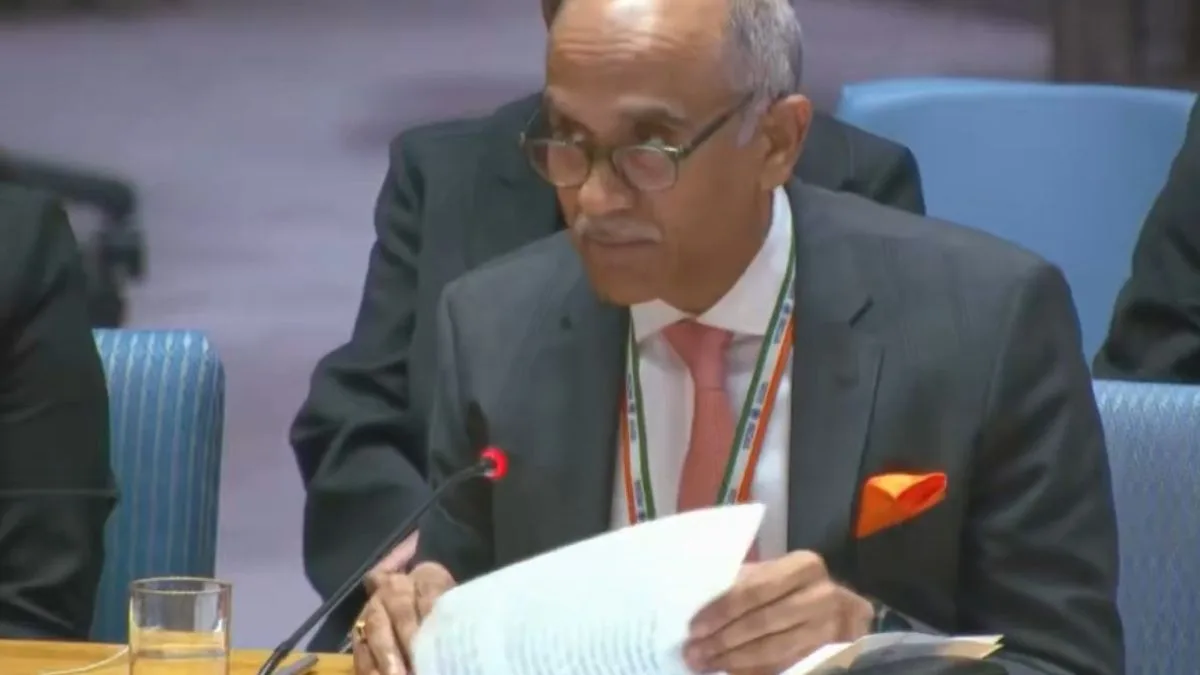
UNITED NATIONS – India Ambassador to the UN Parvathaneni Harish on Thursday raised the involuntary return of millions of Afghans, questioned why the scale of the humanitarian crisis had not triggered a stronger response from the UN Security Council.
New Delhi has turned the fate of the men behind the September 11 attacks into a sharp warning against terror sanctuaries, told the Council members that the architects of 9/11 were not eventually found hiding in remote “caves or badlands”.
Ambassador Harish was speaking at a UNSC meeting on Afghanistan invoked Osama bin Laden, Khalid Sheikh Mohammed and other senior al-Qaeda operatives as he called for action against environments that allow terrorist networks to survive.
He also named Lashkar-e-Taiba and Jaish-e-Mohammed as he warned about continuing support and impunity for al-Qaeda affiliates.
India envoy recalled last week’s Security Council visit to the 9/11 memorial and linked the memory of those killed to the fight not only against terrorists but also those who support them.
“May the memory of these victims always remain a motivation to not only fight against all such individuals who are the worst of humanity, but also those who aid, abet, finance and support their crimes,” he said.
Harish pointed to the circumstances in which several key figures connected with the 9/11 plot were eventually located without naming Pakistan in that part of his remarks.
Osama bin Laden, who ordered and financed the plot, was killed in 2011 during Operation Neptune Spear after being located in a fortified compound in Abbottabad, Pakistan.
Khalid Sheikh Mohammed, the principal architect of the attacks, was captured in Rawalpindi, Pakistan, in March 2003. Mustafa Ahmed al-Hawsawi was also captured in Rawalpindi.
Ramzi Binalshibh was captured in Karachi in September 2002. Walid bin Attash was captured in the same city in April 2003, he noted.
Harish said “In each case, these were not fugitives hiding in caves or badlands; they were men who had for long evaded detection.”
“Draining this swamp that provided an enabling environment for such monsters of humankind to prosper is important,” he added.
Harish widened India’s argument beyond the men behind 9/11, warned that the conditions which protected terrorist leaders had not disappeared.
“The same permissive environment that sheltered the architects of 9/11 has, in the years since, continued to provide space, support, and impunity to affiliates of Al Qaeda such as Lashkar-e-Taiba and Jaish-e-Mohammed and their like,” he said.
He said such groups had acquired different identities to evade the Security Council’s sanctions framework, while their leadership and terror training infrastructure remained shielded from consequences.
India called on the international community to confront the continued existence of such sanctuaries.
“The international community must join hands to address the continuity of such sanctuary in order to ensure that more such individuals are not thrust upon any country or its citizens and no one loses family and loved ones,” Harish said.
He noted that the terrorism warning came during a broader Indian intervention on Afghanistan that also raised the humanitarian impact of large-scale returns to the country.
Harish cited the UN Secretary-General’s report to say 2.9 million Afghans returned in 2025.
Some 1.15 million returned between January 1 and August 22 this year, with a large proportion of the returns involuntary. India questioned the absence of a stronger international response.
Ambassador Harsh said “A forcible return of this nature that is neither safe nor dignified, of over 3 million individuals, in any other part of the world would have elicited a political outcry in this Council, urgent provision of large-scale humanitarian support and efforts to ensure better re-integration and assimilation,”.
“That there is no such reaction is a sad reflection on the times.”
India said such returns should be voluntary, safe and dignified. It also referred to its cooperation with UN agencies and Afghan authorities on housing, food and other essential supplies, including family tents gifted to Afghanistan’s Ministry of Refugees and Repatriation.
