
Second Chances and the Real Meaning of NEET Success
Prabhat Kumar Yadav’s journey from a village in Jaunpur to KGMU highlights the persistence, sacrifice and determination behind a medical admission

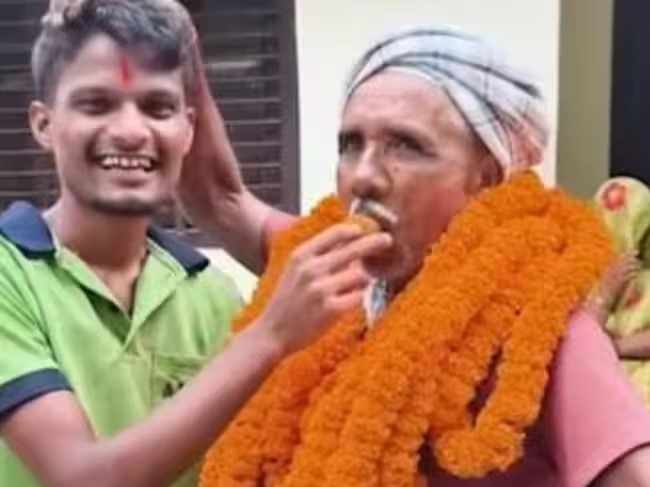
GG News Bureau
New Delhi, 25th Sept: For many students, a competitive examination is viewed as a single decisive test—one result that can seemingly determine the course of an entire career. But the journey of Prabhat Kumar Yadav from Devkipur village in Uttar Pradesh’s Jaunpur district offers a different perspective. His experience demonstrates that an unsuccessful first attempt need not mark the end of an aspiration. Sometimes, it can become the starting point for a stronger and more determined effort.
Prabhat appeared for NEET UG for the first time and scored 504 marks. The result did not take him to the medical college he had hoped for. Instead of abandoning his ambition, he chose to take another attempt. That decision required not merely another year of preparation, but the willingness to confront disappointment and begin the demanding process all over again.
His second attempt produced a substantial improvement. Prabhat scored 627 marks in NEET UG 2026, securing an All India Rank of 3,864 and earning an MBBS seat at King George’s Medical University (KGMU), Lucknow.
The numerical improvement—from 504 to 627 marks—is striking. But the more significant aspect of the story lies behind those numbers.
From Devkipur to Kota
Prabhat’s journey began in Devkipur, a village in Jaunpur district. In pursuit of his medical aspirations, he moved from his village to Kota for coaching.
For a student coming from a village background, such a move represents a major transition. It means leaving behind a familiar environment and adapting to a new place built around competitive examination preparation.
The journey was further complicated by financial difficulties. His preparation was therefore not simply an academic exercise. It was also dependent on the ability of his family to sustain his education and support another attempt at the examination.
That dimension of the story is important because competitive examinations are often discussed primarily through marks, ranks and cut-offs. Behind every successful candidate, however, there can be years of family support, financial planning and personal sacrifice.
Prabhat’s case brings that less visible side of the examination journey into focus.
The courage to attempt again
A second attempt at a competitive examination can carry its own psychological burden. A student already knows what it means to prepare, sit for the examination and wait for the result. Returning to the same process after an unsatisfactory outcome requires considerable persistence.
Prabhat had two choices after scoring 504 marks: accept the result and move away from his medical ambition, or give himself another opportunity.
He chose the latter.
His decision to take a drop year demonstrates an important principle in academic life: a setback is not necessarily a conclusion. It can also become an opportunity to reassess one’s preparation, identify shortcomings and approach the next attempt with greater clarity.
The result of that renewed effort was a 123-mark improvement, taking him from 504 to 627 marks.
More than a score
It would be easy to reduce Prabhat’s story to a simple success formula: first attempt, 504 marks; second attempt, 627 marks; admission to KGMU.
But that would overlook the larger lesson.
Competitive examinations measure performance on a particular day and within a particular examination framework. They do not necessarily capture the entire journey of a student—the circumstances in which preparation took place, the resources available, the obstacles faced or the determination required to continue.
Prabhat’s story is therefore significant not merely because he improved his score, but because he refused to allow his first result to define his aspirations.
His journey also reminds students and families that academic progress does not always follow a straight line. Some students succeed on their first attempt. Others need additional time. The timelines may differ, but the objective can remain the same.
The family’s role
Another important element in Prabhat’s journey is the contribution of his family.
The account of his success specifically points to the efforts his family made to support his education despite financial difficulties. His achievement, therefore, cannot be viewed solely as an individual accomplishment.
A student’s preparation may happen in classrooms, coaching centres and study rooms, but sustaining that preparation often requires support outside them. Families may have to make difficult financial and personal choices to keep an educational goal alive.
Prabhat’s admission to KGMU thus represents not only the outcome of his preparation but also the culmination of the support that enabled him to continue pursuing medicine after his first attempt.
What Prabhat’s journey tells other aspirants
The most valuable message from this story is not that every student should take a drop year after an unsuccessful attempt. Such a decision is deeply personal and depends on individual circumstances.
The broader lesson is about persistence with purpose.
A second attempt becomes meaningful when it is accompanied by a willingness to learn from the first one. Simply repeating an examination does not guarantee a different result. What matters is how a student responds to the earlier outcome and how effectively the next phase of preparation addresses the challenges faced previously.
Prabhat’s 123-mark improvement illustrates what sustained preparation can achieve in his particular case.
His journey also underlines the importance of keeping perspective during competitive-examination preparation. Marks matter, ranks matter and admissions matter—but they are outcomes of a much longer process.
A new beginning at KGMU
With an MBBS seat at King George’s Medical University, Lucknow, Prabhat now begins a new chapter.
The admission is the culmination of his NEET journey so far, but it is not the end of his professional journey. Medical education will bring a new set of academic responsibilities and challenges.
For now, however, his story stands as a reminder that success can sometimes arrive after a setback—and that the distance between the two may be bridged by persistence, family support and the decision to try again.
Prabhat Kumar Yadav’s journey from Devkipur to KGMU is, ultimately, a story about second chances. His 627 marks and AIR 3,864 provide the measurable outcome. The more enduring achievement is the determination that carried him from a first-attempt score of 504 to the medical college he aspired to join.
In an examination culture often dominated by ranks and numbers, that human dimension deserves equal attention.
