
254 Hindu Killings: Bharat Needs Answers, Not Narratives; Govts Should Respond

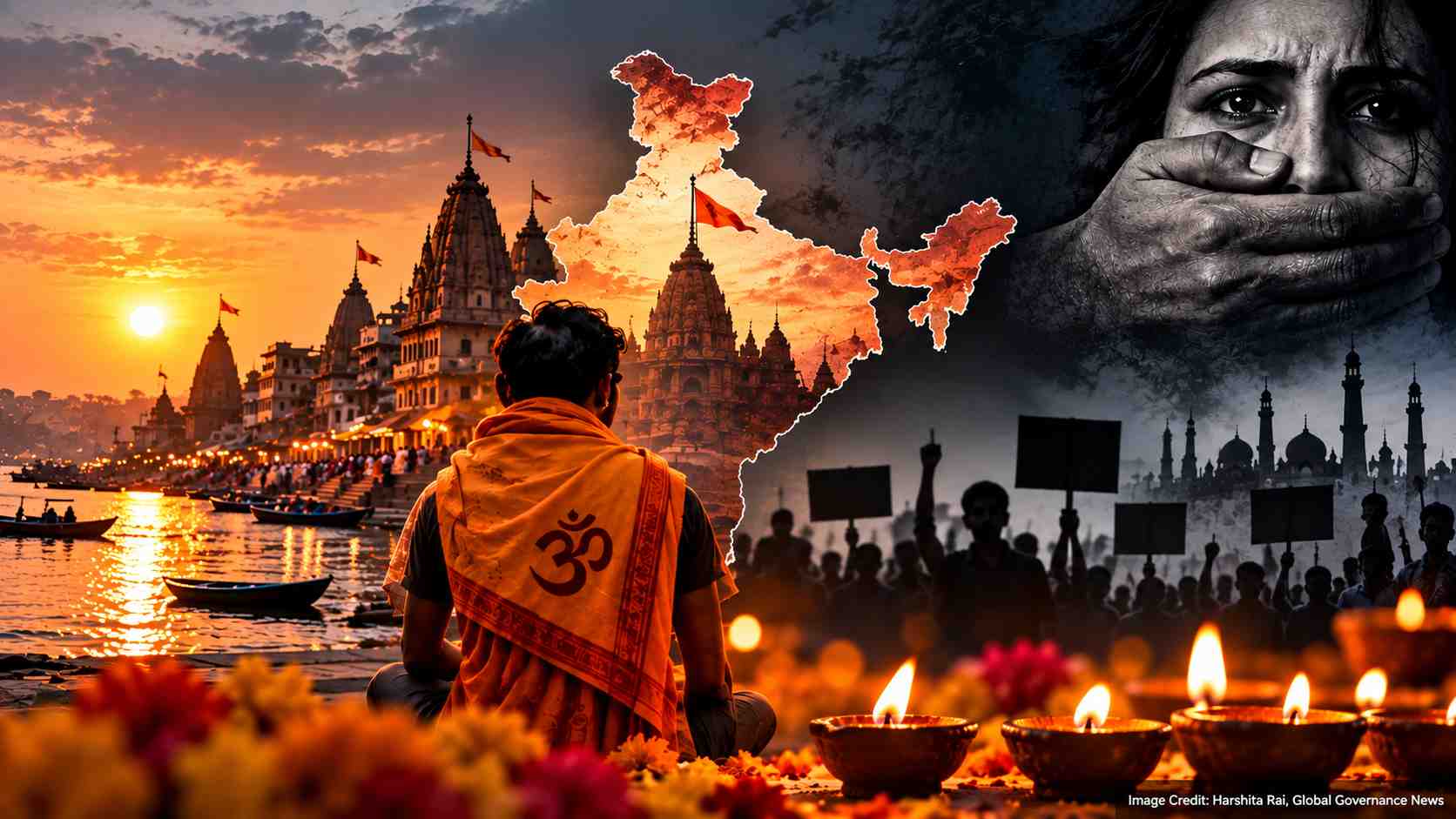
The death of Hindus in Bharat and across the world is increasing day by day, and the issue can no longer be pushed to the margins of public debate. Hindu deaths are taking place in different forms and under different circumstances — through jihadi-type mentality, extremist violence, conspiracies, targeted killings, communal violence, attacks on religious gatherings and, in cases described by Hindu organisations, through “Love Jihad”. Many deaths and attacks are reported, while others are alleged to remain unreported or receive little public attention.
The disturbing question is not merely how many Hindus have died, but why the deaths of Hindus so often fail to become a sustained public concern, and why the narrative surrounding such incidents so frequently turns against Hindus themselves.
Despite the number of Hindu deaths reported from different parts of Bharat and across the world, the narrative in many cases shifts away from the Hindu victim and towards those raising concerns about Hindu security. The focus moves to allegations of communalism, majoritarianism or political motivation, while the circumstances surrounding the victim’s death receive less attention. This has created a persistent concern among Hindus that an established media and political narrative can turn the discussion against them.
There may be political interests behind particular narratives. There may also be exaggerations or incorrect classifications in some cases. Both require scrutiny. But neither justifies ignoring genuine cases of violence against Hindus.
Against this background, the data released by the Vishva Hindu Parishad (VHP) deserves attention.
The VHP has compiled a list of 254 Hindus whom it claims were killed in alleged jihadi attacks between January 1 and August 31, 2026. The 26-page document records the date of incident, location, victim, accused and source of the reported incident. The classification of these cases as “jihadi” killings is the VHP’s assessment and must be independently verified case by case. But the existence of the 254-entry dataset is an eye-opener.
It raises an uncomfortable question for those who repeatedly claim that we are living in a so-called Hindu Rashtra: if this is supposedly a Hindu Rashtra, why are questions about the safety of Hindus still being raised with such urgency?
The answer must be found in facts.
The figures contained in the VHP list show 23 entries in January, 22 in February, 22 in March, 32 in April, 34 in May, 44 in June, 41 in July and 36 in August.
That means 121 of the 254 entries occurred during June, July and August alone. June recorded the highest number with 44 entries, followed by July with 41 and August with 36.
These numbers do not prove that all 254 killings were part of one organised conspiracy or that every case was religiously motivated. But they are too substantial to be dismissed as an insignificant collection of isolated incidents.
The geographical distribution is equally striking. The list records 81 entries from Uttar Pradesh, 42 from Maharashtra, 22 from Delhi, 19 from Karnataka, 16 from Bihar and 13 from Assam. Together, these six states account for 193 of the 254 entries.
The figures should not be converted into a political conclusion without investigation. But they should certainly trigger one.
The first responsibility of the State is to determine what happened to these Hindu citizens. Were they killed because they were Hindus? Were the incidents motivated by personal or criminal disputes? Were there communal elements? Was there evidence of extremist involvement? Were there previous threats? Were the accused arrested, chargesheets filed and convictions secured?
These are questions of law and order, not ideology.
VHP Joint General Secretary Surendra Jain, while releasing the list, said:
“There appears to be no end to the pattern of killing Hindus by extremists on one pretext or another.”
Jain also said that the large number of Hindu deaths should concern patriotic and nationalist Bhartiyas and claimed that Hindus were becoming the “primary targets” of extremist forces.
These are Jain’s assertions and must be identified as such. But dismissing them simply because they come from the VHP would be as intellectually dishonest as accepting every classification in the VHP list without verification.
The correct response is to examine the evidence.
For years, the debate around violence involving Hindus has frequently become a contest over narratives rather than facts. If a Hindu is killed, the political question often becomes who is raising the issue and why, while the circumstances of the death receive less attention.
That approach must change.
A Hindu victim should remain at the centre of the investigation.
If religious hatred was the motive, the State must establish it. If it was not, the State must establish that as well. If the VHP has incorrectly classified a case, the classification should be corrected. If its allegation is supported by evidence, the government should have the courage to acknowledge it.
There is no reason for a Bhartiya State to fear facts.
The issue becomes more serious when allegations involve attacks on Hindu religious gatherings, Hindu settlements and Hindu women. Jain has specifically alleged that attacks on Hindu religious events, abduction of Hindu women through force or deception under the guise of “Love Jihad”, and attacks on Hindu settlements have become frequent.
These allegations must be investigated rather than converted into either unquestioned political truth or automatic political falsehood.
The phrase “Love Jihad” has become one of the politically contested terms in contemporary Bharat. That is precisely why every case described under that label must be examined through evidence. If an alleged relationship involved coercion, deception, trafficking, religious coercion or criminal conspiracy, those facts should be established through investigation. If such elements are absent, that too must be clearly established.
The same principle applies to alleged jihadi violence.
Not every murder of a Hindu by a Muslim automatically becomes a jihadi killing. But neither should every case involving an alleged religious motive be automatically reduced to an ordinary crime merely to avoid political controversy.
The motive must be investigated.
The 254 cases therefore deserve an independent audit.
Every case should be examined against the FIR, police investigation, chargesheet, court proceedings and final outcome. The cases should be categorised according to established facts rather than political assumptions.
If the final verified number is lower than 254, let it be published. If it is higher, let that be published too. If some cases involve religious hatred while others do not, the distinction should be made public.
This would settle the factual dispute far more effectively than political speeches.
But another question cannot be avoided: why does the narrative so often turn against Hindus when Hindus raise concerns about their own security?
A Hindu who raises questions about violence against Hindus can quickly be accused of spreading hatred. A Hindu organisation compiling cases can be accused of communal politics. A journalist discussing Hindu victims can be questioned about ideological motivation.
Yet Hindu citizens have the same right to security as every other citizen.
Demanding that right is not extremism. Demanding investigation is not communalism. Demanding justice is not hatred.
At the same time, Hindu security cannot become a justification for collective hatred against Muslims. Individual criminals must be held responsible for their actions. An entire community cannot be blamed for the crimes of individuals.
But this principle must work both ways.
The protection of minorities cannot mean the silencing of legitimate concerns about Hindu victims, just as the protection of Hindus cannot mean abandoning constitutional justice.
The State must protect Hindus without becoming unjust to anyone else.
Bhartiya political discourse frequently speaks of Hindu civilisation, Hindu identity and the cultural foundations of Bharat. Yet when the question of Hindu security is raised, the discussion often becomes defensive.
If Hindus are genuinely secure, demonstrate it through data.
If Hindu victims are receiving justice, demonstrate it through conviction rates and case outcomes.
If the VHP’s list is substantially inaccurate, publish the corrections.
If the list exposes genuine failures of law and order, address those failures.
This is how a confident State should respond: through facts, not denial or political labelling.
There is also a danger in allowing these 254 names to become merely another political statistic.
Every name represents a human being. Every death has a family. The responsibility of the State is not merely to maintain statistics but to ensure that citizens are protected and perpetrators are brought to justice.
If a Hindu was killed because of his Hindu identity, that is an attack not only on an individual but on the constitutional promise of equal protection.
If the death had nothing to do with religion, that fact must also be established.
Either way, the truth must be recorded.
The VHP has put forward 254 cases.
Now the Bhartiya State must answer with verified facts.
Surendra Jain’s warning that “There appears to be no end to the pattern of killing Hindus by extremists on one pretext or another” should not be treated as either unquestionable truth or political propaganda.
It should be treated as a challenge: investigate the cases, verify the motives, establish the facts, punish the guilty, protect Hindu citizens and correct false claims.
Because the real issue is not whether Bharat is described as a Hindu Rashtra or whether political parties use Hindu identity during elections.
The real test is much simpler:
Can a Hindu citizen live without fear, and can a Hindu family expect justice when one of its members is killed?
If the answer is yes, the State must demonstrate it.
If the answer is no, political slogans cannot conceal the failure.
254 Hindu deaths are therefore not merely a number. They are a question of security, justice and accountability—and Bharat must answer it.
About the Author:
Dr Kumar Rakesh is a senior journalist, writer, commentator and political analyst based in New Delhi, India. Dr. Rakesh has been a member of the core team involved in launching nine TV channels, with around 39 years of experience across print, television, radio, online and digital media. He has travelled to and written from more than 50 countries, covering issues concerning India and the wider world. His work has earned him several honours and awards. Currently, Dr Kumar Rakesh is the Editorial Chairman of Global Governance News Group and Samagra Bharat Media Group. Contact: krakesh8@gmail.com
Source note: The numerical analysis is based on the 254-entry VHP list supplied for this article. The month-wise and state-wise figures are derived from that dataset. The VHP’s classification of individual cases as jihadi killings remains an organisational claim and requires case-by-case independent verification.
