
Rahul Gandhi Moves SC on SIR, EVMs and Punjab Voter Rolls
Congress leader flags alleged deletion of 20 lakh voters in Punjab, questions modified Form 6 and seeks scrutiny of Election Commission procedures ahead of the 2027 Assembly polls.

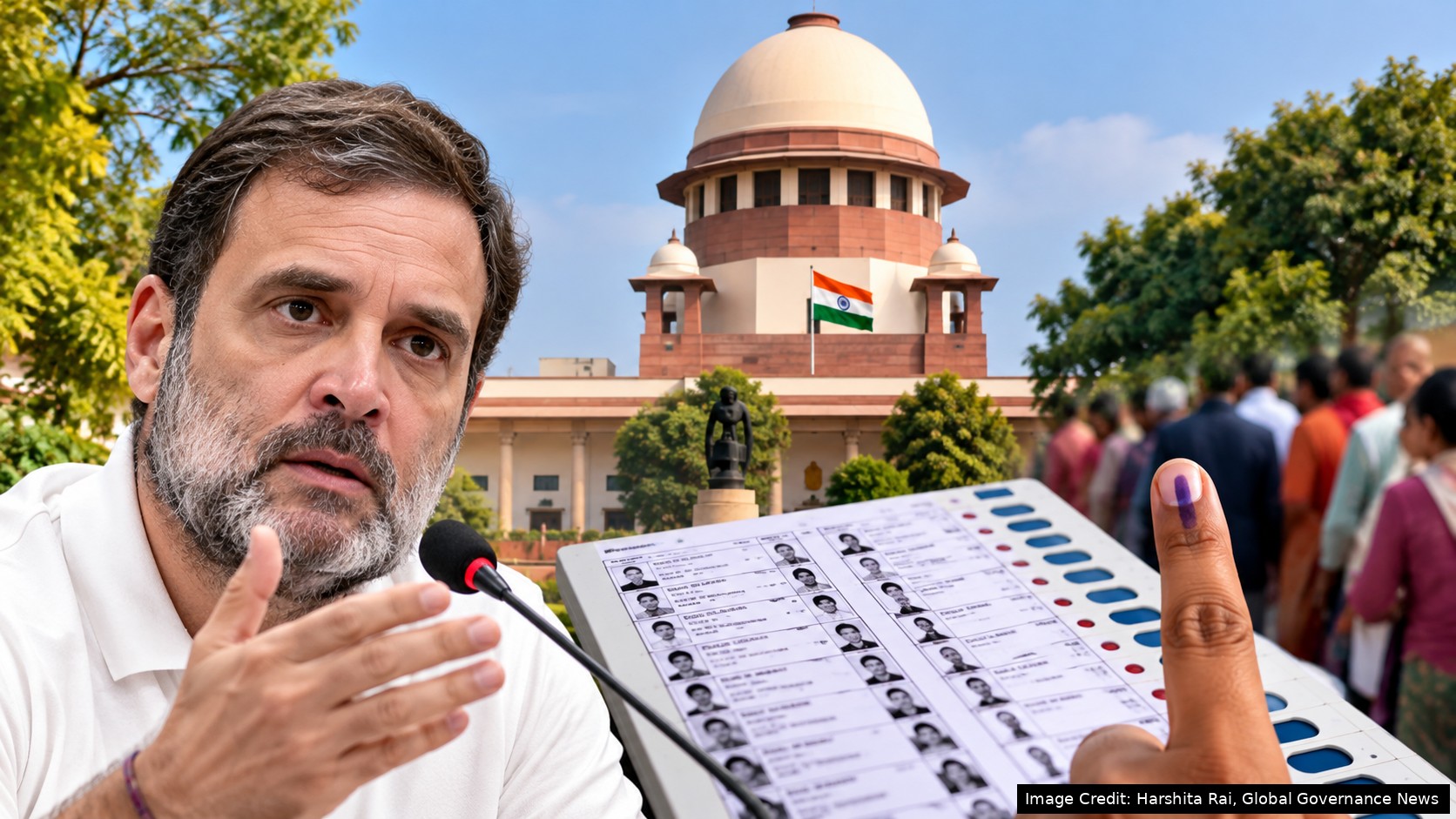
- Rahul Gandhi raises SIR and EVM concerns before the Chief Justice of India.
- He alleges Punjab’s draft voter roll shows a reduction of around 20 lakh names.
- Gandhi questions modified Form 6 and the Election Commission’s decision-making process.
- Supreme Court filing remains pending as registry defects are addressed.
GG News Bureau
New Delhi, 13th Oct: Leader of the Opposition Rahul Gandhi has approached the Chief Justice of India, Surya Kant, raising concerns over the Election Commission of India’s Special Intensive Revision (SIR) of electoral rolls, electronic voting machines (EVMs) and the potential impact on voters ahead of Punjab’s Assembly elections scheduled for early 2027.
Gandhi’s representation reportedly highlights an alleged fall in Punjab’s electorate from 2.14 crore in June 2026 to 1.93 crore when the draft electoral roll was published in August. He has questioned the implications of the reported reduction of around 20 lakh names and warned that unresolved issues could affect eligible voters’ inclusion in the final rolls.
The Congress leader has also raised concerns over the modified Form 6, used for new voter registration. He objected to a requirement asking applicants to declare whether they or their relatives had appeared in an earlier SIR exercise. Referring to the Supreme Court’s October 5 clarification that it had not approved the modified form, Gandhi argued that such a condition could create barriers for first-time and new voters.
Gandhi has sought scrutiny of the Election Commission’s decision-making process behind the nationwide SIR exercise, including whether a formal decision was recorded. He also questioned the design of the ECINET platform, arguing that technology should not undermine the statutory role of Electoral Registration Officers in preparing and revising electoral rolls.
On EVMs, Gandhi called for a comprehensive review of the relevant decisions, policies, procedures, protocols and technical architecture against global best practices. He argued that electoral processes must not only be free and fair but must also inspire public confidence.
The representation clarified that it was not seeking the removal of Chief Election Commissioner Gyanesh Kumar. Instead, Gandhi called for serious allegations concerning the Election Commission’s functioning to be examined and for any action to be taken in accordance with the law. He also suggested that the issues could be considered alongside related proceedings pending before the Supreme Court.
Separately, CPI(M) MP John Brittas has sought a court-supervised independent investigation into alleged police action against him during the October 10 protest demanding Kumar’s resignation. Brittas claimed he was assaulted while peacefully interacting with journalists.
The Supreme Court registry has directed that the representations submitted by Gandhi and Brittas be treated as applications connected to the main case concerning the protest. However, the petition filed by Gandhi and 10 other Opposition leaders was not listed for hearing on Tuesday because registry objections remained unresolved.
According to the court website, 14 defects had been flagged in the filing, including the absence of a clear copy of the identity card of Congress president and Leader of the Opposition in the Rajya Sabha, Mallikarjun Kharge, who is among the co-petitioners.
With the Punjab elections approaching, the dispute places renewed focus on voter registration, the transparency of electoral roll revisions and public confidence in election administration. The allegations raised in the representations remain claims requiring examination through the appropriate legal process.
