
American Indian lawmaker slammed FBI, Trump admin in foiled Hindu temple shooting plot

By Anjali Sharma
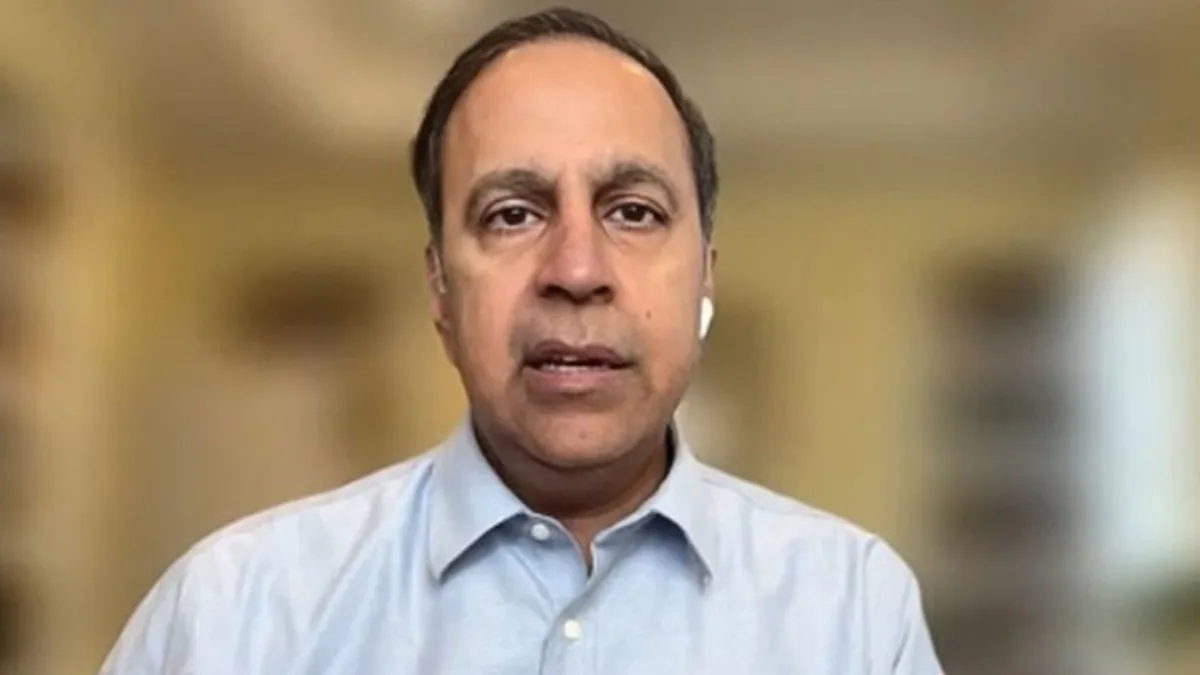
WASHINGTON – US Congressman Raja Krishnamoorthi, an Indian American on Tuesday has warned that another extremist attack could slip past American security agencies unless the federal government strengthens its response to domestic terrorism, argued that a potential massacre at a Hindu temple in Illinois was prevented more by chance than by effective threat detection.
According to local police and law enforcement officials a 19-year-old suspect allegedly spent two years planning a mass shooting before a malfunctioning rifle and warnings from Taco Bell employees helped avert a tragedy.
The case has renewed demands for better hate crime tracking and federal security measures.
Democratic lawmaker Raja Krishnamoorthi questioned the Federal Bureau of Investigation preparedness after an alleged white supremacist attempted to carry out a mass shooting at the Sri Venkateswara Swami Temple in Aurora, near Chicago, where Krishnamoorthi and his family were worshipping on October 11.
Krishnamoorthi said intelligence failures and insufficient attention to domestic extremism could leave religious and ethnic minorities vulnerable.
He also accused senior officials in President Donald Trump’s administration of fostering hostility towards minority communities through divisive public rhetoric.
“We should not have to rely on luck. And yet right now, unfortunately, because the FBI is not focused on these real threats, you know, I fear that one of these plots is going to unfold again and it’ll be too late before we discover it,” he said.
The warning follows the arrest of 19-year-old Alexandros Paporakis, who faces charges of making a terrorist threat and unlawful possession of a weapon.
According to prosecutors, Paporakis had planned a mass shooting for nearly two years and had identified the Aurora temple as a target about two months before the attempted attack.
US authorities said he arrived at the temple with an AR-style rifle, but the weapon malfunctioned as he allegedly attempted to shoot a person. The suspect subsequently left the premises.
His co-workers at a Taco Bell restaurant alerted police after receiving messages about his intentions. Officers later arrested him, preventing a possible further attack.
Krishnamoorthi said the sequence of events exposed troubling weaknesses in the ability of federal agencies to identify potentially violent extremists before they act.
“Almost certainly there were clues that were missed,” he said, questioning whether the FBI was committing sufficient resources to uncover domestic extremist plots.
He has also called for more detailed federal data on hate crimes against specific minority communities, arguing that broad classifications can obscure emerging patterns of targeted violence.
“You cannot stop what you don’t measure,” he said.
He urged the FBI to disaggregate hate crime statistics to provide a clearer picture of threats against individual communities.
Krishnamoorthi accused the country’s political leadership of aggravating divisions across American society beyond the security response.
“Well, yes, I do think that the America of today is more polarized than ever before,” he told ANI.
He alleged that senior government leaders were singling out communities based on religion, ethnicity and sexual orientation, creating an environment in which prejudice could escalate into violence.
He cited a controversial Department of Homeland Security social media post that depicted a Sikh man identified as Singh alongside a Transformers-inspired character bearing the agency’s insignia.
The September post carried the messages “Get off our roads, you don’t know how to drive, Mr. Singh” and “Self-deport or find out”.
It was subsequently deleted after criticism from Sikh organizations, Indian-American groups and Democratic lawmakers.
A Sikh truck driver was stabbed 17 times at a highway rest stop in Wyoming.
The suspect was charged with attempted first-degree murder. Authorities had not established a motive in the charging documents reported at the time.
Krishnamoorthi cited the two incidents while arguing that government messaging could deepen hostility towards vulnerable communities.
“And this is what has to stop. If we’re going to stop this horrible rash of hate, it has to stop at the top,” he said.
The DHS had defended the disputed graphic, stated it referred to an Indian national facing charges over a fatal road accident in Florida.
Krishnamoorthi said he and his family would continue attending religious services despite the alleged threat against the Aurora temple,.
“We’re going to go back. We’re going to go back over and over again,” he said.
“We’re not going to change the way that we pray or we practice our religious beliefs… Because the attackers want us to change who we are, and we cannot yield to either them or yield to fear.”
He also expressed disappointment over what he described as a lack of outreach from the White House following the incident.
“No. And I think that’s part of the problem,” he replied wWhen asked whether federal administration leaders had contacted him.
The case has prompted calls for federal scrutiny, with lawmakers Ro Khanna and Rich McCormick seeking an investigation into whether the alleged plot constituted a hate crime and whether others were involved.
India has also expressed concern over the threat. Ministry of External Affairs spokesperson Randhir Jaiswal described the incident as a matter of deep concern and pointed to racial discrimination and hate crimes targeting Indian communities in the United States.
Krishnamoorthi appealed for solidarity across religious and ethnic communities, said Americans must be able to practice their faith without intimidation.
“And so that is one of the messages that I hope goes out, you know, from this particular terrorist plot: that we have to stand together against hate of all kinds,” he added.
